Category Archives: Corporation

That’s TAMIYA for you… Their manufacturing philosophy has made them “precise yet easy to build.”

By Yasumasa Matsui: Former TV Asahi announcer. Journalist. News reporter.
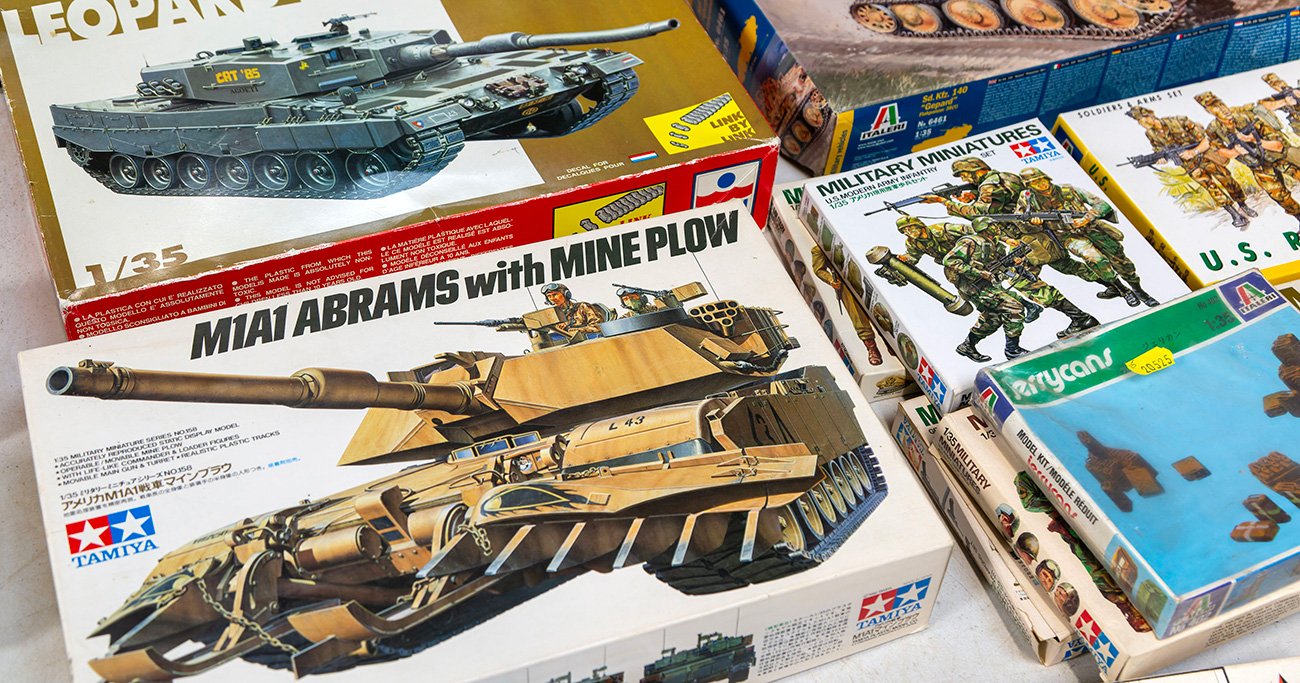
Tamiya, now a global brand, didn’t have a smooth sailing start. Their first plastic model, the Yamato, didn’t sell well, and at one point the company faced a crisis of survival. Furthermore, overseas, they were simply ignored because their products were “Made in Japan.” So how did Tamiya manage to rise from there to become “Tamiya of the World”? Behind it all were their unique manufacturing approach that prioritized “ease of assembly” rather than just pursuing precision, and the presence of two brothers. *This article is an excerpt and edited version of “Half a Century with Plastic Models” by Yasumasa Matsui, former TV Asahi announcer (Chuokoron Shinsha).

Tamiya ‘s first model kit, the Yamato, failed to sell, putting the company in grave danger.

What makes Tamiya products so great? From the packaging design to the precision, the attractive lineup, the total product range including assembly tools and paints, the development and operation of numerous events, and the excellent customer service… there are so many things that come to mind. But what I especially want to convey to everyone is the “ease of building” of the kits. Tamiya plastic models are fun to build.

Most Japanese plastic model manufacturers founded during the Showa era started out as wooden model manufacturers. Tamiya, too, had achieved great success with its large wooden models of warships, so its transition to plastic models, which were a huge boom after being introduced from overseas, was slower than its competitors. The first plastic model, the “1/800 Yamato,” was released in May 1960, but it clashed with the “Battleship Musashi,” a plastic model released earlier by a rival company, and sales were poor, putting the company at risk of collapse.

Thorough research of the actual object to create a precise kit

However, the massive success of the “Panther Tank,” released in January 1962, led to a miraculous V-shaped recovery, and the slot racing boom that began in 1965 expanded sales channels overseas. But the most epoch-making product was undoubtedly the “1/12 Honda F-1,” released in November 1967.

Nowadays, it’s commonplace to conduct on-site research when developing new plastic model kits, but back then, it was normal to design based on drawings published in magazines and a limited number of photographs. However, Tamiya, with the full cooperation of Honda, went to the warehouse at Haneda Airport where the actual car was waiting to be airlifted for the Monaco Grand Prix to conduct on-site research for the development of the Honda F1. As mentioned earlier, this kit made a spectacular debut at Tamiya’s first Nuremberg International Trade Fair and became a huge hit.

On the other hand, when it came to tank models, there were virtually no suitable subjects available for research domestically, so they went to the trouble of traveling to military museums overseas to conduct thorough photography and measurements. Thus, Tamiya’s scale model development, which began in the late 1960s, was based on “research of the real thing,” and a lineup of precise kits that set it apart from other companies began. All of this was handled by the young leader, Shunsaku Tamiya, then head of planning.

Other companies were not to be outdone. They also began conducting research on the actual objects, and a competition to develop more precise kits began. Amidst this, the general trend was to think that “the more parts there are, the more precise and better the kit,” but Tamiya consistently stuck to keeping the number of parts down and prioritizing ease of assembly.

Shunsaku Tamiya’s decision prioritized ease of assembly over precision.

There is a symbolic example: the large-scale motorcycle kit of the “1/6 Honda Dream CB750 FOUR,” released in December 1970. A dedicated young designer developed a movable structure for the drive chain, combining metal and plastic parts link by link. Indeed, even after completion, a natural slack is reproduced, and the sense of precision is outstanding. However, due to numerous complaints from customers that it was “difficult to assemble,” the chain section was replaced with a single molded part in the second edition. While he himself greatly appreciated the assembly method, it was the young Shunsaku Tamiya who prioritized ease of assembly and made this decision, taking cost into consideration as well.

Here’s another example of how easy it is to assemble: When attaching small, symmetrical parts to tanks or airplanes, it can be easy to get confused about which is which. Tamiya, however, has designed the parts with different numbers and sizes of mounting holes on the left and right sides to ensure that you can glue them in the correct position without making a mistake.

Furthermore, since the turn of the 21st century, Tamiya’s mold molding technology has become even more refined. When you combine the left and right parts of the airplane’s body and bring a brush with liquid adhesive close to them, the adhesive enters the seam through capillary action, making it impossible to tell where the joint is.

In recent years, Asian model manufacturers, in particular, have made remarkable progress, and some kits have even begun to surpass Tamiya in terms of precision. However, generally speaking, the parts division has become very fine, and some kits now have more than double the number of parts. The finished product is certainly wonderful, but the assembly is a difficult and arduous task. Tamiya, on the other hand, has consistently developed products that are “precise yet have a surprisingly small number of parts” through further improvements in its engraving technology. They can be assembled so quickly that it’s as if the parts are fitting together on their own. In short, Tamiya kits are stress-free and enjoyable to build, and you can move on to the next step, painting, with plenty of energy left over.

Farewell to Shunsaku Tamiya, Chairman who built “Tamiya of the World.”

It was a sudden phone call from someone. One day in July, shortly before the reopening of the history museum after renovations,

“Mr. Matsui… you heard it, didn’t you?”

“Huh? What is it?”

“Chairman Shunsaku… has passed away…”

“…”

I was in a daze for a while, unable to comprehend what was happening. A few days later, Tamiya made an official announcement. On July 18, 2025, Chairman Shunsaku passed away. He was 90 years old.

Everyone knew this day would come someday, but no one imagined it would happen so soon. Later, we learned that the closer you were to Chairman Shunsaku, the more unexpected and sudden this event was for you. He joined his family business, Tamiya Trading Co., Ltd., at the age of 23, and as a young leader, he steered the company through the most difficult period of transition from wooden models to plastic models. He essentially built Tamiya into a global plastic model manufacturer in just one generation, and continued to lead the industry for over 50 years. Tamiya fans all over Japan, and indeed the world, shed tears.

His younger brother, Tokuo, supported “Tamiya, the world’s leading company,” through his design work.

The sad events continue. On August 19th, about a month after Chairman Shunsaku’s passing, his younger brother, Tokuo Tamiya, who worked as a designer and art director at Tamiya, also passed away at the age of 87.

Tokuo is Shunsaku’s younger brother, three years his junior, and while he was a student at Tokyo University of the Arts, he was asked by his brother Shunsaku to design the first Tamiya “Twin Star” logo, and was deeply involved with Tamiya.

From 1967, he became a freelancer and established an office in Aoyama, Tokyo, where he oversaw all aspects of Tamiya’s design work as a designer and art director, a role he held until 1998.

Even as a child, I felt that Tamiya’s products were a step or two ahead of their competitors in every aspect, from the excellent kits themselves to the packaging, catalogs, flyers, magazine advertisements, merchandise, and even their company envelopes.

Everything was unified in design around the Tamiya Twin Star mark. The contributions of its creator, Tokuo Tamiya, are immeasurable. Although the term CI (Corporate Identity) is now commonly used, it is astonishing that he was one of the first to adopt this concept more than half a century ago and thoroughly embody it. This was all built by one man, Tokuo Tamiya.

Later, in an article reflecting on that time, Tokuo wrote:

Book cover of “Half a Century of Me and Plastic Models”
” My Half-Century with Plastic Models ” (Yasumasa Matsui, Chuokoron-Shinsha)
“How can we make Tamiya a company that can compete on a global level? We want to change the image of it being just a toy. How can we raise the level of perception in the model industry?”

It is written that they came up with this unified design through trial and error.

Mr. Tokuo redesigned Tamiya’s now-used Twin Star logo around the time when the young Chairman Shunsaku had traveled alone to America to sell Tamiya products, but was rejected simply because they were “Japanese products” (at that time, “Made in Japan” was used in a negative sense), and returned to Japan heartbroken. By proclaiming in the company motto, “We must be the best in the world, not just the best in Japan,” he developed the groundbreaking “1/12 Honda F-1” model and exhibited it for the first time at the Nuremberg International Toy Fair in 1968, where this new Twin Star logo shone brightly on the top of the box.

Tamiya rose to become “Tamiya of the World” thanks to the combined efforts of these two brothers.

Source in Japanese language: DIAMOND online
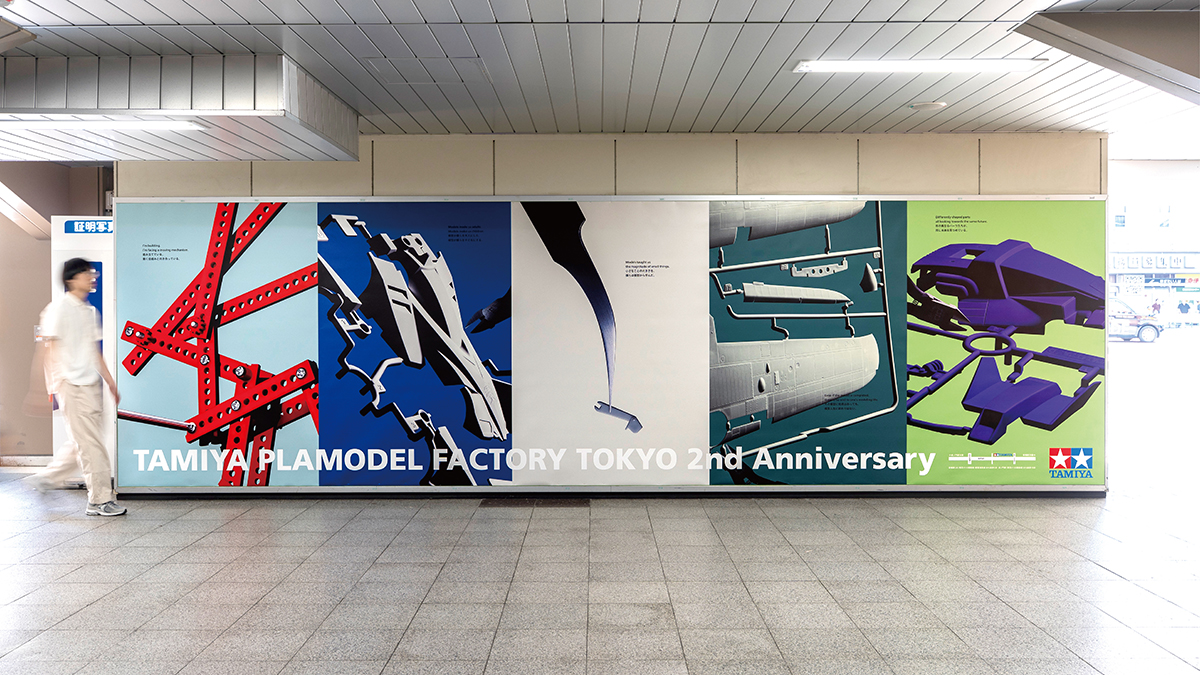
TAMIYA TOKYO’s advertising campaign wins ADC Award for the second year in a row


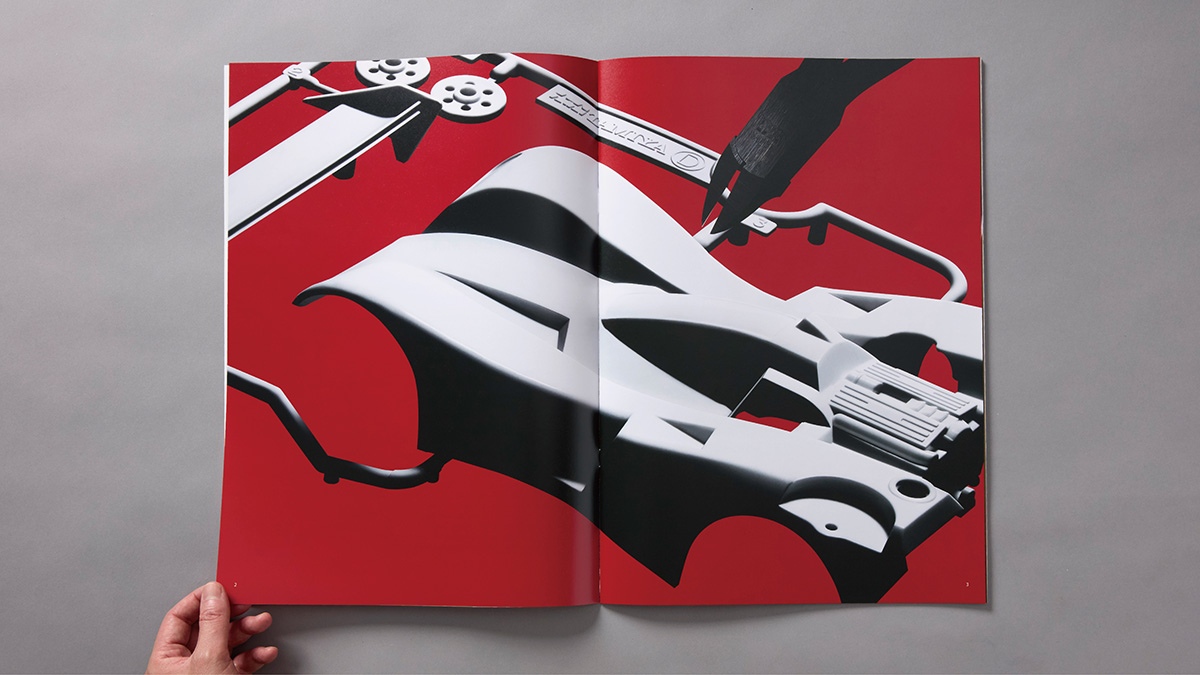
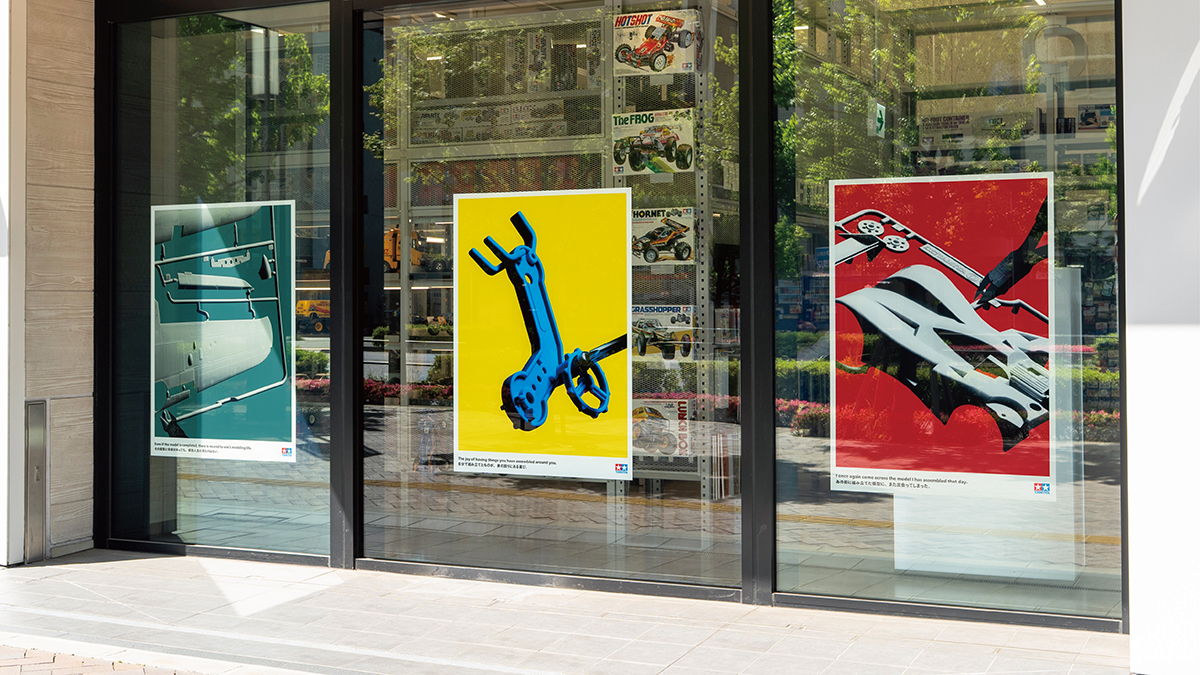
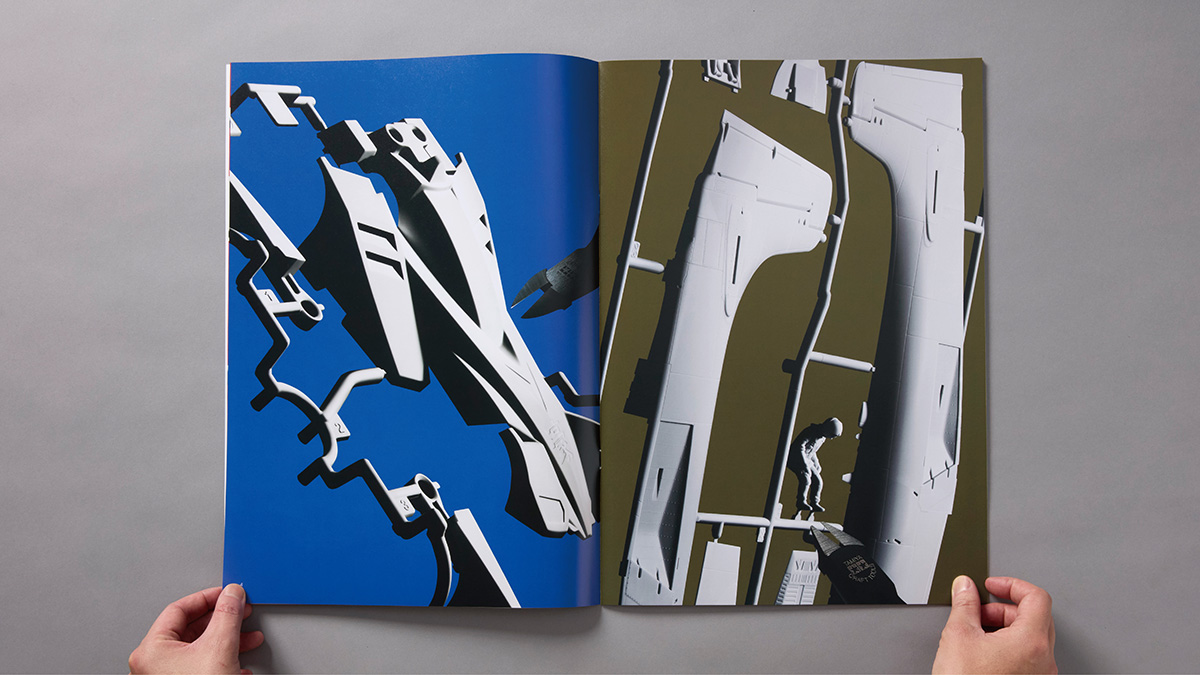
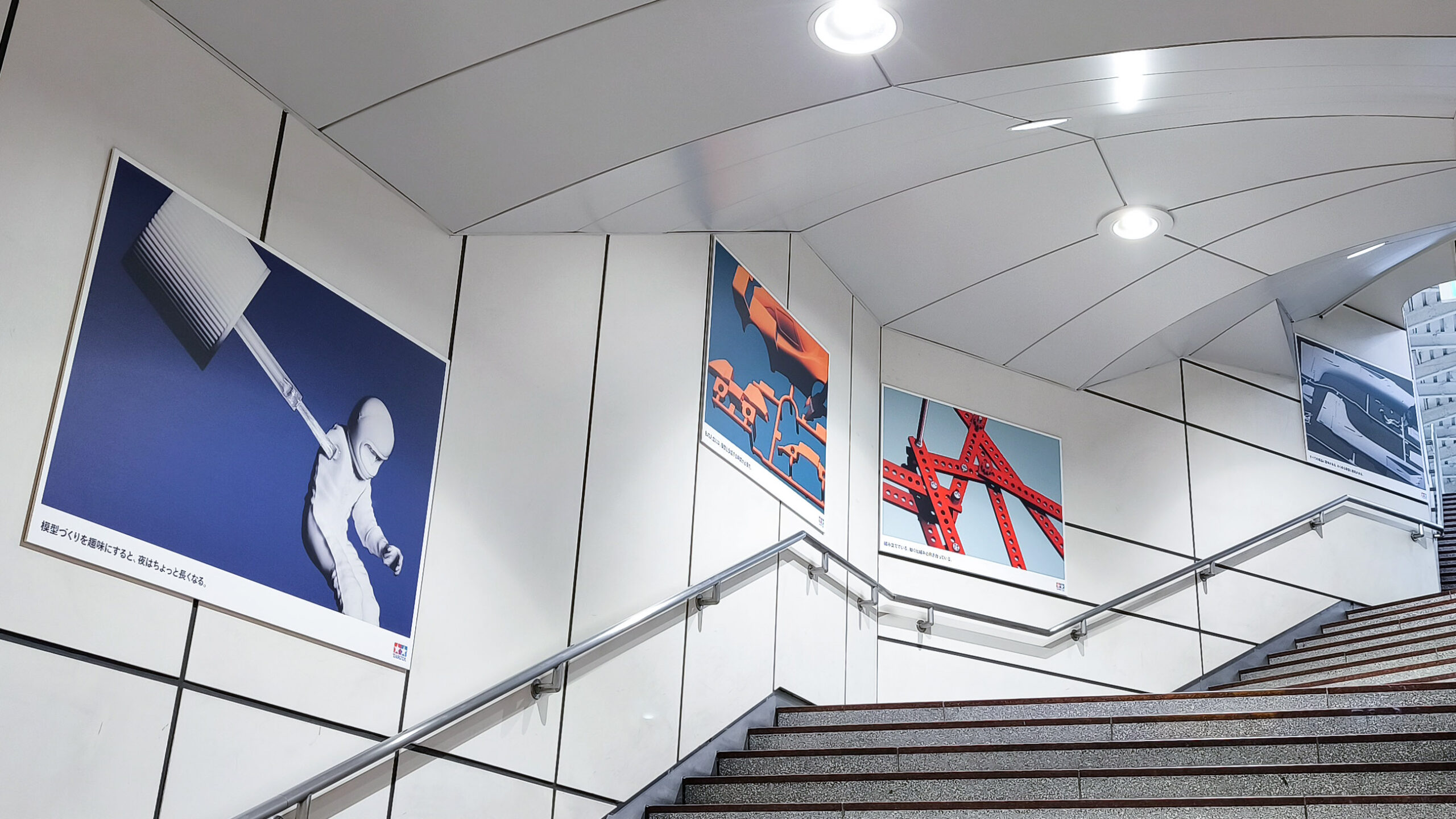
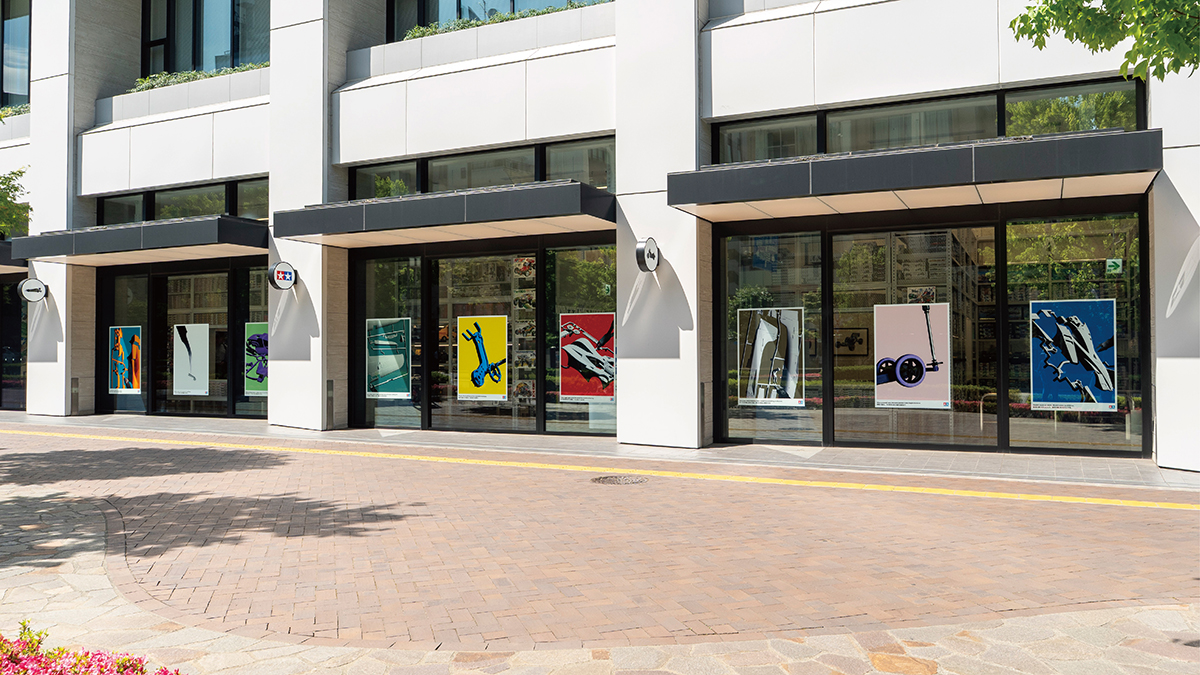
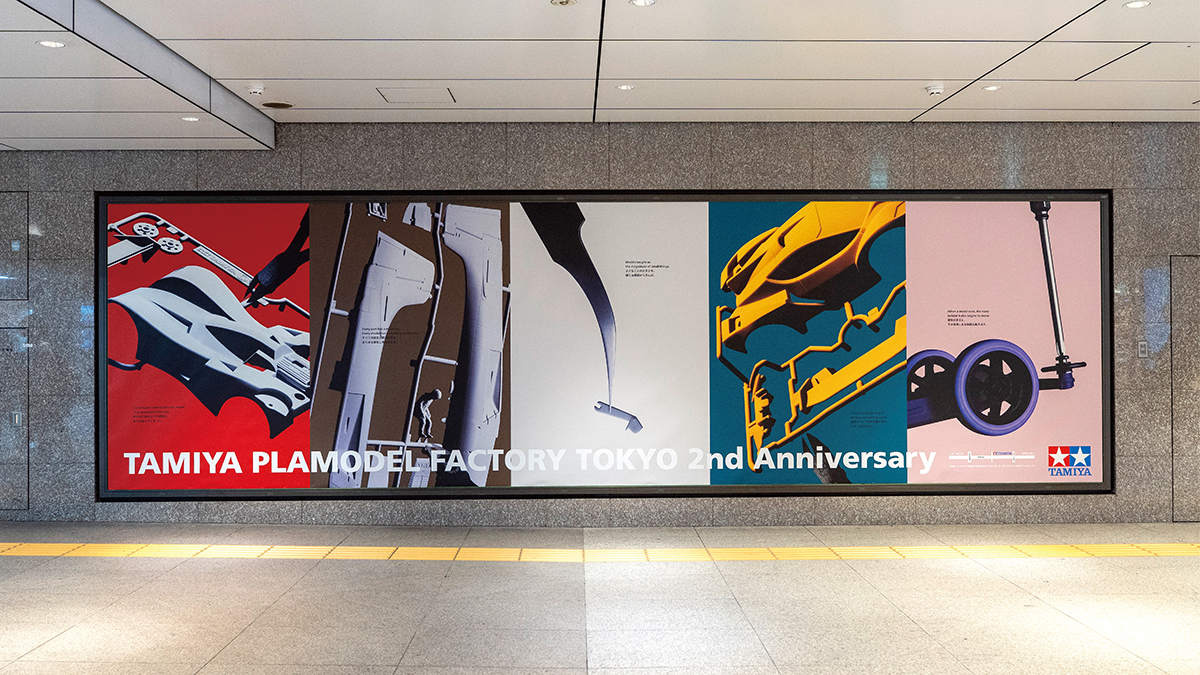
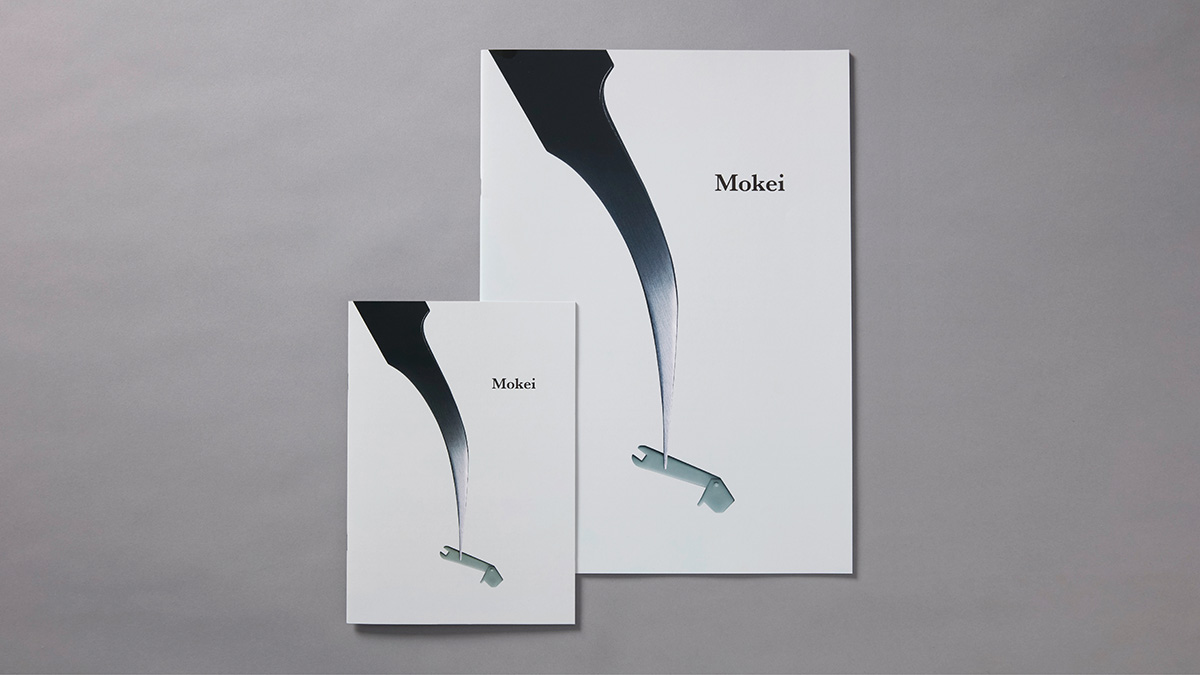
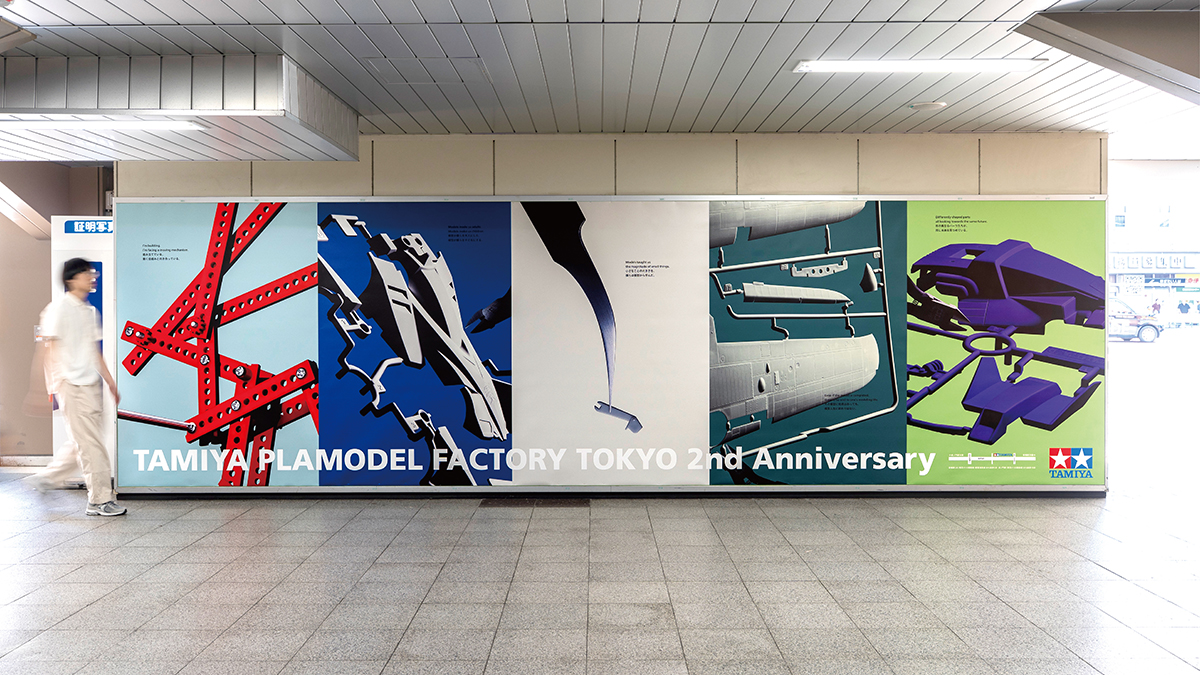
This year, a series of graphic designs, including posters displayed within the TAMIYA PLAMODEL FACTORY TOKYO facility, as well as at JR Tokyo Station and JR Shimbashi Station, and a non-commercial photobook, received the ADC Award for 2026, following last year’s success.

The ADC Award
is one of the most prestigious awards in the fields of advertising and design, hosted by the Tokyo Art Directors Club (ADC), a leading organization of art directors in Japan. It recognizes outstanding visual communication works and is a prestigious award with a history dating back to 1957, highly regarded both domestically and internationally.

Award Winners
Art Director Tomohiro Nakayama (Sun-Ad) / Art Director Kazuyuki Ishida (Sun-Ad) / Photographer Shinichi Kaneko


Japanese Art Direction Exhibition 2026
Ginza Graphic Gallery (DNP Ginza Building, 7-7-2 Ginza, Chuo-ku, Tokyo) / October 30th (Fri) – November 30th (Mon), 2026

■Traveling Exhibition
Komoro Kogen Museum of Art / Shiratori Eisetsu Hall (Komoro City, Nagano Prefecture) / December 6, 2026 (Sun) – January 24, 2027 (Sun)

Related Links
Tokyo Art Directors Club
Ginza Graphic Gallery

JUN WATANABE – Why do we fall in love with TAMIYA’s “Twin Star” logo?


Interview and text by Kenki Maeda, Photography by Daisaku Eto, Editing by Goji Terada

Tamiya, a model manufacturer that continues to lead the way in the hobby world. From precise scale models based on real-world research to RC cars, Mini 4WDs, and craft series, Tamiya has produced numerous epoch-making products and provided thorough user service, earning the support of many fans. This article delves into the company’s current state.

Many people associate Tamiya with the red and blue twin stars. Simple yet eloquent, the Tamiya logo possesses a duality of being catchy yet unobtrusive, without detracting from the product itself. We explore the charm and background of this increasingly brilliant logo.

Four changes in 80 years! The evolution of the Tamiya logo.

1953-1960
The earliest logo used during the era when they only dealt in wooden models.


This was the first logo used for wooden model products, devised in 1953 when the company transformed into a dedicated model manufacturer. It features the initials “TMK” for “Tamiya Model Materials” against a globe background. Two versions with different backgrounds have been confirmed

1960-1966
The old logo made its debut with Tamiya’s first plastic model kit, the “Battleship Yamato”.


The first “Twin Star” was born when Shunsaku Tamiya (deceased), the restorer of Tamiya, asked his younger brother Masao (deceased), who was studying design at Tokyo University of the Arts at the time, to create a mark “suitable for the new era of plastic models.”

1965-1968
The “black circle logo” was used in conjunction with the twin star logo, mainly on export products.


The “black circle Tamiya” logo was primarily used on slot racing car products, also known as “running plastic models,” which became a huge boom in 1963. It was never used alone, but was always used in conjunction with the old logo or the new (current) logo.

From 1966
The birth of an iconic logo that has been loved for over half a century.


First used in 1966. Initially used in conjunction with the “black circle logo” shown on the right for about two years, it became Tamiya’s sole flagship logo around 1968. For 60 years since then, it has remained a high-design logo without change. Following the first logo “TMK” (Tamiya Model Materials), Tamiya (then Tamiya Models), which became a plastic model manufacturer with the “Battleship Yamato,” needed a logo befitting the new era of hobby plastic models. Tokuo Tamiya, who designed the “Twin Star,” recalls in his brother Shunsaku’s book “The Work of Tamiya Models” (Bunshun Bunko): “I made it casually. It felt like I was helping out with the family business. (omitted) The only thing I came up with was a ‘star mark.’ Initially, I had English text around the mark, but it wasn’t very practical, so I changed it when we released the slot racing car in the 1960s, and it became the simple one we have today.” The simple red and blue Twin Star stands out against the white background of the packaging. The star symbolizes a popular figure (star) in the model-making world, while red represents creativity, passion, and youth, and blue represents precision, accuracy, and sincerity.

The distinctive “white packaging” is the face of Tamiya products.

Tamiya’s “Twin Star” logo is serene yet austere,
a high-design product that combines refined beauty.


Creative Director/Graphic Designer JUN WATANABE
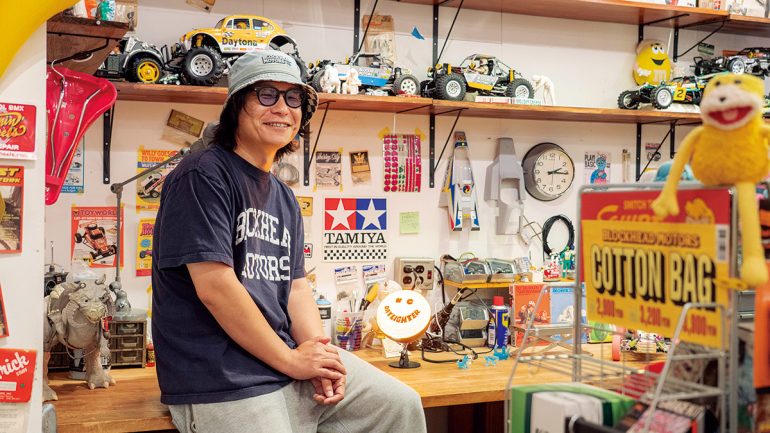
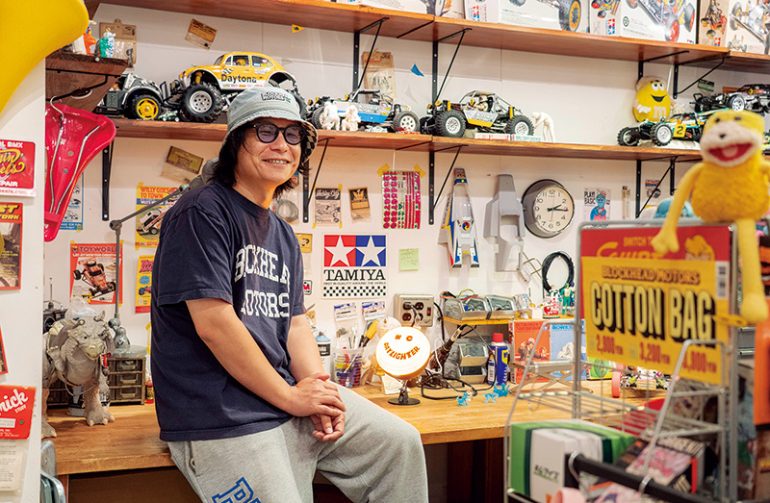
is a former creative director at Start Today (now ZOZO). His own brand, ‘JUN WATANABE’, features numerous collaborations with companies like Tamiya and sneaker brands. In 2016, he launched ‘BLOCKHEAD MOTORS’, creating special editions of the ‘Wild One’ and ‘Hot Shot II’.

Tamiya is a historic and sacred brand, and I’m speaking purely from a third-party perspective.
 While the elements that make Tamiya what it is are, of course, the models themselves, which combine precise reproduction with ease of assembly, some might also point to the “Tamiya design,” which is fundamental to the “white packaging” and the “twin star” logo. Creative director Jun Watanabe, known for his collaborations with Tamiya, is one of them.
“My father enjoyed RC airplanes, so when I was in elementary school, he bought me my first car, the ‘Hot Shot II.’ While manga and TV shows influenced my becoming a Tamiya fan, I think the power of their packaging design was the biggest factor. For example, their tank plastic models. While other companies used dramatic, graphic novel-style backgrounds, explosion effects, and flashy katakana lettering, Tamiya used illustrations on a white background. The lettering was mainly in the alphabet, with only the ‘Twin Star’ placed in a perfectly positioned location… I was struck by its serene, serious, and sophisticated design. That’s why I’m not only a fan of Tamiya products, but also a fan of Tamiya’s design.”
 Later, he joined Start Today, the company that operates ZOZOTOWN. Even after taking on the role of head of the design department, his love for hobbies and his passion for Tamiya never waned.

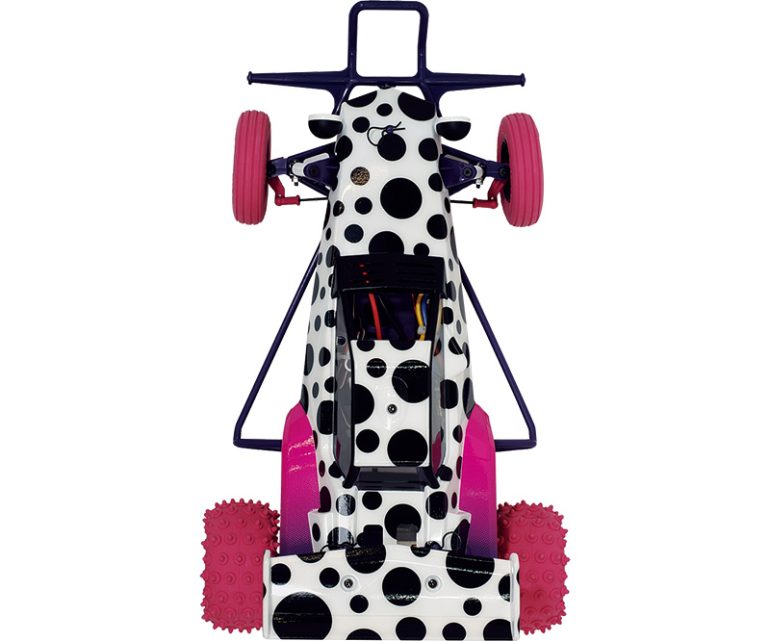
“At one point, I realized that my strength lay in combining fashion with Tamiya. And, rather presumptuously, I sent a handwritten proposal enthusiastically stating, ‘The Tamiya brand has a strong appeal that transcends the model world!’ This marked the beginning of my interaction with Tamiya, which led to apparel products and the RC car collaboration ‘Hornet’ (pictured above).”

 In a sense, he appears to be attempting to completely transform the Tamiya brand, but he is trying to maintain an objective, third-party perspective.

“I’m just a fan and an external designer. Tamiya has design regulations that have been cultivated over its history, and the ‘Twin Star’ has the strength to present a whole worldview on its own. That’s why, when I’m involved in the design, it’s absolutely essential that I approach it with a perspective and respect that doesn’t disrupt that tradition.”

Tamiya ‘1/10 RC Hornet by JUN WATANABE’

A groundbreaking RC design collaboration!
Released in March 2012. A special model based on Tamiya’s famous “Hornet.” Featuring pink tires and nuts, a black polka-dot body, and other unique features, this is a truly distinctive car.

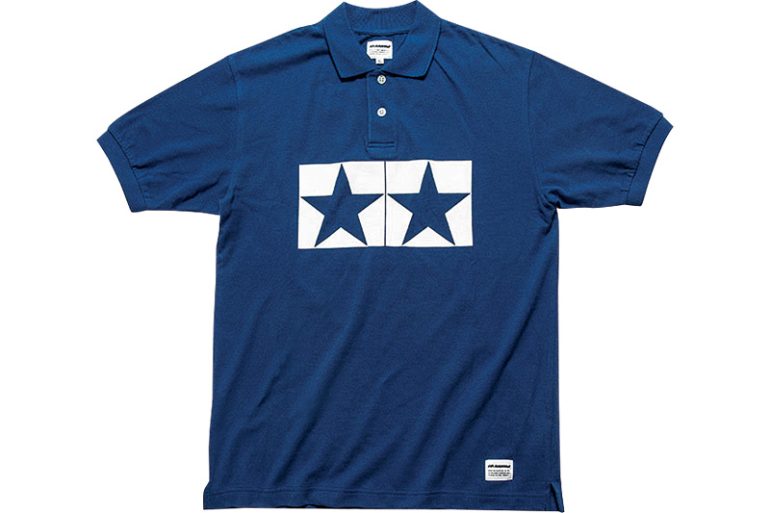
TAMIYA x JUN WATANABE “JUN WATANABE Tamiya Polo Shirt (Blue)”

This cool polo shirt is made from breathable pique fabric, making it comfortable even in summer.
It features a monochrome twin star on the chest and buttons engraved with Tamiya’s star mark and collaboration name. In addition to the blue shown in the photo, it is also available in black, white, and burgundy.

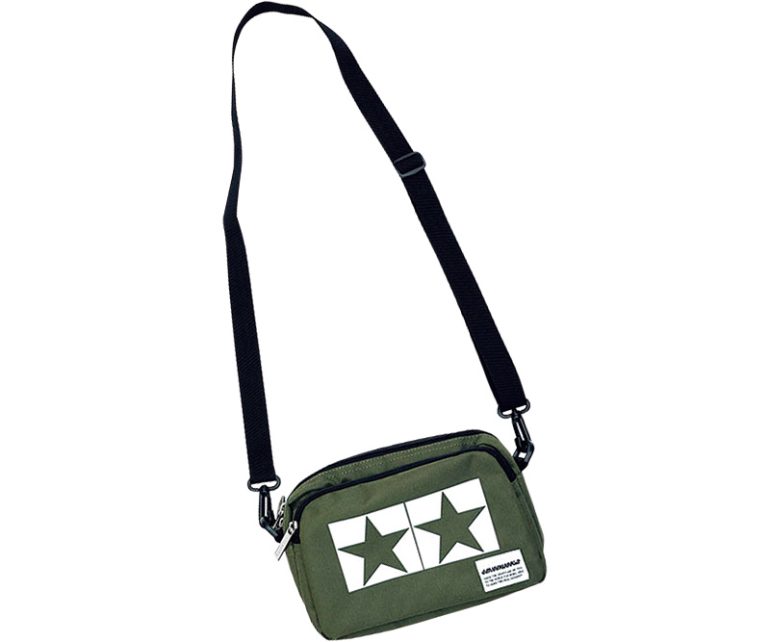
TAMIYA x JUN WATANABE “Tamiya Mark Mini Shoulder Bag Khaki”

The monochrome twin stars give it a unique look!
Measuring 23cm wide, 17cm high, and 4.5cm deep, it’s a compact and durable bag made from high-density nylon, perfect for everyday use as well as camping and other outdoor activities. Available in khaki (pictured), navy, gray, and black.

Interview and text by Kenki Maeda, Photography by Daisaku Eto, Editing by Goji Terada
Source in Japanese language: DIME

TAMIYA is considering purchasing land from landowners


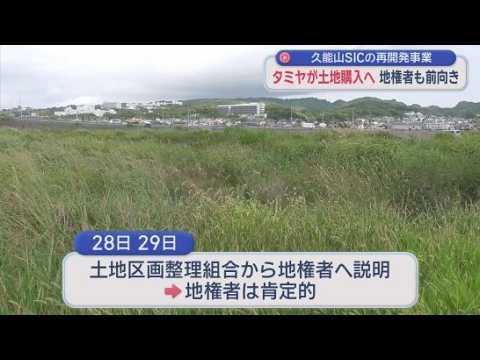
It has been revealed that Tamiya, a plastic model manufacturer, is considering purchasing land in connection with the redevelopment of the area around the Tomei Kunozan Smart Interchange in Shizuoka City.

In the Miyagawa and Mizukami districts surrounding the Kunozan Smart Interchange, developers and landowners are in discussions regarding redevelopment, including the possibility of attracting a warehouse-style Costco store.

According to sources, it has been learned that Tamiya, a plastic model manufacturer, plans to purchase approximately 26,100 square meters of land in this area. The land readjustment association provided explanations to landowners on the 28th and 29th.

The landowners have reportedly viewed Tamiya’s purchase positively and have not raised any objections. The timing of the purchase is yet to be determined.

According to sources, the union and Tamiya are currently discussing what to produce. Tamiya commented to Shizuoka Asahi Television that “nothing has been decided yet regarding what to produce.”
Source in Japanese language: LOOK

“After work, I race Mini 4WD cars in Shinbashi” – TAMIYA reveals the secrets to their 40-year-long success

TAMIYA PLAMODEL FACTORY TOKYO is lined with Mini 4WD cars (Photo courtesy of TAMIYA PLAMODEL FACTORY TOKYO / Photography by Editorial Department)

Mini 4WD cars, which once captivated boys across Japan, are now attracting attention again in the Reiwa era.

“TAMIYA’s flagship facility, ‘TAMIYA PLAMODEL FACTORY TOKYO,’ located in Shinbashi, Tokyo, which had its grand opening in 2024, is attracting a large number of people, including office workers on their way home from work,” says a hobby magazine reporter.

Mini 4WDs are, as everyone knows, model cars powered by batteries and motors. Since their creation in 1982, they have sold over 190 million units and are a popular product from their manufacturer, TAMIYA. There are currently more than 200 different types of Mini 4WDs and parts available.

In fact, the Mini 4WD has experienced several booms in popularity over the 44 years since its release.

“The first boom was the ‘Racer Mini 4WD’ that appeared in the late 1980s. TAMIYA’s RC cars, with the ‘Jr.’ designation, became popular, and the manga series based on them, ‘Radio Control Boy’ and ‘Dash! Yonkuro’ (both serialized), became popular and spearheaded the boom. Then, in 1994, the second boom arrived when ‘Bakusou Kyoudai Let’s & Go!!’ began serialization in ‘CoroCoro Comic’. After that, the third boom came in 2012 when the ‘Japan Cup’, a TAMIYA-sanctioned competition to determine the best Mini 4WD in Japan, was revived.” (Ibid.)

And the current boom, which began a few years ago, is said to be the fourth boom. At this point, it feels less like a boom and more like it has taken root as a culture, but why is it gaining popularity again?

To find out the reason, this website interviewed TAMIYA’s headquarters and facilities and spoke with them.

“A major factor in the resurgence of the boom is the entry of the adult generation. The reason these adults started playing with Mini 4WD again was the revival of the Japan Cup.”

This is according to Norihisa Mitsuzono, manager of the Sales Planning Section in TAMIYA’s Sales Department.

The Japan Cup, which was temporarily suspended in 1999, was revived in 2012 to coincide with the 30th anniversary of the release of Mini 4WD, after a 13-year hiatus. In fact, at last year’s Japan Cup, more than 70% of the participants were adults, mainly in their 30s to 50s.

Mr. Mitsuzono recalls the time of the revival as follows:

“The Japan Cup used to be a tournament only for junior high school students and younger, but when it was revived, adults were also allowed to participate. I think that the kids who admired it back then have grown up, and that admiration has suddenly been rekindled.”

The children who grew up during the first and second booms have now grown up and returned. That was the third boom, but the current fourth boom is a combination of that and the tailwinds unique to the Reiwa era.

Kentaro Matsumoto, a staff member at TAMIYA PLAMODEL FACTORY TOKYO in Shinbashi, says this:

“Social media and YouTube have a big influence. Modification examples and how to use parts are being shared on X and in videos, and some people are getting interested again after seeing them. The generation that used to play with Mini 4WDs has had their passion for Mini 4WDs rekindled since the Japan Cup, and they are uploading their machines to social media. Then adults who see these become aware of the current boom and it seems to be inspiring them to start again. On Fridays, we get office workers coming after work, and on Saturdays and Sundays, the room with the track can get full with families.”

The social media activity of the adults who supported the third boom has now influenced many adults who are now parents themselves, and these people have started sharing the fun of Mini 4WD with their own children—this may be what is leading to its current popularity.

■ ‘Hot Shot Jr.’ is still around!

TAMIYA PLAMODEL FACTORY TOKYO is one of the hubs for Mini 4WD enthusiasts. This hobby facility stocks approximately 6,000 items, including Mini 4WD cars and related parts, and even has a track where you can actually race your machines. As a result, it has become a place where people who played with Mini 4WDs in the past can rediscover their passion for the sport.

In fact, when the reporter visited the facility on Friday evening, there were many users there, including men in suits who appeared to be on their way home from work, and families with children.

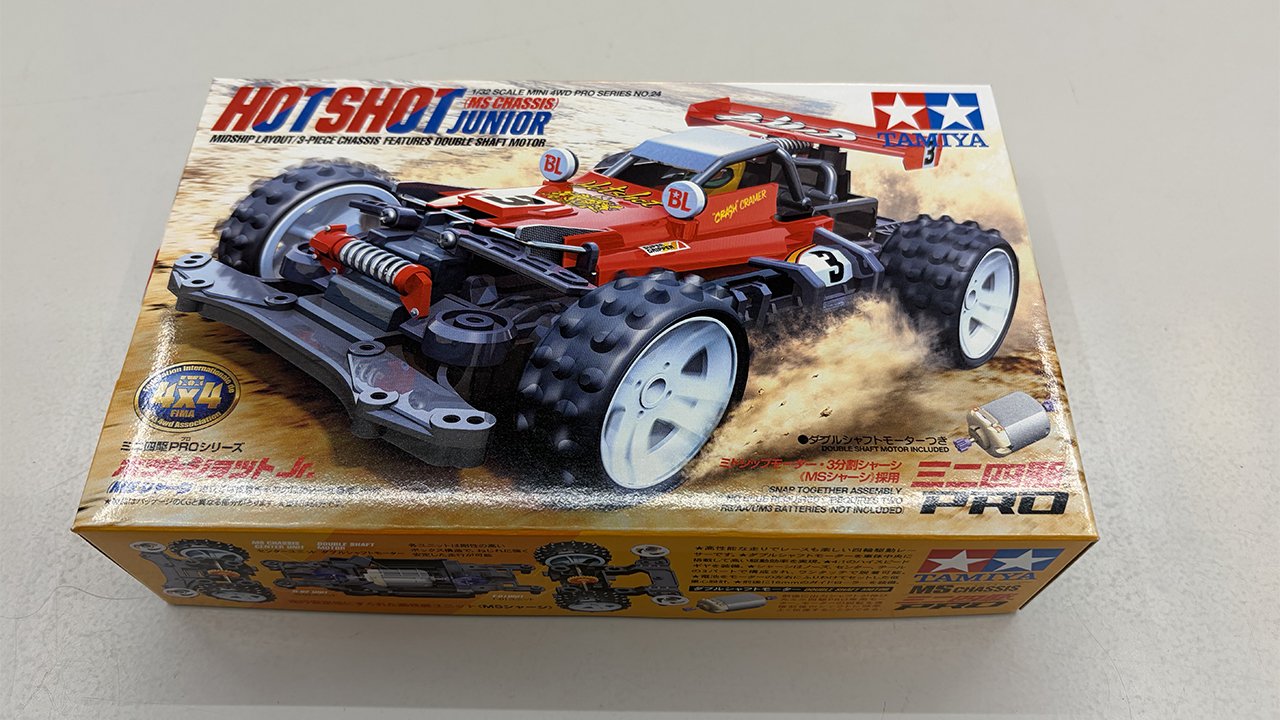
“We often have old fans who just drop by the facility and, upon seeing the Mini 4WD cars lined up, say to the staff, ‘How nostalgic!’ Or, while their children are looking at the latest machines, a father might see the name ‘Hot Shot Jr.,’ which has been around for a long time, and say, ‘They still have that!’ and pick it up. By the way, the design and specifications are different from the Hot Shot Jr. of that time,” (Mr. Matsumoto, quoted above).

Many people also expressed nostalgia.

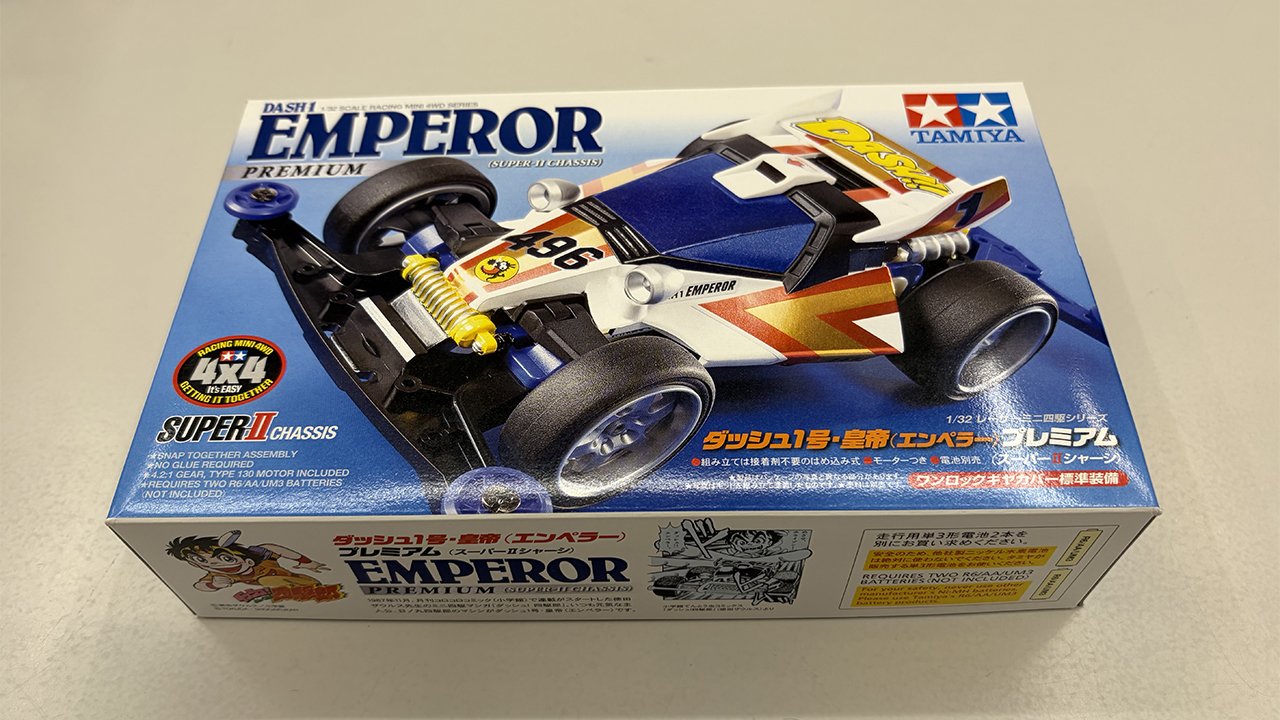
“We often get questions like, ‘Do you have the Emperor (the machine used by Hinomaru Shikuro, the protagonist of “Dash! Yonkuro”)?’ It’s a special machine for those who read CoroCoro Comic back then. Different generations have different Mini 4WD machines that they feel attached to, and the manga they read as children has a big influence on them,” (ibid.).

A machine that parents instinctively reach for can seem like a fresh and exciting creation to a child. Mini 4WD is a hobby that can be enjoyed across generations.

However, today’s Mini 4WD is no longer just a nostalgic past pastime. It has now become a sophisticated hobby that adults can seriously enjoy, requiring knowledge of processing techniques and setting up the cars. Furthermore, the machines themselves have evolved, and the way they are driven and modified has become more profound than ever before.

“The biggest change is the machine’s structure. The chassis (the base of the machine) is different. Previously, rear motors were the norm, but in 2005, the ‘MS chassis’ appeared, which places the motor in the center of the body. The weight is in the center, providing good balance, and now it’s important to consider how to combine not only the rollers, but also the weights and brakes,” (Mr. Mitsuzono, quoted above).

Many users are drawn to the intricacies of these modifications.

In fact, we spoke to a man in his 40s who was adjusting his machine in the section of the facility that has a race track, and who said he was on his way home from work.

“I started playing with Mini 4WD again after my child started reading ‘CoroCoro Comic,’ but before I knew it, I was more hooked than my child. The appeal of it as an adult is that you can spend money and time on it. You can try out parts you couldn’t afford back then, and it’s fun to modify them at home and come up with your own ideas. I spend about 20,000 to 30,000 yen on modifications, but it’s an easy hobby to stick with as an adult.”

Also, another user,

“There’s always someone here. The biggest thing is that it’s a place where you can meet people who share the same hobby. If you build a Mini 4WD properly, it will run properly. If you build it carefully, it will be fast. So, looking at other people’s machines is educational, and it makes me want to improve my own as well.”

Why does Mini 4WD continue to attract people for so long? Mr. Mitsuzono explains its appeal as follows:

“I think the main reason is that there’s no ‘right answer’ no matter how far you go. You build it, run it, think about it again, and improve it. The fun lies in that repetition.”

The past’s games are drawing adults back while simultaneously passing on their appeal to the next generation. And now, the children who were hooked during this fourth boom have grown up, and another boom may be on the horizon… This is how Mini 4WD may continue to be passed down through generations.

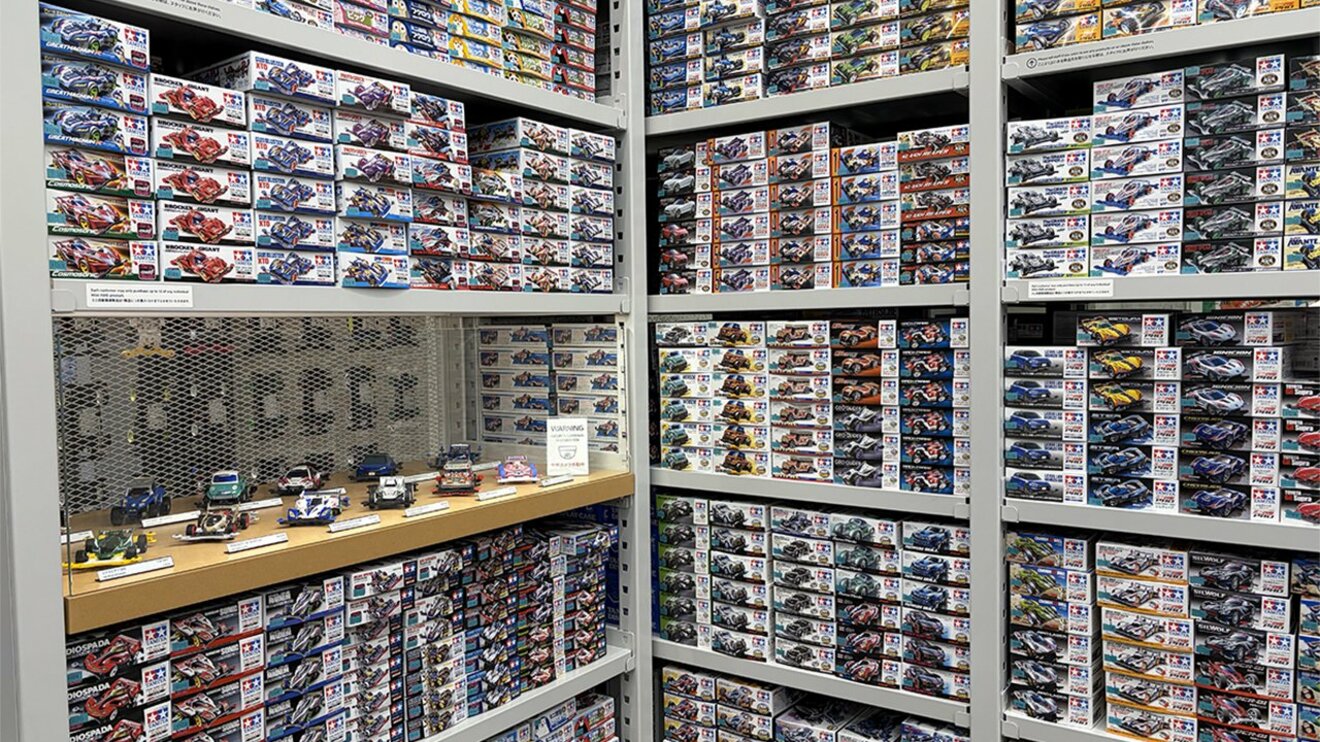
■ Nostalgic machines lined up at TAMIYA’s flagship store in Shinbashi

A collection of nostalgic machines lined up at ‘TAMIYA PLAMODEL FACTORY TOKYO’.

‘Hot Shot Jr.’ has now been revived with a completely redesigned format.

“Dash 1 Emperor” from the anime series “Dash! Yonkuro” (ibid.)

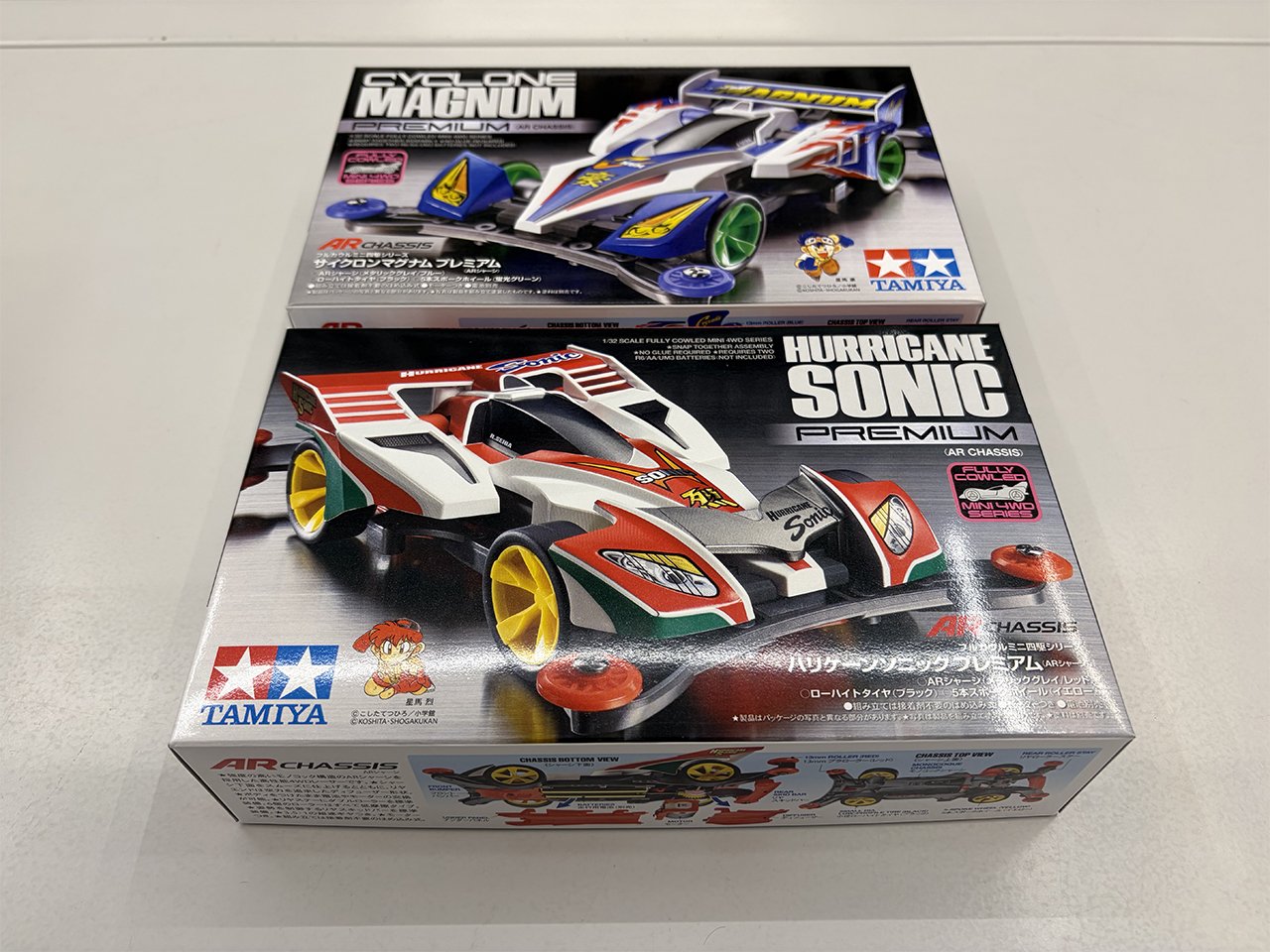
The “Cyclone Magnum” and “Hurricane Sonic” from the anime series “Bakusou Kyoudai Let’s & Go!!” (ibid.)

Source: Pinsba NEWS Editorial Department

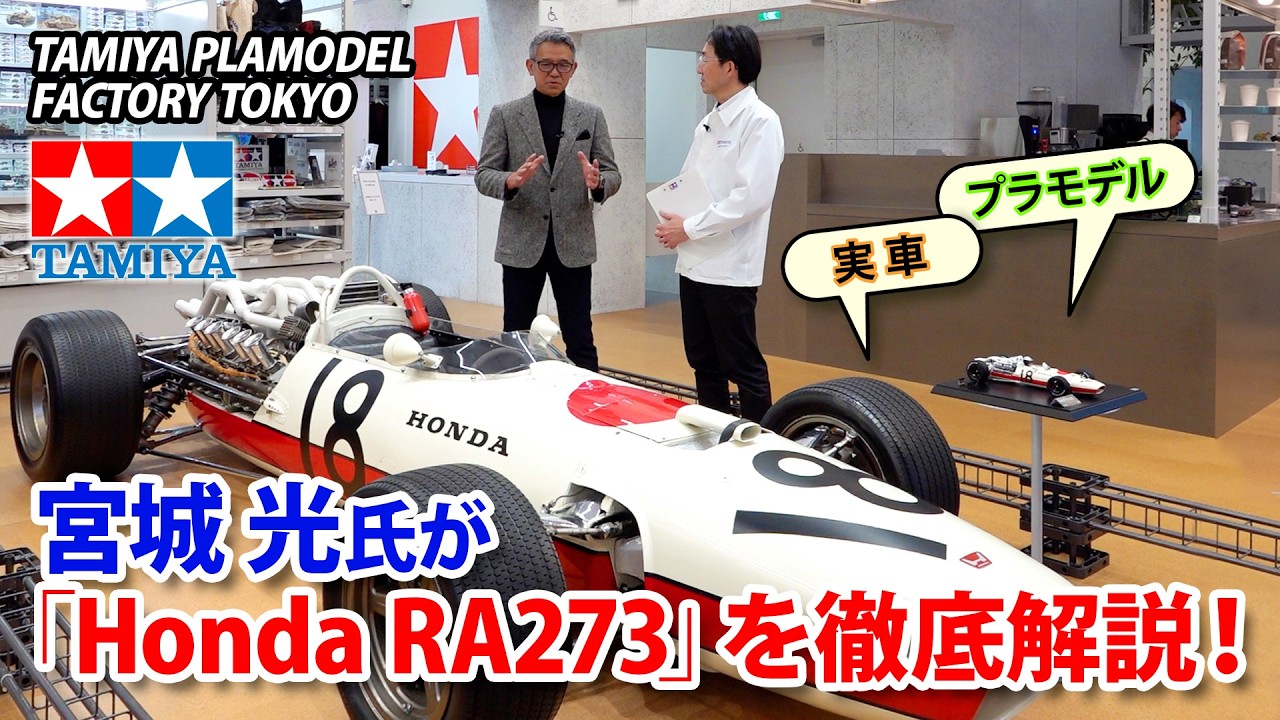
Mitsuru Miyagi gives a thorough explanation of the Honda RA273, the car that challenged the 3-liter F1 class and gave birth to TAMIYA’s masterpiece model


^
In 1966, during its first F1 campaign, Honda introduced the “RA273,” equipped with a 3L V12 engine compliant with the new engine regulations. In 1967, TAMIYA released a 1/12 scale model of this car, which garnered a huge response worldwide due to its precise reproduction. In this video, Hikaru Miyagi, who also serves as a test driver for the Honda Collection Hall, explains the features of the actual car. We explore the appeal of this masterpiece that transcends time and conveys the history of motorsport and model making.

Featuring: Hikaru Miyagi (Motorcycle and Automotive Critic)

Honda RA273 Actual Vehicle Information (Honda Official Website)
https://global.honda/jp/F1/machine/1966_HondaRA273/

TAMIYA 12032 1/12 Honda RA273 (with Etched Parts)
https://www.tamiya.com/japan/products/12032/index.html

Cooperation: Honda Motor Co., Ltd., Honda Mobilityland Corporation Mobility Resort Motegi Filming: TAMIYA PLAMODEL FACTORY TOKYO (This video was filmed in February 2026. The vehicle is no longer on display.)
https://www.tamiya-plamodelfactory.co.jp/

Related Event Information RA273 60th Anniversary TAMIYA and Honda World Exhibition Held at Honda Collection Hall March 14 (Sat) – July 12 (Sun), 2026
https://www.mr-motegi.jp/collection-hall/event/exhibition.html#TAMIYA

Tamiya models receive awards from prestigious German magazines


Prestigious Awards for Tamiya
The results of the latest Modell des Jahres (Model of the Year) awards were recently announced by German magazine ModellFan! Tamiya is delighted to report that our 1/35 scale French Light Tank H39 model was honored in the awards, which are chosen by the magazine’s staff and readership.

This news follows German scale and R/C auto model magazine Modellfahrzeug honoring our 1/10 R/C Audi 90 quattro Racing (TT-02) and 1/24 Audi quattro models with Modellfahrzeug des Jahres awards, and naming Tamiya a 2025 Premium Brand in the R/C model genre.

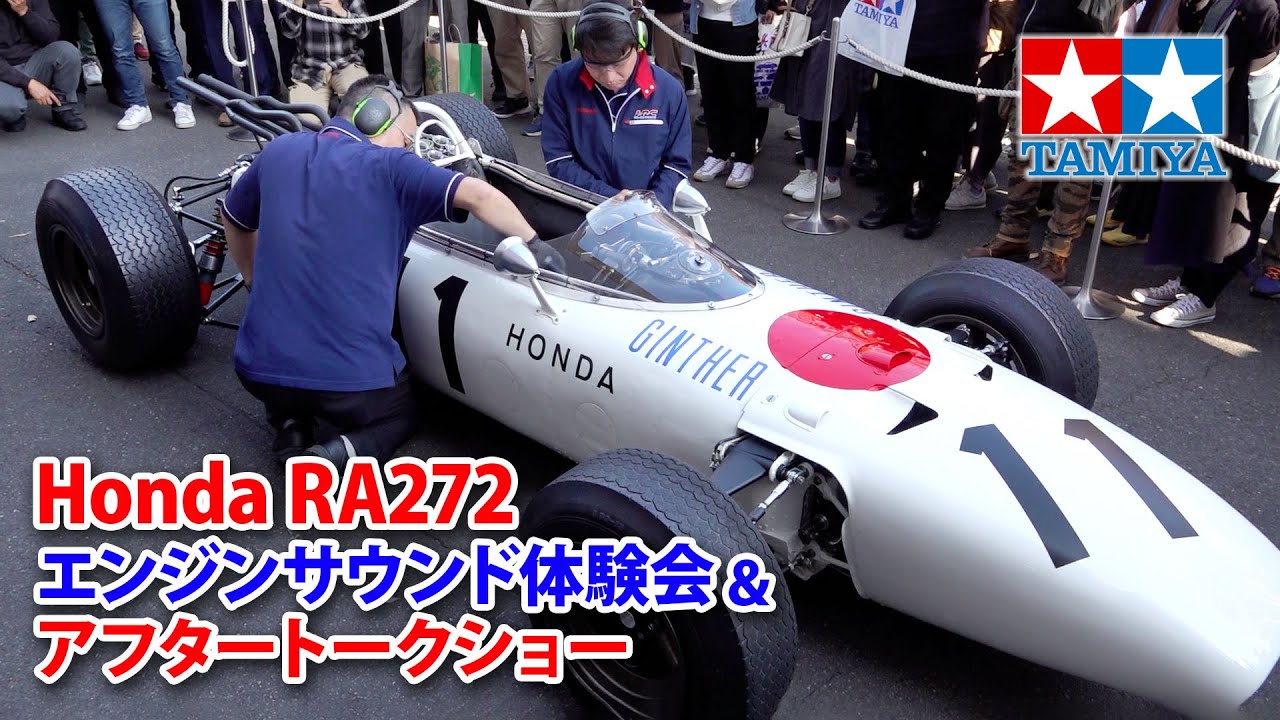
Honda RA272 Engine Sound Experience & After-Talk Show with Mr Miyagi Hikaru at the Tamiya Fair 2025


■ On Sunday, 16th November 2025, an engine start demonstration of the legendary machine, the Honda RA272, was held at the Tamiya Fair 2025 venue. The powerful ‘Honda Music’ produced by the 1.5-litre V12 engine drew enthusiastic applause from attendees.

■ Following the demonstration, a talk show was held featuring Mr Hikaru Miyagi, a former Honda works rider who now serves as a test rider and driver at the Honda Collection Hall. He shared insights and anecdotes based on his experience actually driving the RA272. Please see the footage above.

■ Cooperation
Honda Motor Co., Ltd.
https://www.honda.co.jp/
Honda Mobility Land Co., Ltd. Mobility Resort Motegi
https://www.mr-motegi.jp/

■ Related Information
Hikaru Miyagi Official Website
http://www.hikarun.net/
Honda Collection Hall
https://www.mr-motegi.jp/collection-hall/
Tamiya 1/20 Honda RA272 – 1965 Mexican Grand Prix Winner
https://www.tamiya.com/english/products/20043/index.html
Tamiya 1/12 Honda RA273 (with Etching Parts)
https://www.tamiya.com/english/products/12032/index.html
Tamiya Fair 2025
https://tamiyablog.com/2025/11/tamiya-fair-2025-photo-video-report/