Category Archives: Vintage

“After work, I race Mini 4WD cars in Shinbashi” – TAMIYA reveals the secrets to their 40-year-long success

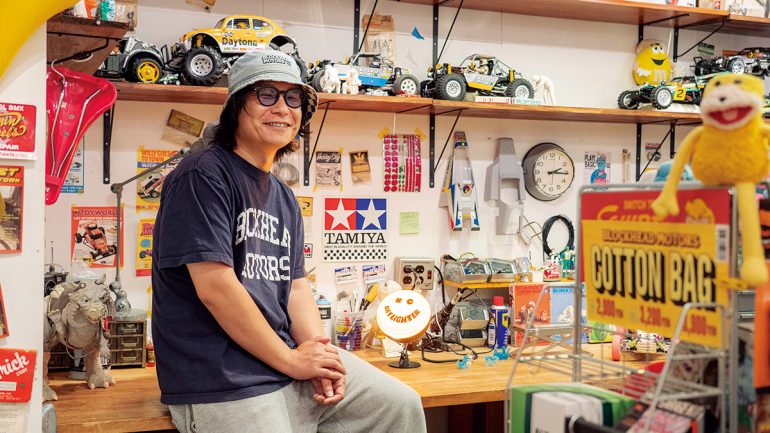
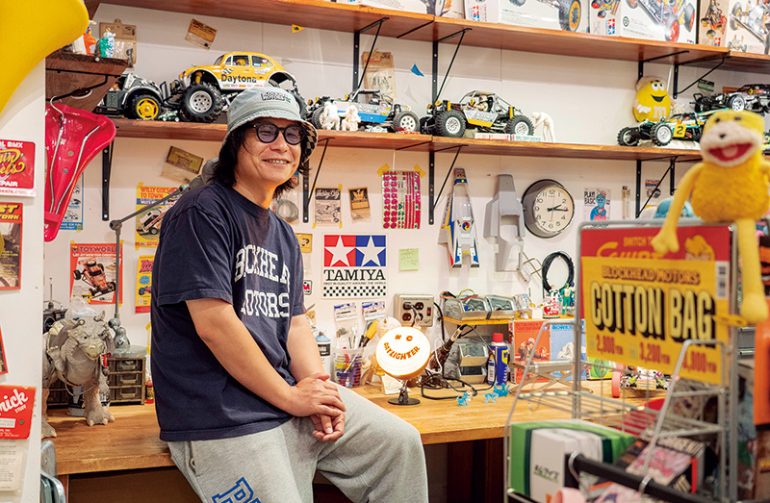
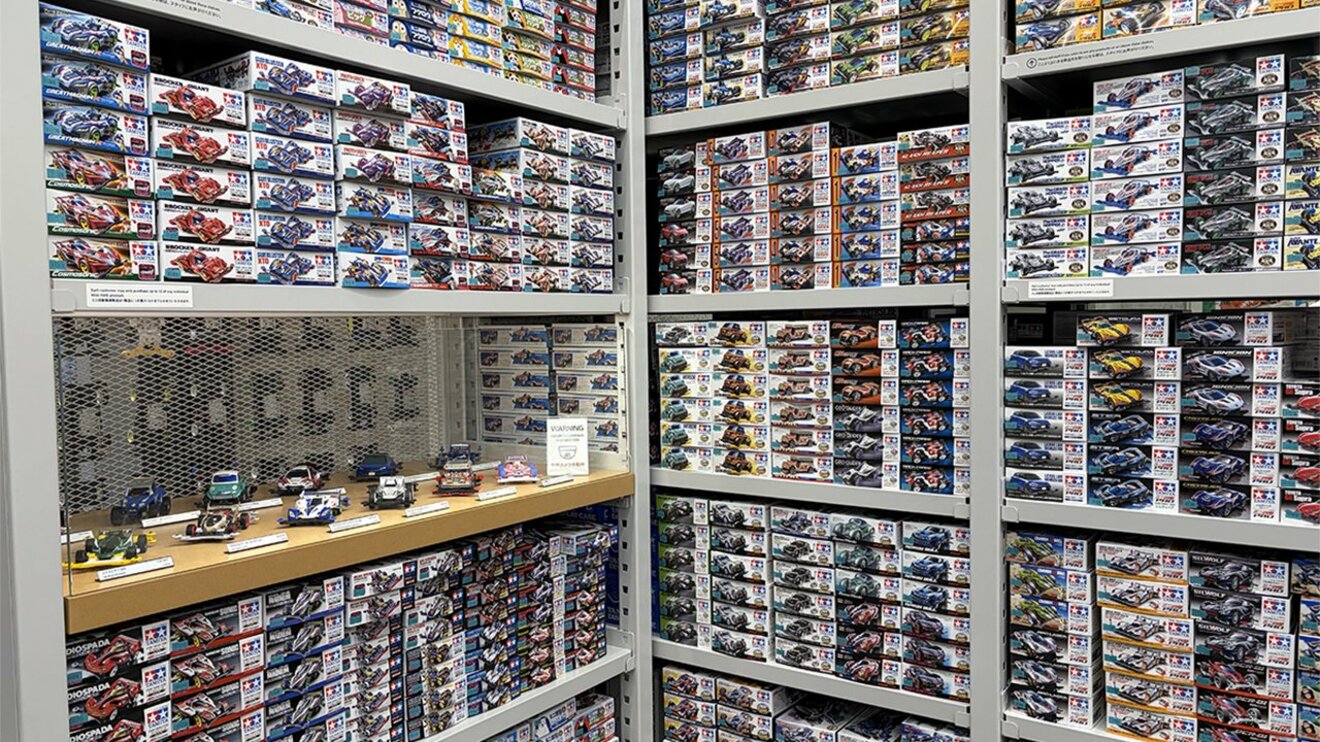
TAMIYA PLAMODEL FACTORY TOKYO is lined with Mini 4WD cars (Photo courtesy of TAMIYA PLAMODEL FACTORY TOKYO / Photography by Editorial Department)

Mini 4WD cars, which once captivated boys across Japan, are now attracting attention again in the Reiwa era.

“TAMIYA’s flagship facility, ‘TAMIYA PLAMODEL FACTORY TOKYO,’ located in Shinbashi, Tokyo, which had its grand opening in 2024, is attracting a large number of people, including office workers on their way home from work,” says a hobby magazine reporter.

Mini 4WDs are, as everyone knows, model cars powered by batteries and motors. Since their creation in 1982, they have sold over 190 million units and are a popular product from their manufacturer, TAMIYA. There are currently more than 200 different types of Mini 4WDs and parts available.

In fact, the Mini 4WD has experienced several booms in popularity over the 44 years since its release.

“The first boom was the ‘Racer Mini 4WD’ that appeared in the late 1980s. TAMIYA’s RC cars, with the ‘Jr.’ designation, became popular, and the manga series based on them, ‘Radio Control Boy’ and ‘Dash! Yonkuro’ (both serialized), became popular and spearheaded the boom. Then, in 1994, the second boom arrived when ‘Bakusou Kyoudai Let’s & Go!!’ began serialization in ‘CoroCoro Comic’. After that, the third boom came in 2012 when the ‘Japan Cup’, a TAMIYA-sanctioned competition to determine the best Mini 4WD in Japan, was revived.” (Ibid.)

And the current boom, which began a few years ago, is said to be the fourth boom. At this point, it feels less like a boom and more like it has taken root as a culture, but why is it gaining popularity again?

To find out the reason, this website interviewed TAMIYA’s headquarters and facilities and spoke with them.

“A major factor in the resurgence of the boom is the entry of the adult generation. The reason these adults started playing with Mini 4WD again was the revival of the Japan Cup.”

This is according to Norihisa Mitsuzono, manager of the Sales Planning Section in TAMIYA’s Sales Department.

The Japan Cup, which was temporarily suspended in 1999, was revived in 2012 to coincide with the 30th anniversary of the release of Mini 4WD, after a 13-year hiatus. In fact, at last year’s Japan Cup, more than 70% of the participants were adults, mainly in their 30s to 50s.

Mr. Mitsuzono recalls the time of the revival as follows:

“The Japan Cup used to be a tournament only for junior high school students and younger, but when it was revived, adults were also allowed to participate. I think that the kids who admired it back then have grown up, and that admiration has suddenly been rekindled.”

The children who grew up during the first and second booms have now grown up and returned. That was the third boom, but the current fourth boom is a combination of that and the tailwinds unique to the Reiwa era.

Kentaro Matsumoto, a staff member at TAMIYA PLAMODEL FACTORY TOKYO in Shinbashi, says this:

“Social media and YouTube have a big influence. Modification examples and how to use parts are being shared on X and in videos, and some people are getting interested again after seeing them. The generation that used to play with Mini 4WDs has had their passion for Mini 4WDs rekindled since the Japan Cup, and they are uploading their machines to social media. Then adults who see these become aware of the current boom and it seems to be inspiring them to start again. On Fridays, we get office workers coming after work, and on Saturdays and Sundays, the room with the track can get full with families.”

The social media activity of the adults who supported the third boom has now influenced many adults who are now parents themselves, and these people have started sharing the fun of Mini 4WD with their own children—this may be what is leading to its current popularity.

■ ‘Hot Shot Jr.’ is still around!

TAMIYA PLAMODEL FACTORY TOKYO is one of the hubs for Mini 4WD enthusiasts. This hobby facility stocks approximately 6,000 items, including Mini 4WD cars and related parts, and even has a track where you can actually race your machines. As a result, it has become a place where people who played with Mini 4WDs in the past can rediscover their passion for the sport.

In fact, when the reporter visited the facility on Friday evening, there were many users there, including men in suits who appeared to be on their way home from work, and families with children.

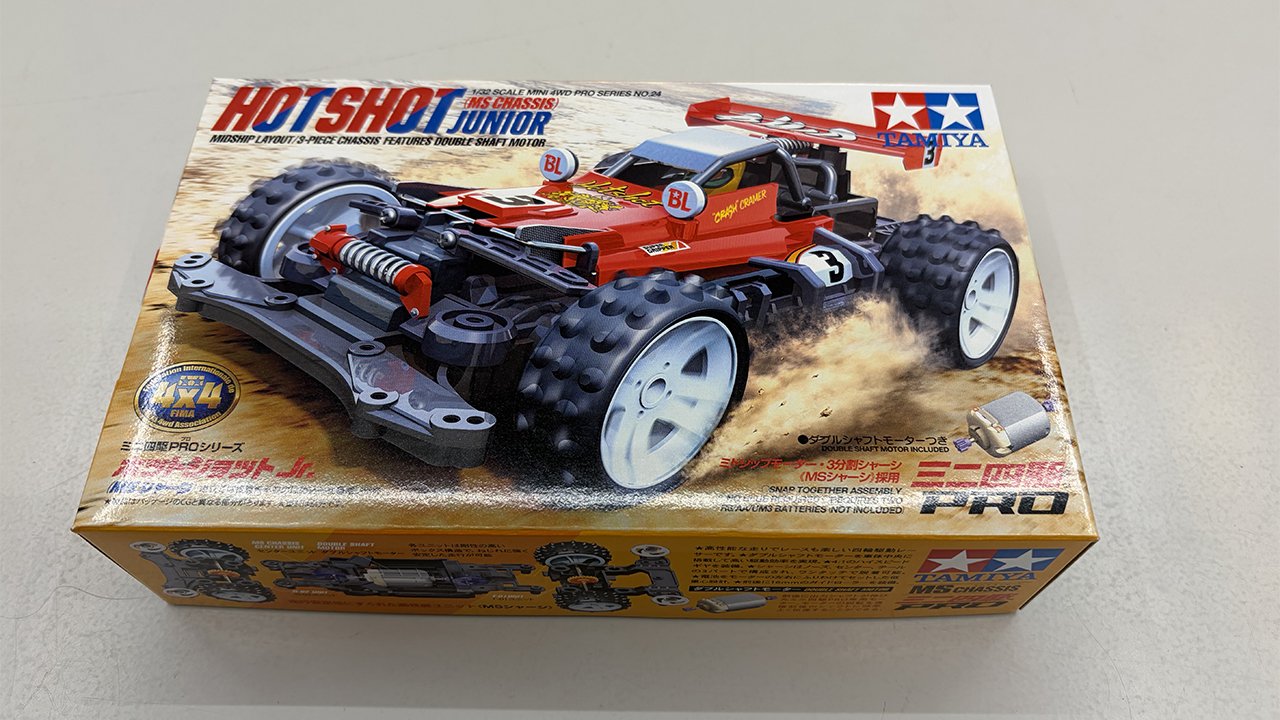
“We often have old fans who just drop by the facility and, upon seeing the Mini 4WD cars lined up, say to the staff, ‘How nostalgic!’ Or, while their children are looking at the latest machines, a father might see the name ‘Hot Shot Jr.,’ which has been around for a long time, and say, ‘They still have that!’ and pick it up. By the way, the design and specifications are different from the Hot Shot Jr. of that time,” (Mr. Matsumoto, quoted above).

Many people also expressed nostalgia.

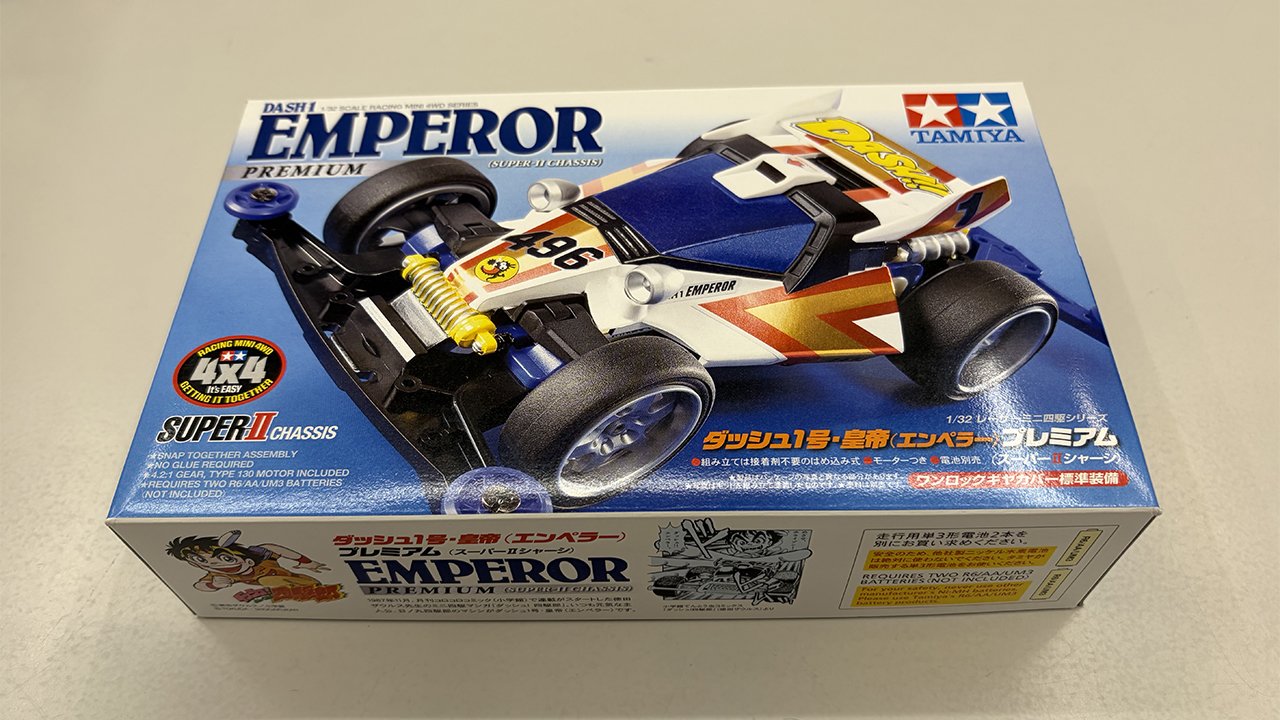
“We often get questions like, ‘Do you have the Emperor (the machine used by Hinomaru Shikuro, the protagonist of “Dash! Yonkuro”)?’ It’s a special machine for those who read CoroCoro Comic back then. Different generations have different Mini 4WD machines that they feel attached to, and the manga they read as children has a big influence on them,” (ibid.).

A machine that parents instinctively reach for can seem like a fresh and exciting creation to a child. Mini 4WD is a hobby that can be enjoyed across generations.

However, today’s Mini 4WD is no longer just a nostalgic past pastime. It has now become a sophisticated hobby that adults can seriously enjoy, requiring knowledge of processing techniques and setting up the cars. Furthermore, the machines themselves have evolved, and the way they are driven and modified has become more profound than ever before.

“The biggest change is the machine’s structure. The chassis (the base of the machine) is different. Previously, rear motors were the norm, but in 2005, the ‘MS chassis’ appeared, which places the motor in the center of the body. The weight is in the center, providing good balance, and now it’s important to consider how to combine not only the rollers, but also the weights and brakes,” (Mr. Mitsuzono, quoted above).

Many users are drawn to the intricacies of these modifications.

In fact, we spoke to a man in his 40s who was adjusting his machine in the section of the facility that has a race track, and who said he was on his way home from work.

“I started playing with Mini 4WD again after my child started reading ‘CoroCoro Comic,’ but before I knew it, I was more hooked than my child. The appeal of it as an adult is that you can spend money and time on it. You can try out parts you couldn’t afford back then, and it’s fun to modify them at home and come up with your own ideas. I spend about 20,000 to 30,000 yen on modifications, but it’s an easy hobby to stick with as an adult.”

Also, another user,

“There’s always someone here. The biggest thing is that it’s a place where you can meet people who share the same hobby. If you build a Mini 4WD properly, it will run properly. If you build it carefully, it will be fast. So, looking at other people’s machines is educational, and it makes me want to improve my own as well.”

Why does Mini 4WD continue to attract people for so long? Mr. Mitsuzono explains its appeal as follows:

“I think the main reason is that there’s no ‘right answer’ no matter how far you go. You build it, run it, think about it again, and improve it. The fun lies in that repetition.”

The past’s games are drawing adults back while simultaneously passing on their appeal to the next generation. And now, the children who were hooked during this fourth boom have grown up, and another boom may be on the horizon… This is how Mini 4WD may continue to be passed down through generations.

■ Nostalgic machines lined up at TAMIYA’s flagship store in Shinbashi

A collection of nostalgic machines lined up at ‘TAMIYA PLAMODEL FACTORY TOKYO’.

‘Hot Shot Jr.’ has now been revived with a completely redesigned format.

“Dash 1 Emperor” from the anime series “Dash! Yonkuro” (ibid.)

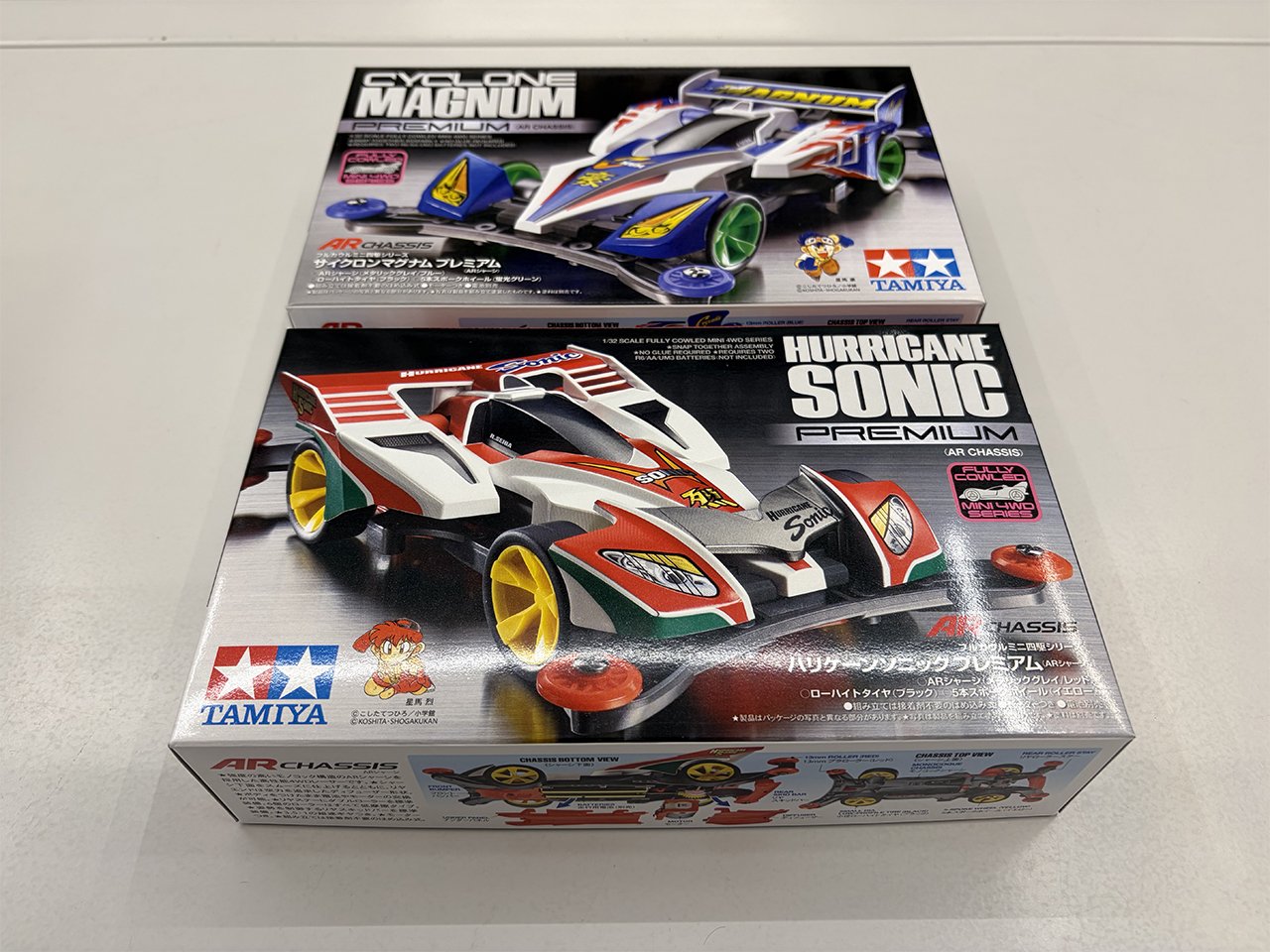
The “Cyclone Magnum” and “Hurricane Sonic” from the anime series “Bakusou Kyoudai Let’s & Go!!” (ibid.)

Source: Pinsba NEWS Editorial Department

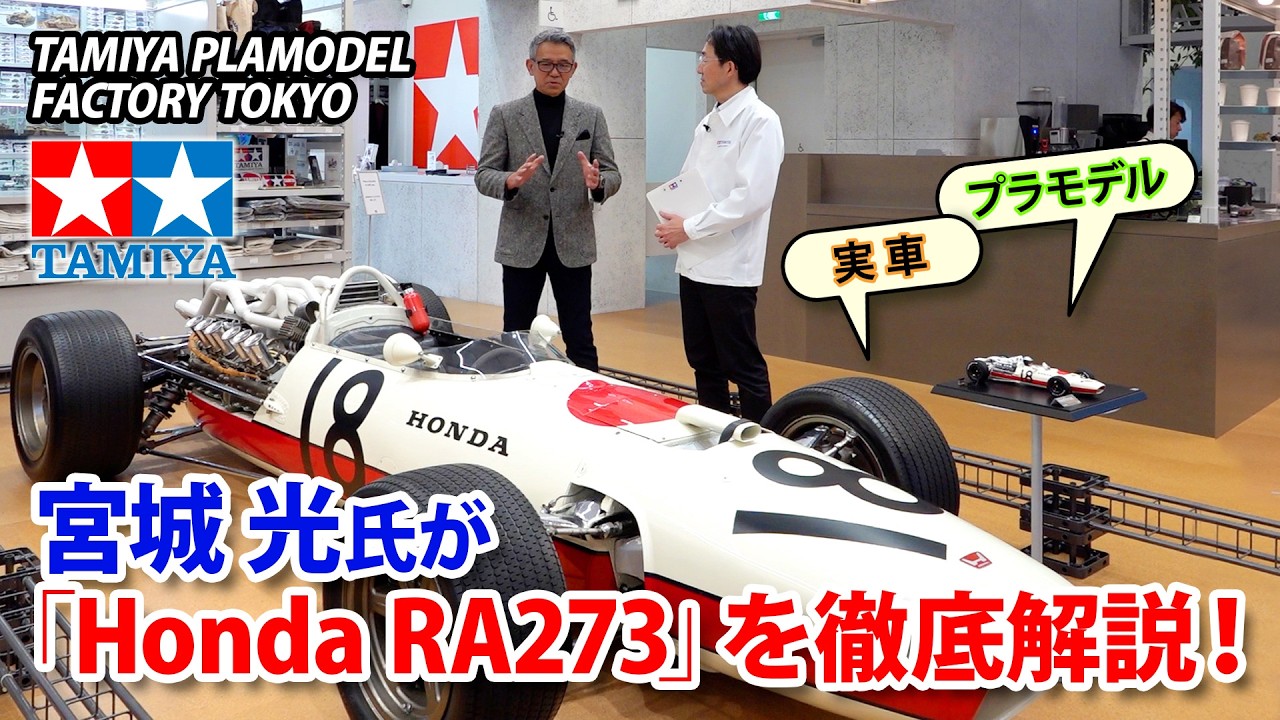
Mitsuru Miyagi gives a thorough explanation of the Honda RA273, the car that challenged the 3-liter F1 class and gave birth to TAMIYA’s masterpiece model


^
In 1966, during its first F1 campaign, Honda introduced the “RA273,” equipped with a 3L V12 engine compliant with the new engine regulations. In 1967, TAMIYA released a 1/12 scale model of this car, which garnered a huge response worldwide due to its precise reproduction. In this video, Hikaru Miyagi, who also serves as a test driver for the Honda Collection Hall, explains the features of the actual car. We explore the appeal of this masterpiece that transcends time and conveys the history of motorsport and model making.

Featuring: Hikaru Miyagi (Motorcycle and Automotive Critic)

Honda RA273 Actual Vehicle Information (Honda Official Website)
https://global.honda/jp/F1/machine/1966_HondaRA273/

TAMIYA 12032 1/12 Honda RA273 (with Etched Parts)
https://www.tamiya.com/japan/products/12032/index.html

Cooperation: Honda Motor Co., Ltd., Honda Mobilityland Corporation Mobility Resort Motegi Filming: TAMIYA PLAMODEL FACTORY TOKYO (This video was filmed in February 2026. The vehicle is no longer on display.)
https://www.tamiya-plamodelfactory.co.jp/

Related Event Information RA273 60th Anniversary TAMIYA and Honda World Exhibition Held at Honda Collection Hall March 14 (Sat) – July 12 (Sun), 2026
https://www.mr-motegi.jp/collection-hall/event/exhibition.html#TAMIYA

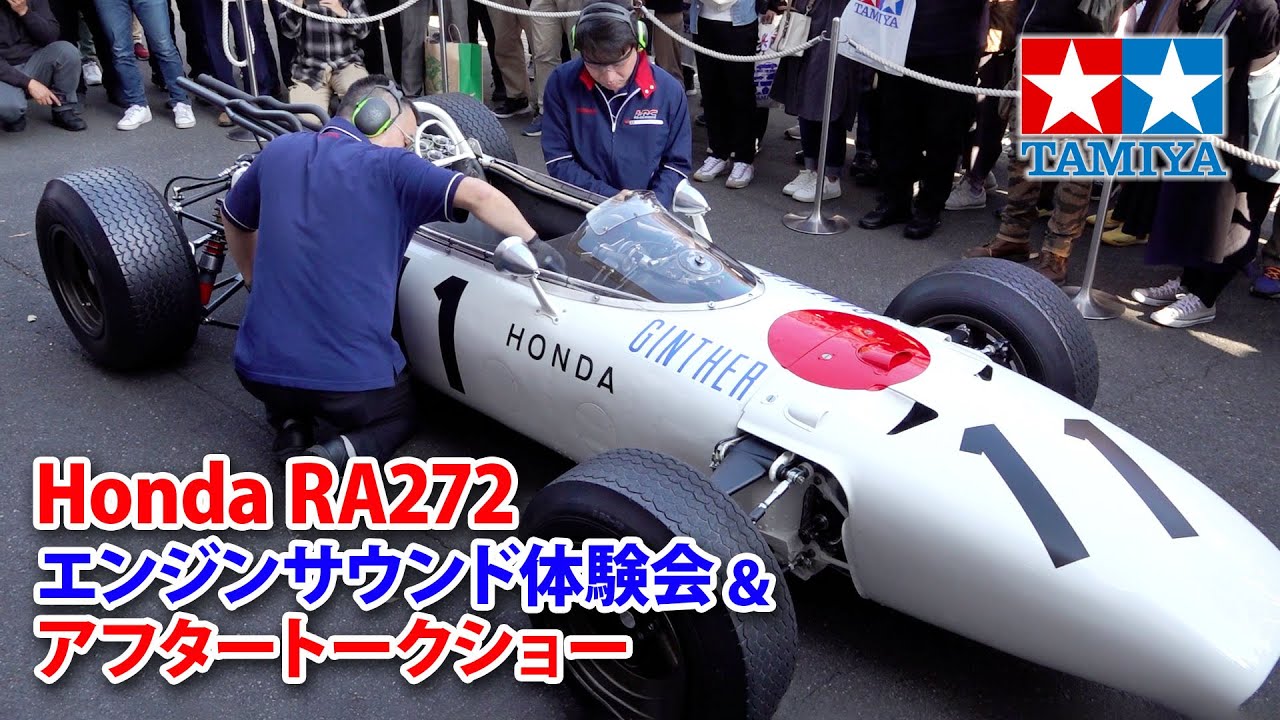
Honda RA272 Engine Sound Experience & After-Talk Show with Mr Miyagi Hikaru at the Tamiya Fair 2025


■ On Sunday, 16th November 2025, an engine start demonstration of the legendary machine, the Honda RA272, was held at the Tamiya Fair 2025 venue. The powerful ‘Honda Music’ produced by the 1.5-litre V12 engine drew enthusiastic applause from attendees.

■ Following the demonstration, a talk show was held featuring Mr Hikaru Miyagi, a former Honda works rider who now serves as a test rider and driver at the Honda Collection Hall. He shared insights and anecdotes based on his experience actually driving the RA272. Please see the footage above.

■ Cooperation
Honda Motor Co., Ltd.
https://www.honda.co.jp/
Honda Mobility Land Co., Ltd. Mobility Resort Motegi
https://www.mr-motegi.jp/

■ Related Information
Hikaru Miyagi Official Website
http://www.hikarun.net/
Honda Collection Hall
https://www.mr-motegi.jp/collection-hall/
Tamiya 1/20 Honda RA272 – 1965 Mexican Grand Prix Winner
https://www.tamiya.com/english/products/20043/index.html
Tamiya 1/12 Honda RA273 (with Etching Parts)
https://www.tamiya.com/english/products/12032/index.html
Tamiya Fair 2025
https://tamiyablog.com/2025/11/tamiya-fair-2025-photo-video-report/

Tamiya History Museum


Tracing Tamiya’s history through models

The Tamiya History Museum showcases Tamiya products, which have evolved with the times since the company’s founding in 1946.
In the summer of 2025, the museum renovated its exhibits from the company’s early days. The museum explores the transition from wood to plastic model materials through restored finished models, wooden models, and Styrofoam models, showcasing products from which only blueprints remained. Products symbolizing the company’s early days are also on display, including Tamiya’s first plastic model, the 1/800 Yamato, and the 1/35 Panther Tank, which laid the foundation for military model development. The museum also features valuable products that have defined the era, including early military miniatures and car models, which continue to this day, radio-controlled cars that sparked a boom upon their release, and Mini 4WD, which spread the appeal of palm-sized, moving models around the world as a racing hobby. Experience Tamiya’s journey as a global model manufacturer through trial and error .
Advance reservations are required to visit the museum. Apply for a reservation here.

Tamiya’s history from its founding to the 1970s

May 1946: Tamiya Shoji Limited Partnership was established in Oshika, Shizuoka City, with the aim of processing and selling general building materials.
April 1948: Recognizing the promising future of wooden models, a woodworking department was established. A manufacturing and sales business for model teaching materials was also established.
June 1953: The general building materials manufacturing and sales department was dissolved. The company began operations as a manufacturer specializing in wooden models.
May 1960: The 1/800 scale Yamato battleship was released as the first all-plastic model assembly kit.
January 1962: The 1/35 scale Panther Tank, the first motorized plastic model tank, was released.
January 1968: Tamiya exhibited for the first time at the Nuremberg International Toy Fair in Germany. The 1/12 scale Honda F-1 exhibited, further enhancing Tamiya’s reputation for precision scale plastic models.
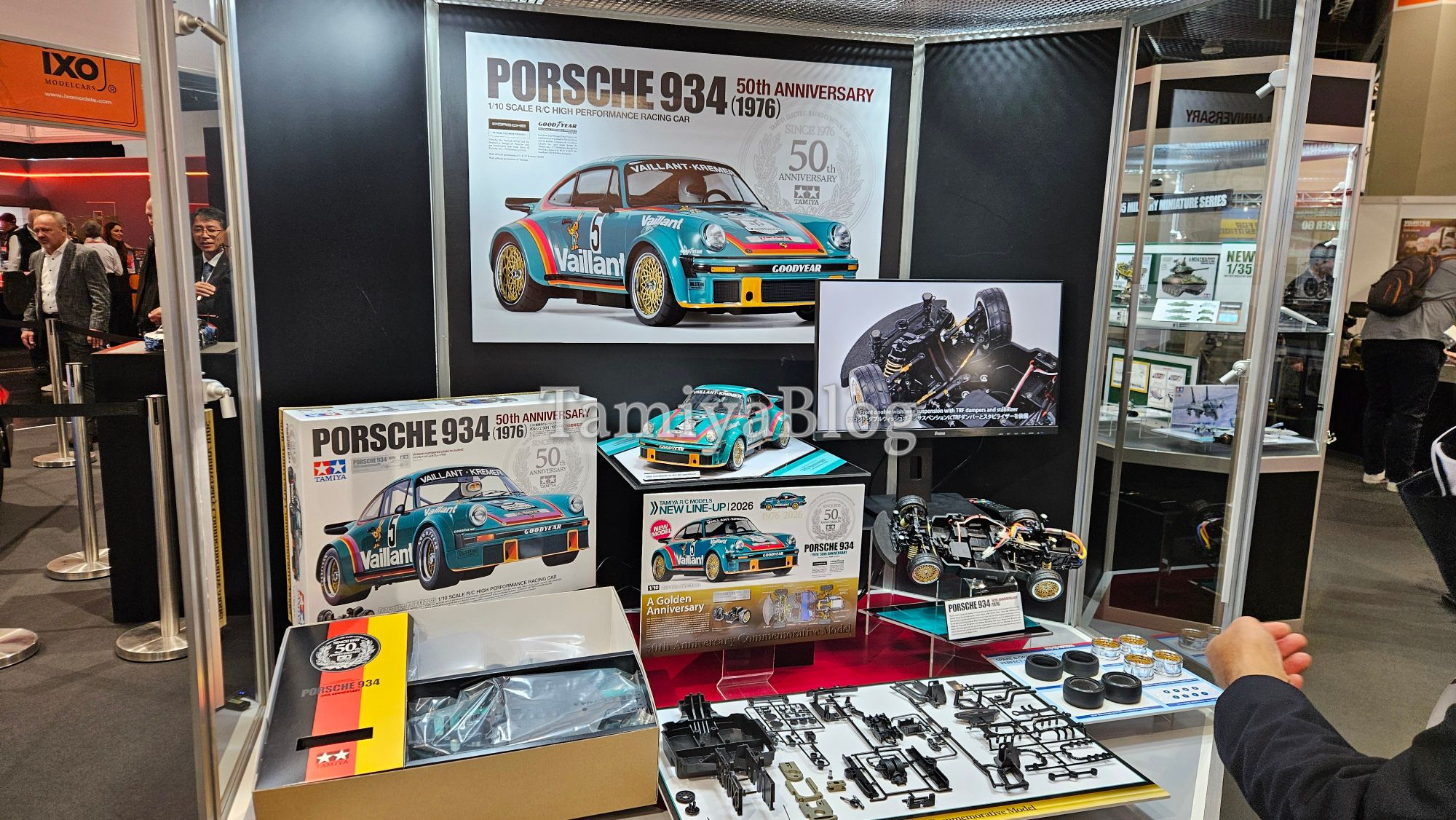
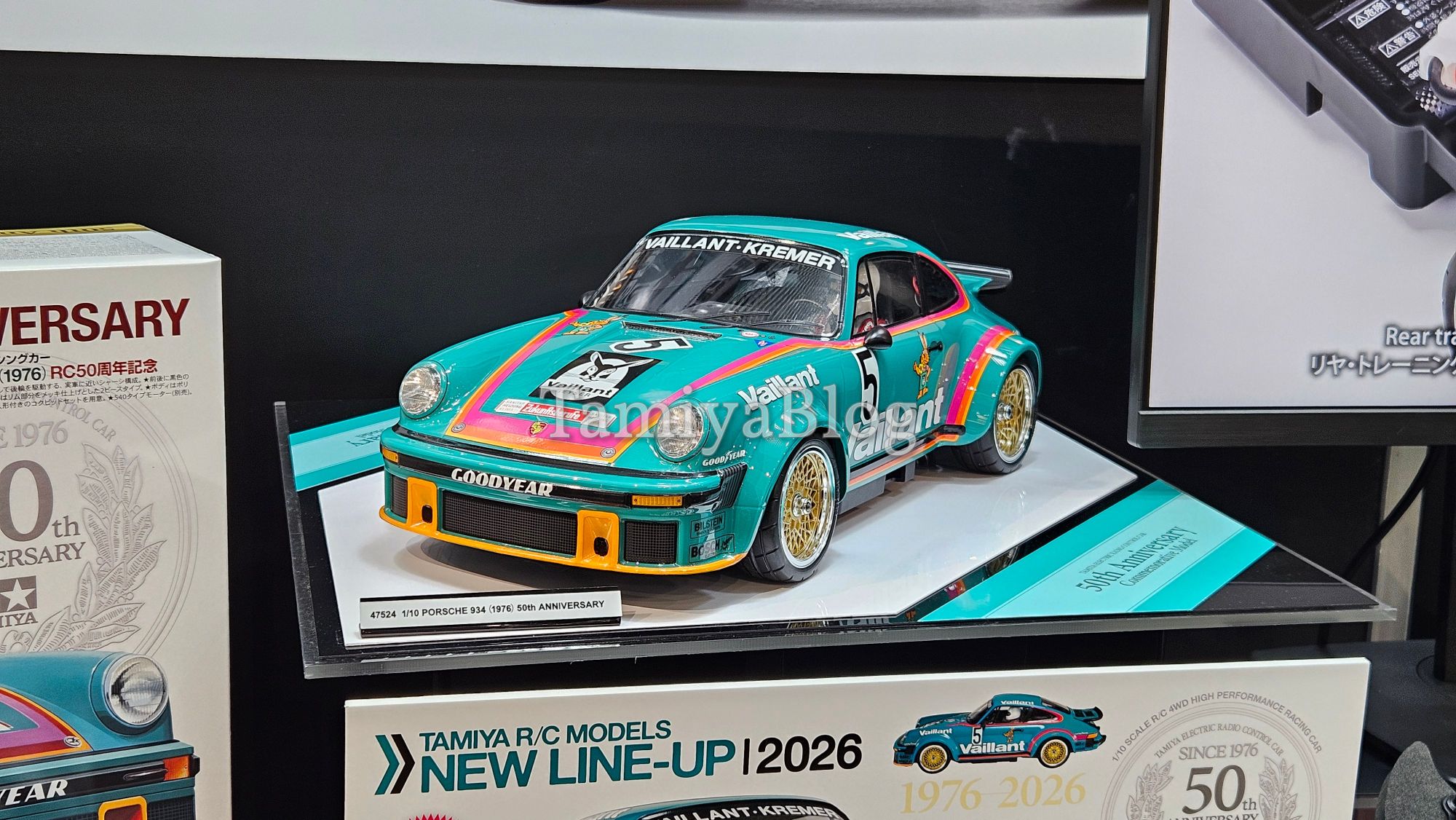
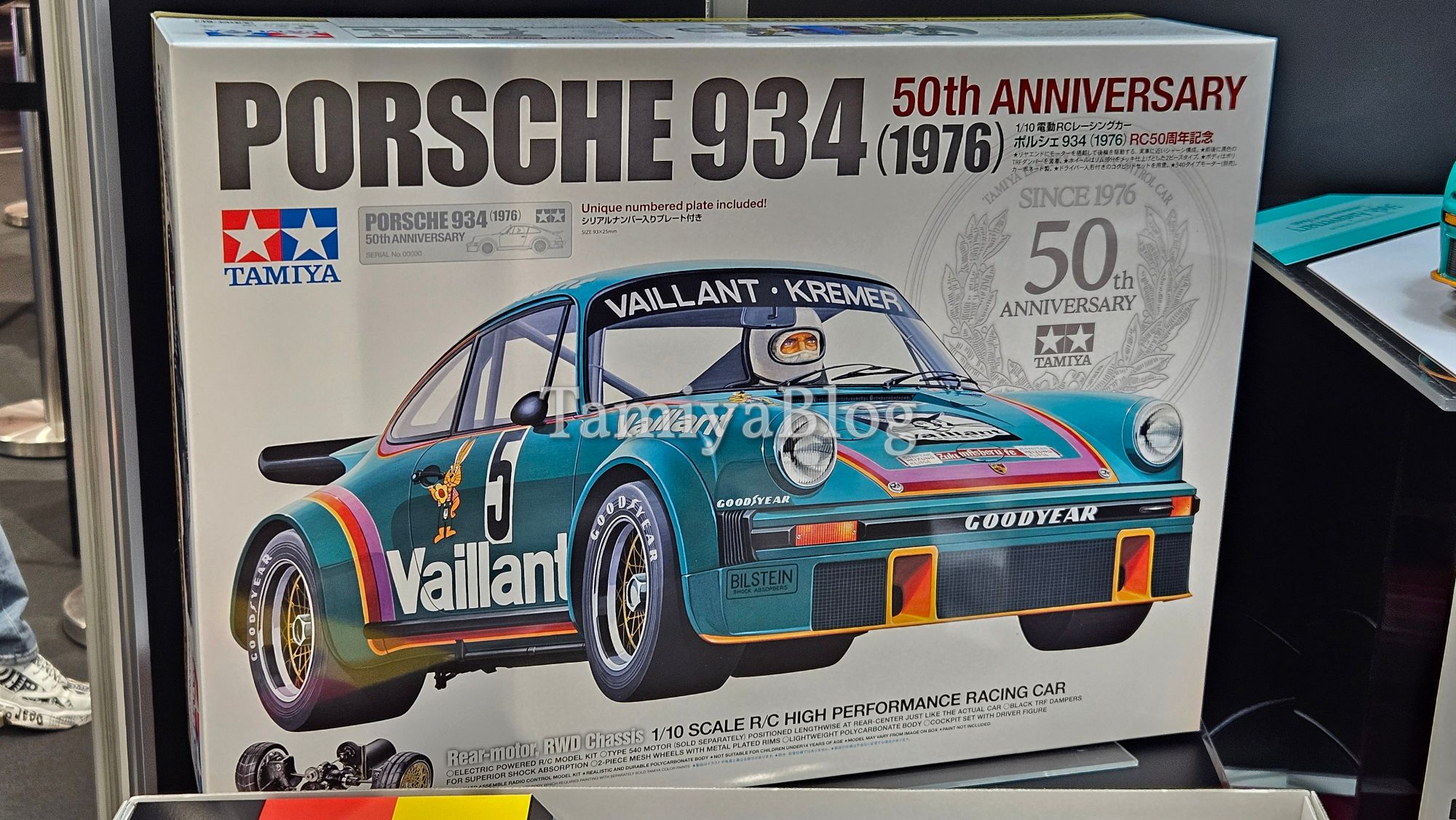
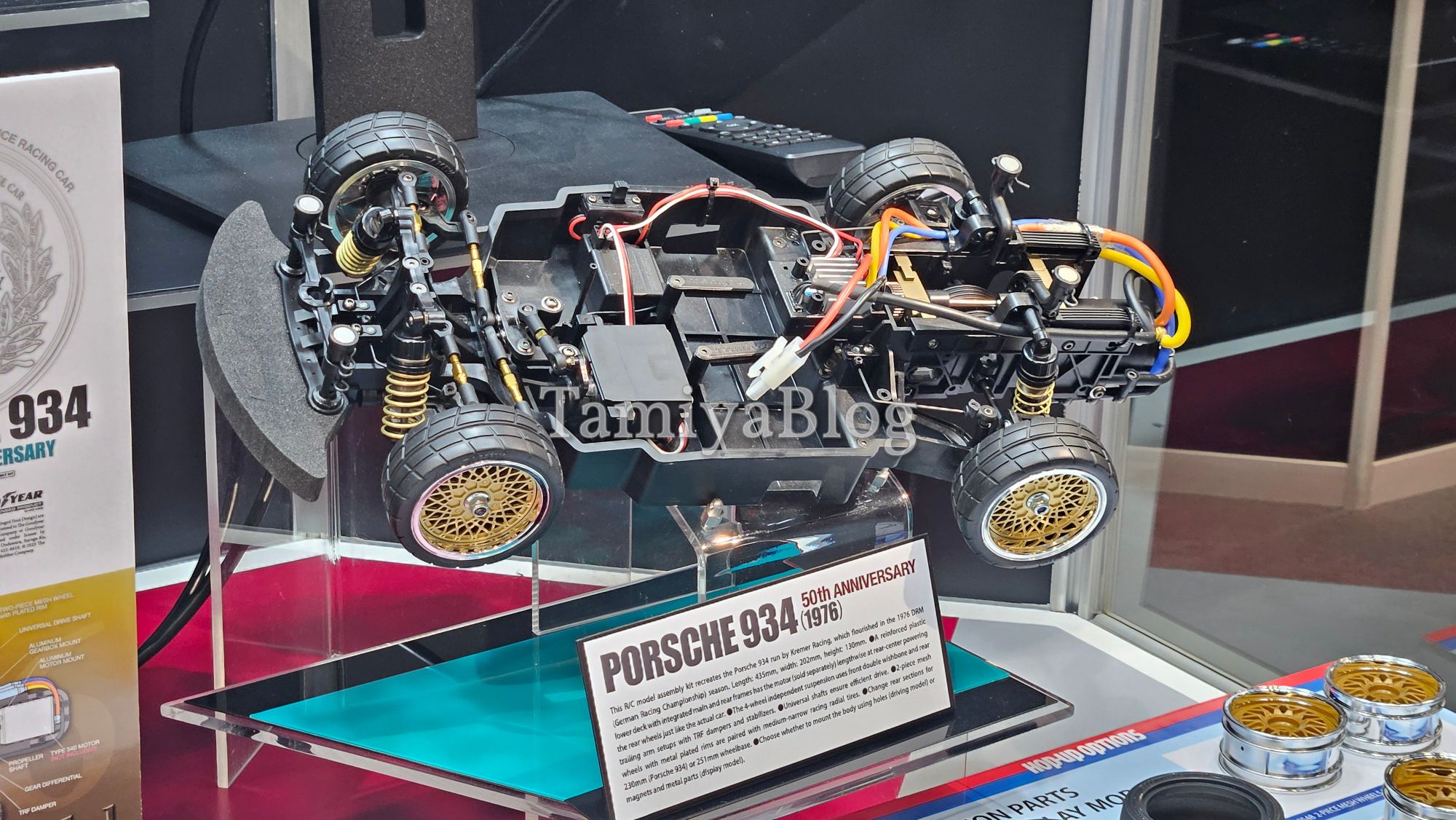
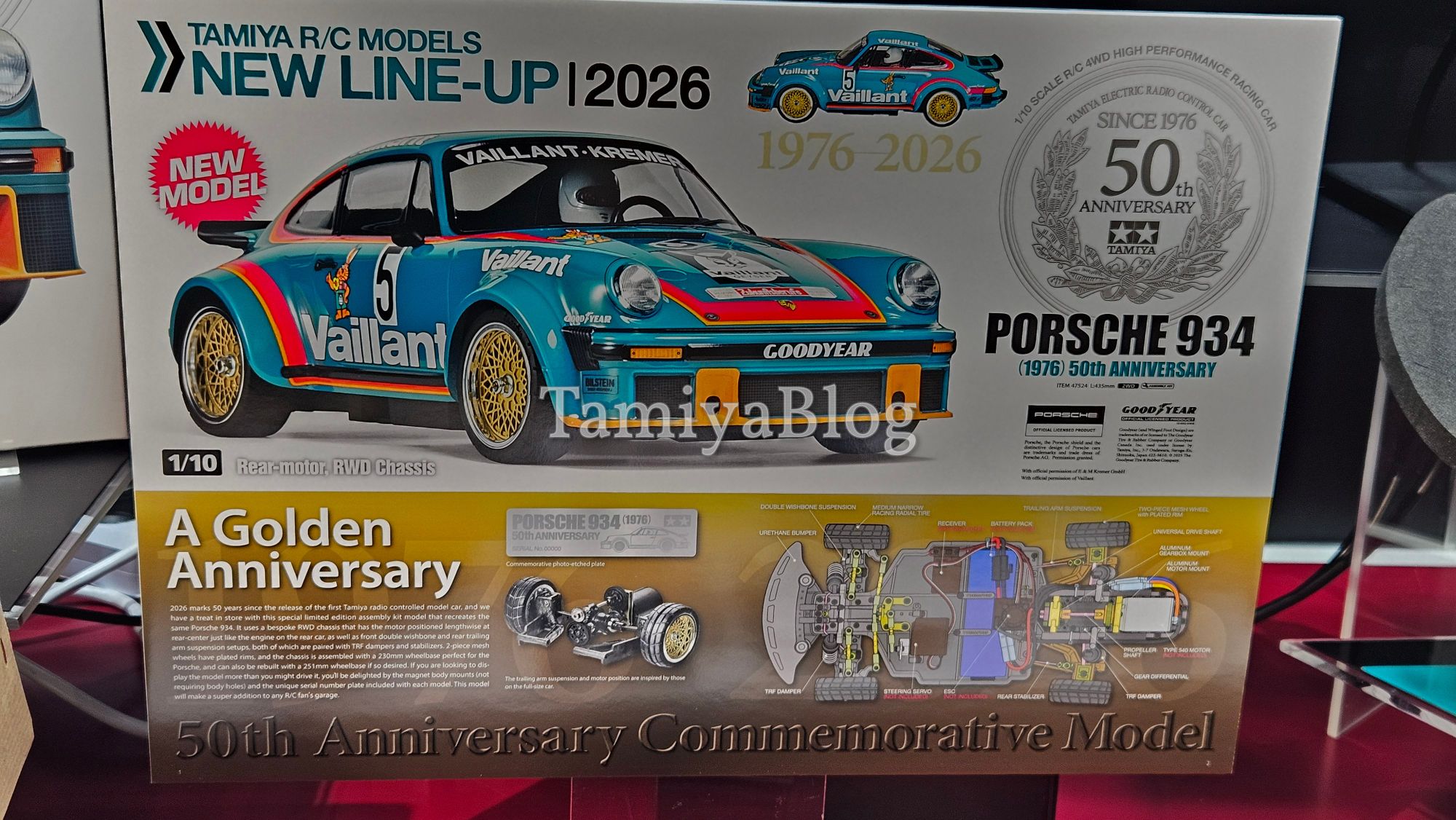
November 1976: The 1/12 scale Porsche 934 Turbo electric radio-controlled car was released.

Company history and background

May 1946 Tamiya Shoji Limited Partnership was established in Oshika, Shizuoka City, for the purpose of processing and selling general building materials.
April 1948 Recognizing the promising future of wooden models, the company established a woodworking department, which also began manufacturing and selling model teaching materials.
June 1953 The general building materials manufacturing and sales division was dissolved and the company started as a specialized manufacturer of wooden models.
May 1960 The first all-plastic model assembly kit, the 1/800 scale Battleship Yamato, was released.
January 1962 The first motorized plastic model tank, the 1/35 Panther Tank, is released.
December 1962 The plastic molding division was spun off and Tamiya Plastic Industry Co., Ltd. was established.
January 1967 The first issue of the model information magazine Tamiya News is published.
January 1968 Tamiya exhibits for the first time at the Nuremberg International Toy Fair (now Spielwarenmesse), one of the world’s largest toy fairs. The 1/12 scale Honda F-1 model enhances Tamiya’s reputation for precision scale plastic models.
August 1969 Tamiya Plastic Industry Co., Ltd. changes its name to Tamiya Model Co., Ltd., and strengthens its mold and molding divisions.
August 1973 Tamiya Shoji Co., Ltd. completed its head office and set factory at 628 Oshika, Shizuoka City, a four-story reinforced concrete building with a total floor area of ​​4,500 m².
November 1976 Founder and Chairman, the late Yoshio Tamiya, is awarded the Order of the Sacred Treasure, Fifth Class.
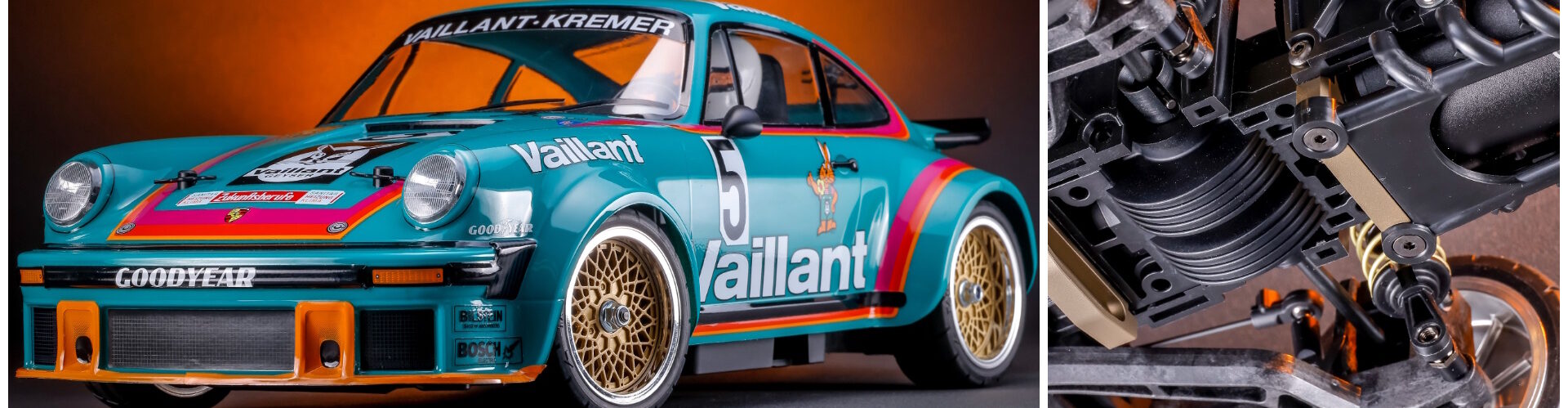
November 1976 1/12 scale electric radio control car Porsche 934 Turbo released.
May 1977 Shunsaku Tamiya is appointed President and Representative Director of Tamiya Model Co., Ltd.
November 1977 A three-story, 5,460m² distribution center is completed on the Tamiya Shoji (affiliated) site.
October 1978 Tamiya Circuit completed on land adjacent to Tamiya Shoji.
October 1978 Tamiya Plastics Co., Ltd. was established with the expansion of the plastic molding division.
May 1980 The first Tamiya Modellers Gallery exhibition, sponsored by Tamiya, was held at Tokyu Hands Shibuya in Tokyo.
December 1980 Tamiya Model Co., Ltd.’s new headquarters (main building) is completed at 3-7 Ondahara, Shizuoka City. It is a six-story building with a total floor area of ​​7,000 m².
July 1982 The Mini 4WD series, which would later become a huge hit, began with the Ford Ranger 4×4.
March 1984 As Tamiya Shoji Co., Ltd. expanded its business, Tamiya Co., Ltd. was established. Shunsaku Tamiya was appointed President and Representative Director.
Tamiya Co., Ltd. took over all of Tamiya Shoji’s operations.
November 1985 Tamiya Plastics Co., Ltd. Ikeda Factory begins operation.
November 1988 Yoshio Tamiya, founder and chairman of the Tamiya Group, passes away at the age of 83.
April 1989 Construction of the second headquarters building (East Wing) was completed on the Tamiya Model Co., Ltd. headquarters premises, with 8 floors above ground and 1 basement floor, totaling 8,500 m².
May 1989   Tamiya America is established in Los Angeles as a local office to expand sales in the United States.
September 1989   Tamiya Europe GMBH is established in Neuss, Germany as a sales base in preparation for the integration of the European Community.
April 1990 Tamiya’s second distribution center is completed at 915 Oshika, Shizuoka City. It is a four-story building with a total floor area of ​​5,317 m².
July 1990   Tamiya Hall opens at the Bovington Tank Museum in the UK.
December 1990 The planning, development, and other operations of Tamiya Model Co., Ltd. are integrated into Tamiya Co., Ltd.
July 1992 Tamiya America’s headquarters building is completed in Aliso Viejo, Orange County, California.
December 1993 Tamiya Hong Kong is established.
September 1994 Tamiya Philippines is established in the Mactan Island Special Export Processing Zone, Cebu, Philippines.
June 1995 Following the wishes of the late Yoshio Tamiya, he established the Tamiya Scholarship Foundation.
December 1995 The Mini 4WD series reaches a cumulative production of 100 million units.
May 1996 The Tamiya R&D Center Kakegawa, a research and development facility, and the Tamiya Kakegawa Circuit, one of the largest in the world with a site area of ​​approximately 7,000m² and a course length of 320m, have opened in Kakegawa City, Shizuoka Prefecture.
December 1996 Tamiya Europe GMBH moves to Fürth, Germany.
April 1997 A scholarship program has been launched in the Philippines for students enrolled at both the University of San Carlos and the University of the Philippines.
November 2000 The first Tamiya Fair was held at Twin Messe Shizuoka South Hall.
March 2005 Received the 1st Design Excellent Company Award from the Japan Industrial Design Promotion Organization.
June 2006 Tamiya Tokyo office opens in Chiyoda-ku, Tokyo.
June 2007 Tamiya America moves from Aliso Viejo, California to Irvine, California.
June 2008 Senior Managing Director Masayuki Tamiya is appointed President and Representative Director of Tamiya Co., Ltd. President Shunsaku Tamiya becomes Chairman and Representative Director.
September 2008   The official Tamiya Plastic Model Factory Shimbashi store opens in Shimbashi, Tokyo.
Tamiya’s Tokyo office is relocated to the same location.
October 2008 An off-road course for RC cars and a full-scale rock crawling field were constructed within the Tamiya Kakegawa Circuit.
April 2012 Tamiya Scholarship Foundation transitions from a foundation to a public interest incorporated foundation.
April 2015 The “1/1 Mini 4WD Real Car Project” begins. The “1/1 Mini 4WD Aero Avante” will be unveiled for the first time in October.
June 2016 Tamiya Kakegawa Circuit reopens as an all-weather circuit.
June 2016   In response to the Kumamoto earthquake, we sold “Ganbare! Kumamoto Mini 4WD (Kumamon Edition)” and donated all profits to Kumamoto Prefecture.
February 2017 The 68th Spielwarenmesse, the world’s largest toy fair, was held in Germany. Tamiya celebrated its 50th anniversary of exhibiting at the fair.
May 2017   President and CEO Masayuki Tamiya passes away (aged 59).
June 2017   Shunsaku Tamiya, Chairman and Representative Director of Tamiya Co., Ltd., will also serve as President.
July 2018 The 1/35 scale military miniature series celebrates its 50th anniversary. The lineup includes 360 models.
October 2023 Tamiya Philippines begins operations at new factory in CLIP (Cebu Light Industrial Park) on Mactan Island, Cebu
May 2024 TAMIYA PLAMODEL FACTORY TOKYO opens in Shinbashi, Tokyo as a new flagship location.
July 2024   Senior Managing Director Nobuo Tamiya is appointed President and Representative Director of Tamiya Co., Ltd. Chairman and President Shunsaku Tamiya becomes Chairman and Representative Director.
*In April 2005, Shizuoka City changed its address notation when it became a designated city.


In Memoriam: Mr. Masao Tamiya who defined the Tamiya style


For model enthusiasts and design aficionados, the name Masao Tamiya has long been deeply etched in their hearts as the “behind-the-scenes force” behind the beauty of the Tamiya brand. As the younger brother of Chairman Shunsaku, Tamiya oversaw Tamiya’s design for over 30 years and created the iconic Twin Star logo that symbolizes the brand. His passion and craftsmanship exude an unwavering commitment to beauty and unwavering trust.

The Man Behind Packaging That “Conveys” Design
In 1981, the exhibition “Designer and Company Series 20: Masao Tamiya and TAMIYA: Tamiya Model Packaging Design” was held at Design Gallery 1953, showcasing the internationally acclaimed packaging designs he had created over more than 20 years. Tamiya’s white box (the so-called “white package”) was not merely packaging, but a “window” that spoke of its contents and heightened the anticipation of opening it. Above all, the precise and thoughtful design resonated deeply with fans.

Design as Art − The World of “Paper and Color”
After leaving Tamiya in 1998, Tamiya shifted his creative focus to graphic art. In 2005, an exhibition of three-dimensional artworks created by hand using paper was held. Utilizing the unique texture of paper and the warmth of handcrafted work, the pieces featured vibrant flat surfaces and depth reminiscent of paintings. Visitors were likely moved by the subtle variations in coloring and cutting, realizing that this was not merely a print but a living, breathing work of art.

Tamiya World Championship 1996

Our reader Søren Boy Holst who won the Tamiya World Championship 1996 and still races since 35 years without a break RC cars kindly provided us some insights, photos and video of it for which we are very thankful:

Attached is a podium photo from the Tamiya World Championship 1996 held at Kakegawa Circuit, where Søren Boy Holst from Denmark won the FWD class and became Tamiya World Champion. In the same season, he also won the Tamiya European Championship in Switzerland (where a young Marc Rheinard also participated in the FWD class) – making it a double victory year for him in the Front Wheel Drive category.

In the photo, Søren is seen at the top of the podium holding his trophy and his Tamiya FWD race car. The race marked the early use of the now-famous Kakegawa Circuit, which had only just opened that year.

Also present at the same event was Scotty Ernst (USA), now a legendary RC race announcer and founder of the ETS series, who competed in the 4WD Touring Car class. The US FWD Champion Fred Medel also took part in the FWD category.

If you have other photos, link to the TV article, or any other relevant informations from that race, please send it to me. – I had a fantastic time in Japan, and I plan to come back soon, this time with my family.