Why are only TV Asahi’s models so realistic? Former announcer Yasumasa Matsui talks about his love for plastic models and Tamiya’s teachings: “I sincerely continued doing what I loved.”
Text and interviews by Daisuke Furushima
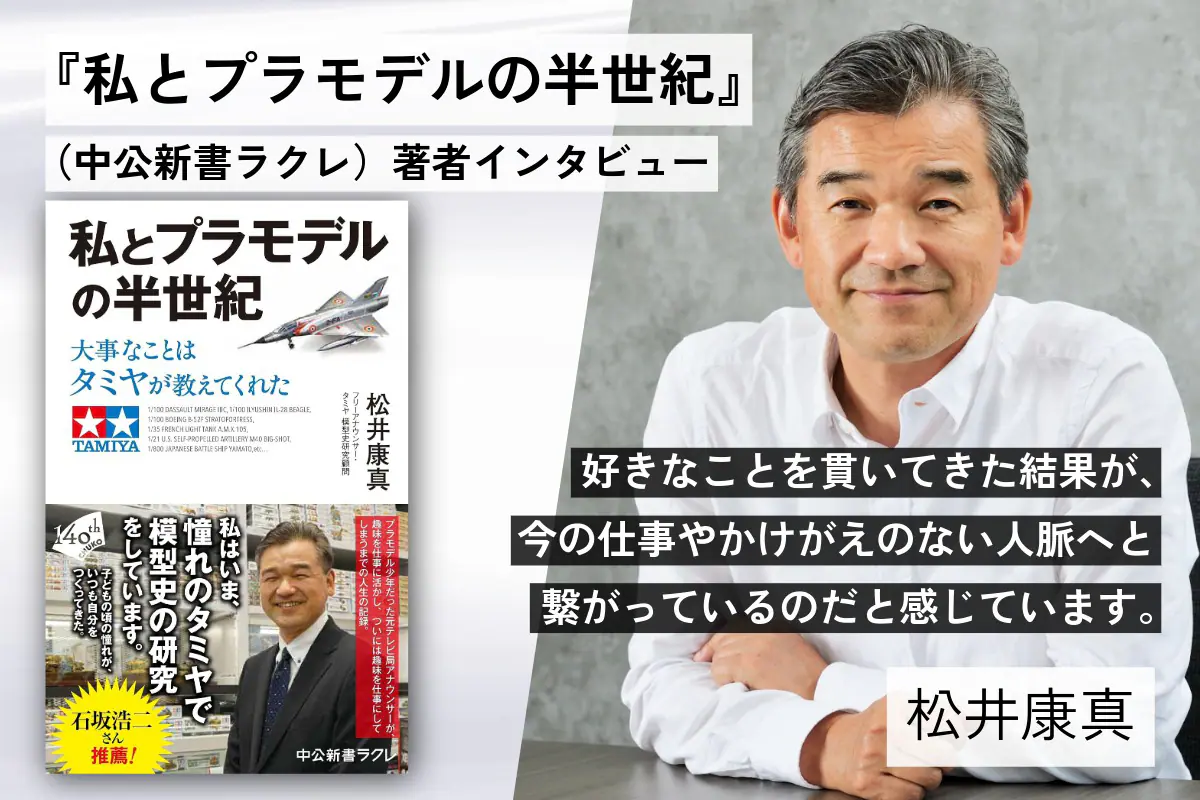
Almost everyone probably has at least one hobby they were so engrossed in as a child that they lost track of time. For my generation, that would include things like Mini 4WD cars, Hyper Yo-Yos, Tamagotchis, and the original Game Boy.
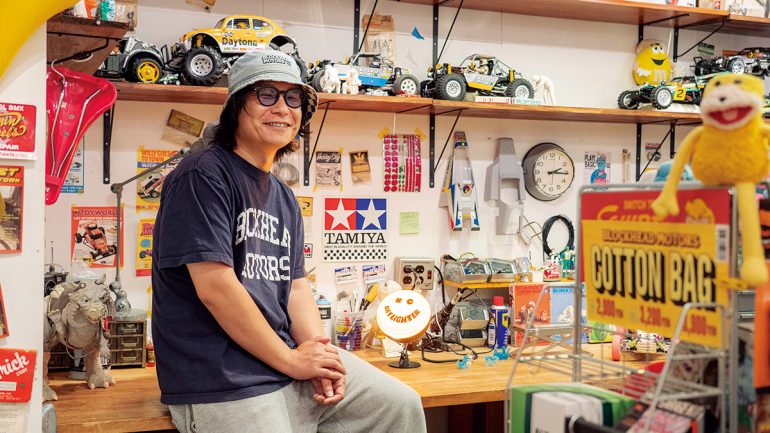
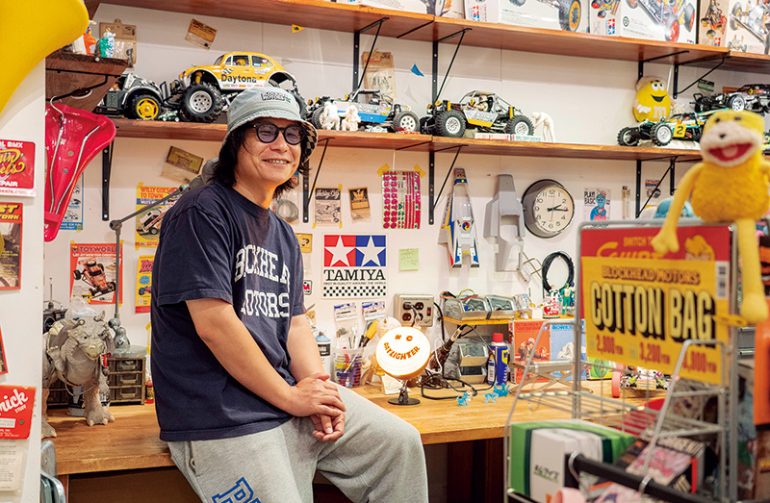
There is one person who pursued that childhood passion into adulthood, and used it to great effect in his life. That person is Yasumasa Matsui, who, while working as an announcer for TV Asahi, pursued his passion for collecting plastic models to the fullest extent, and eventually became a “Model History Research Advisor” at his dream company, Tamiya.
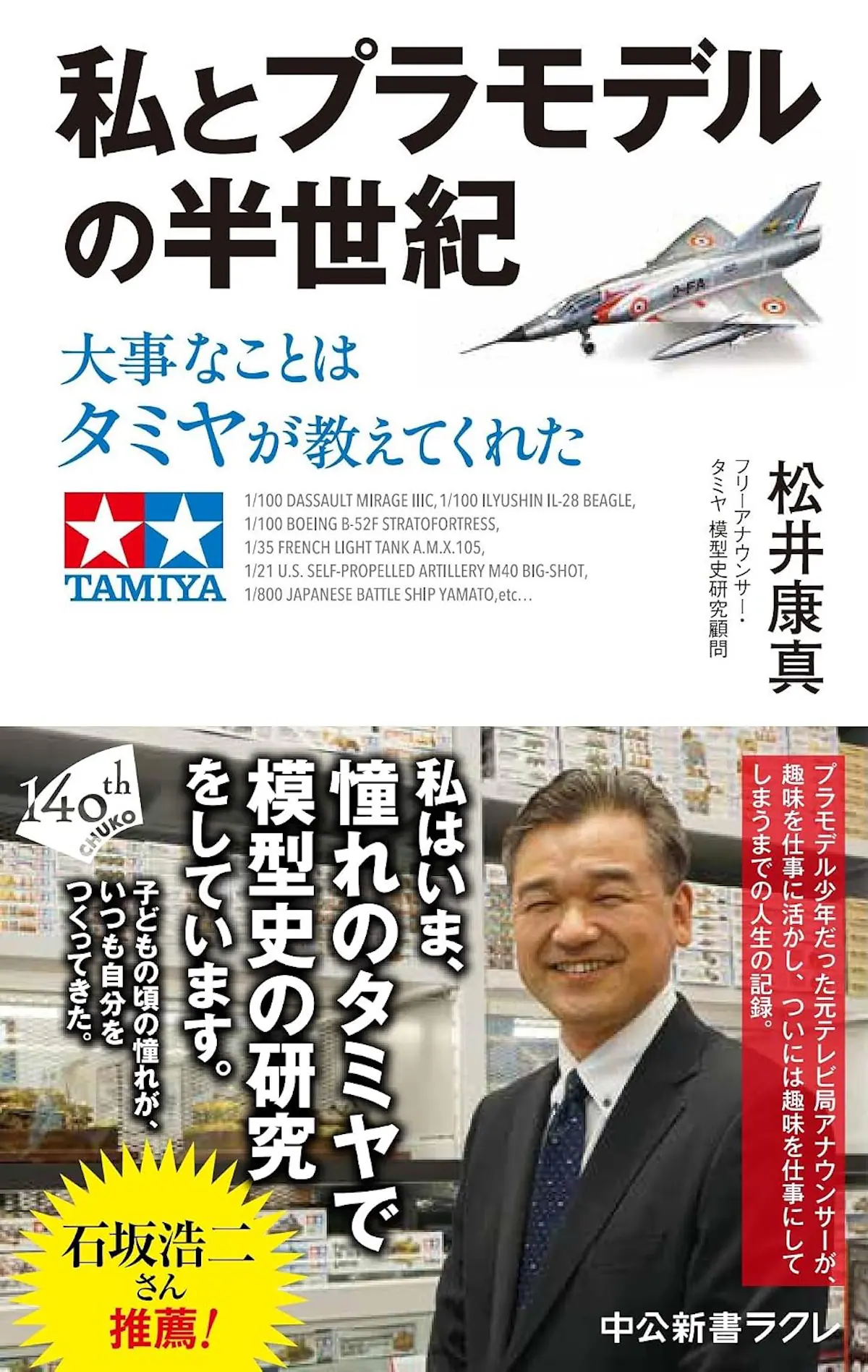
Having published “Half a Century with Plastic Models: What Tamiya Taught Me” (Chuko Shinsho Raclé), Matsui embodies a lifestyle of “turning hobbies into work.” We spoke with her about the origins of her fascination with plastic models, how she came to aspire to become an announcer, and the influence Tamiya has had on her life.
The “information gap” in towns without model shops deepened my passion for plastic model kits.
–Among all the different kinds of “hobbies” and “activities” out there, could you tell us why you became “hooked” on plastic model kits, Ms. Matsui?
Yasumasa Matsui (hereinafter, Matsui): I am currently 63 years old, and for those of us who spent our childhood in the early to mid-1960s, plastic model kits were truly the quintessential form of play. I think many people of that generation will be able to relate to that.
Then and now, baseball and soccer are the main forms of outdoor play for children. However, when it comes to cultural activities, just as smartphone games were commonplace for today’s younger generation and the Famicom (Nintendo Entertainment System) was commonplace for those in their 40s and 50s, for our generation, plastic model kits were naturally integrated into our lives.
Meanwhile, I was born and raised in a small town in Toyama Prefecture with a population of only about 10,000. From Tokyo’s perspective, it was certainly quite rural, even within the prefecture. At the time, only two commercial television channels were available, creating a significant “information gap” as we would call it today, but back then, I thought that was just a normal part of everyday life.
In my town, there were no toy stores at all, let alone specialty model kit shops, but model kits were commonly sold in stationery stores, bookstores, watch shops, and candy stores.
However, unlike in the city, there were hardly any opportunities to access a wide variety of products, catalogs, and new product information at model shops or department stores. Therefore, I would often buy whatever I happened to find on the shelves without even knowing what series existed.
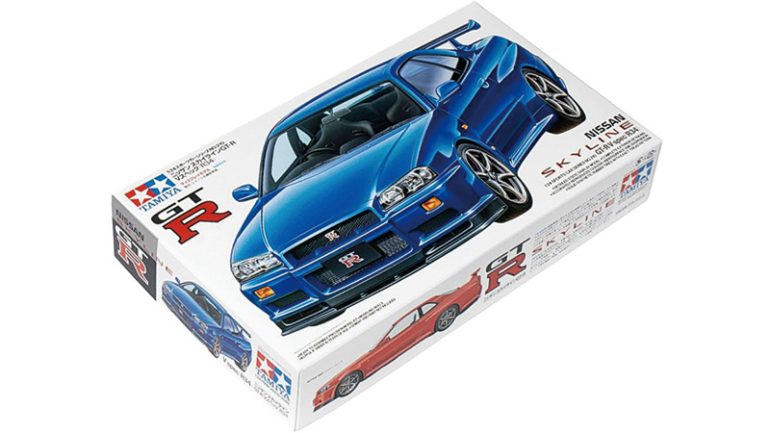
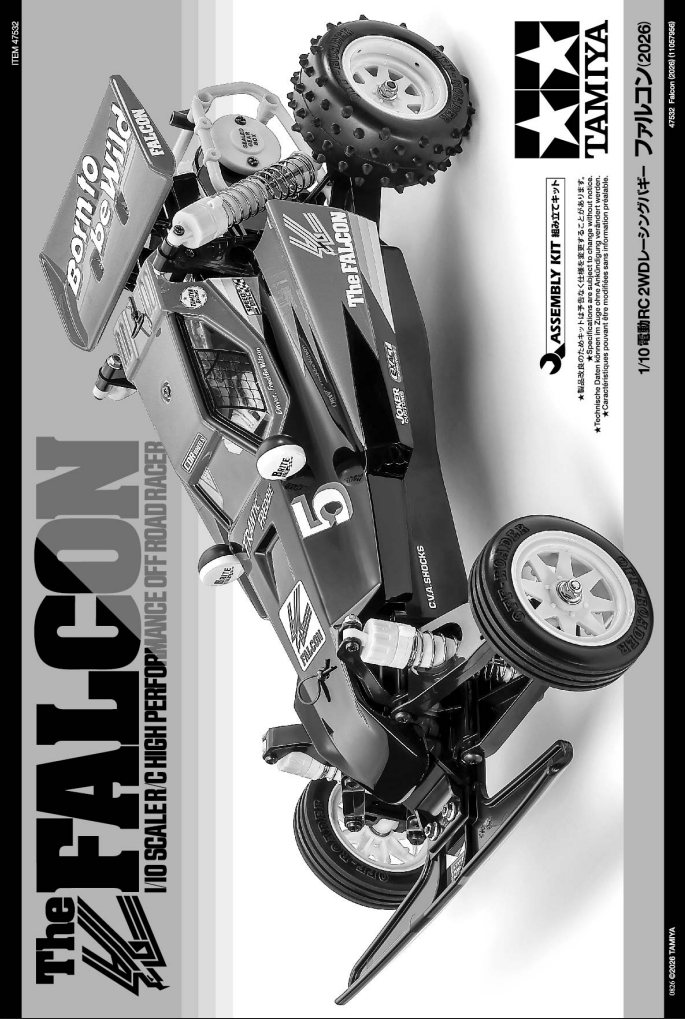
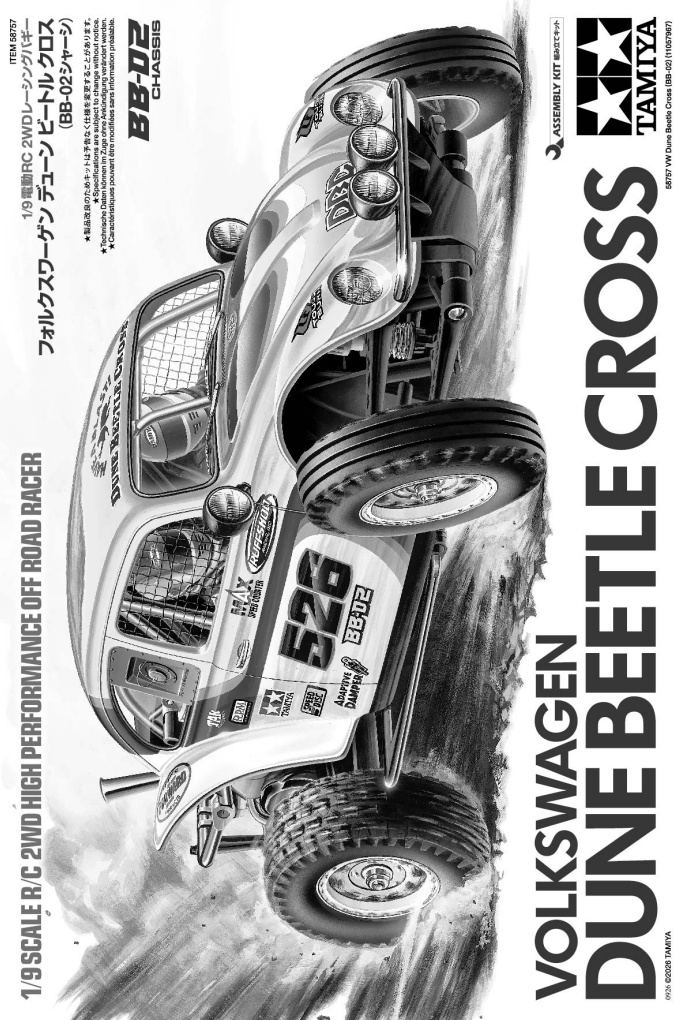
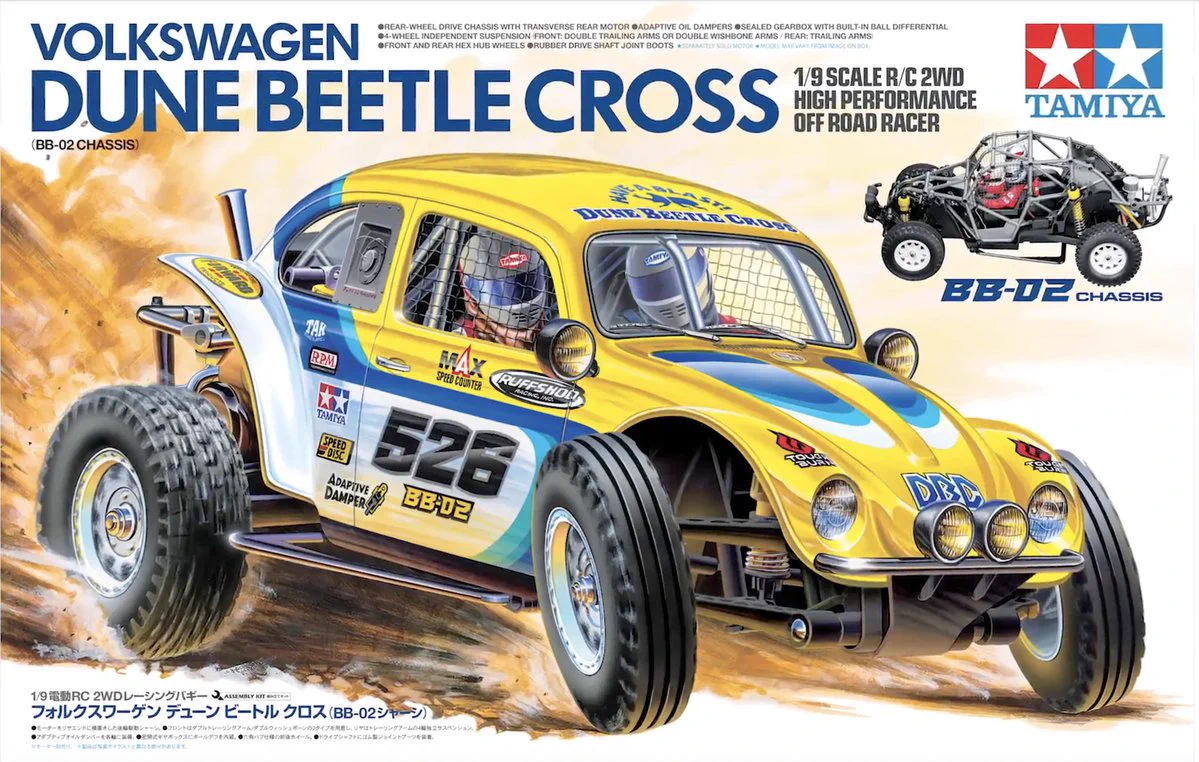
The first model kit I ever got was from Tamiya’s Mini Jet series, but back then I didn’t know anything about the series as a whole, nor did I understand what the numbers meant. Even so, I really enjoyed using the instructions and numbers on the side of the box to gradually write down numbers 1, 2, and so on in my notebook with a pencil.
Because I never knew what I would find, the process of discovering each new kit felt like a treasure hunt. My greatest dream as a boy was to one day collect all of Tamiya’s mini jet aircraft series, and I think that became the driving force behind my collecting of plastic models.
The first letter I ever wrote was addressed to Tamiya.
—When you sent a letter to Tamiya when you were in elementary school, you received a polite reply and response, without being treated like a child, is that right?
Matsui: One day, I found a defective part in a plastic model kit I had bought, where the resin hadn’t flowed completely. Normally, I would have given up, but I thought, “It’s not my fault,” and decided to send a letter to Tamiya. At the time, aside from New Year’s cards that my parents urged me to write, I think that was the first time in my life I had written a letter to someone of my own volition to convey my feelings.
I wrote a clumsy but earnest letter explaining, “I’m a fourth-grader from Toyama Prefecture,” “I always build Tamiya plastic models,” and “This is the only part that was like this.” To avoid being mistaken for lying, I enclosed the defective part and sent it along with the letter.
After mailing it, I made it a point to check the mailbox every day as soon as I got home from school. Then, about a week to ten days later, a brown envelope arrived from Tamiya. Not only did it contain the correct parts, but I was also very impressed that it was written in proper adult language, not childish language.
Moreover, the document was printed using a method called “blueprinting” at the time. Unlike modern photocopies, it was an old-fashioned copying method that printed in blue ink. My sister said, “Oh, it’s just a copy,” but they didn’t treat me like a child; they treated me as a valued customer. I was deeply moved by their sincere attitude, and that incident deepened my affection for Tamiya even more.
By the way, I still cherish the brown envelope that Tamiya sent me when I was in elementary school, and I’ve actually kept all the other envelopes I’ve received as well (laughs).
“If I’m going to do it, it has to be now.” The determination of a science major who seriously aims to become a news announcer.
— What were your feelings when you decided to repeat a year of school and attend a school specializing in becoming an announcer, in order to pursue a dream you had almost given up on?
Matsui: I’ve always dreamed of becoming an announcer since I was in elementary school, and I even served as the head of the broadcasting committee in junior high school, so I’ve always loved “talking.” However, I was well aware that becoming an announcer is extremely difficult, and considering the small number of positions available, I understood that it was even harder than becoming a professional baseball player.
As the youngest son, I intended to work locally in order to take over the family business in the future. I also considered going to a science-focused university, joining a research lab, and aiming for a job at a major corporation.
However, towards the end of my third year of university, when I started thinking about my future career path and wondering, “What kind of work do I really want to do in Toyama?”, I remembered the option of becoming a news announcer. There is a broadcasting station in Toyama called Kitanippon Broadcasting, and I thought that if I could become an announcer there, I could work in Toyama and pursue my dream. On the other hand, I also quickly realized that “I would never pass the exam if I just took it the normal way.”
Furthermore, as a science student, I had a strong inferiority complex towards humanities students. Looking back now, it was just a misconception, but naturally, I had to learn the standard Japanese accent from scratch.
If things continued as they were, it would just end up being a “practice exam.” This sense of crisis led me to decide to “prepare to win.” Knowing my parents would object, I didn’t consult them, and instead deliberately chose to “plan to repeat a year” at university. With the resolve that “if I’m going to do it, it has to be now,” I made a major shift in my career path.
Amidst all of this, in order to raise myself to a level where I could compete with those in the humanities, I gathered information through word of mouth and learned about the existence of “announcing schools.” I immediately started by calling to inquire about the application period and tuition fees.
I was told that school classes were only one hour and a half a week and would be over in three months, but from the very first class, the teacher said to me, “Do you really think you can pass the announcer exam just by attending classes?” That’s when I started to take my independent practice seriously.
—If you have any anecdotes from your independent practice sessions, please share them with us.
Matsui: I had to repeat a year of university, and I had burned my bridges to take the announcer exam, so I was determined to do everything I could. As part of that, I practiced describing scenes while on a train, something my teacher had taught me. Looking back now, it’s embarrassing, but I was also a bit self-absorbed and thought that doing this much was only natural.
One day, on the subway, I came across a scene where a woman about my age was loudly reciting lines from a play, fully immersed in her role, while two men who appeared to be her seniors watched from a distance. It was probably a practice session for a newcomer in a theater troupe to build up their confidence. Seeing that, I remember feeling encouraged, realizing that I wasn’t the only one doing this kind of practice.
Later, when I took the recording of my commentary that I had made on the train to my teacher to let him listen to it, he said, “You’re the first person who’s actually done this,” which surprised me.
I later learned that even years later, the teacher would introduce the student to others, saying, “There was a student who recorded live commentary on a train in the past. That student is now Matsui, who appears on TV Asahi’s ‘News Station’.”
He wasn’t a modeler, but rather a “professional journalist” who made his own models.
—When using your own models in news reporting settings, what were you conscious of in order to balance the media perspective with the attention to detail of a modeler (someone who assembles plastic models)?
Matsui: Creating news models for television often dealt with tragic incidents and accidents, so it was by no means a fun time to make things. Therefore, it was important to be pragmatic and decide what to focus on within the limited time available, not as a “modeler” but as a professional “on the news side.”
Rather than trying to recreate everything perfectly, it was necessary to identify and recreate the key points that made the crime scene memorable. Also, there were almost no cases where ready-made plastic models could be used as is; basically, modifications and creating blueprints from scratch were the norm. However, it was this overwhelming difficulty that gave us the confidence that “no other station could ever make something like this.”
Even though my name wouldn’t be publicly associated with the model making process, I dedicated all my efforts to “how to carefully convey the truth of what happened at the scene.” In a situation where I didn’t know who across the country was watching, it was important to make people think, “Why is TV Asahi the only one that can produce such a realistic model just five hours after the incident?” This was perhaps a point I was particularly passionate about as a modeler.
—Could you tell us about the most memorable model you’ve ever made?
Matsui: As I mentioned in my book, I have very strong memories of creating a model of the Fukushima Daiichi nuclear power plant in order to accurately convey the situation during the Great East Japan Earthquake. The experience of going through trial and error based on the blueprints and spending more than 120 hours of actual work to complete it is still vividly etched in my memory.
Also, during the Gulf War, I recreated all of the American and Iraqi tanks using custom-made models. They were designed for desert environments, so their equipment differed from regular vehicles, but I tried to recreate even those small details as faithfully as possible.
Later, when he appeared on a special news program, he brought the model with him and explained the battle situation, saying, “When the American M1 tanks advanced into Baghdad, the Iraqi forces on the other side were responding with T-62s and T-72s…”
However, another commercial TV station was also providing commentary on tanks advancing on Baghdad, but the model used in the program was a model of a German Panzer IV from World War II. This became a big topic of conversation among tank enthusiasts who saw it, saying, “There are German Panzer IVs lined up in Baghdad!” As a result, TV Asahi was praised for using a proper model and being accurate.
Since then, the number of collaborators and supporters within the station has gradually increased. Eventually, even when the program’s producers and directors were younger than me, a trend developed where people would say, “If we’re in trouble, let’s ask Matsui-san,” and I started receiving calls from directors I’d never met asking, “Could you make a model for us?”
The encounter with the great man, Shunsaku Tamiya, has become an invaluable asset.
—What does Tamiya, with whom you have maintained a close relationship throughout your life, mean to you, Mr. Matsui?
Matsui: Of course, I have feelings for the Tamiya company itself, but the person I have always admired is Shunsaku Tamiya. Like Soichiro Honda in the automotive world, or Shohei Ohtani in the baseball world, Shunsaku Tamiya is someone that everyone looks up to, and for me, that person was Shunsaku Tamiya.
I’ve loved model kits since I was a child, and as I diligently researched and collected old materials with limited information, I gradually became strongly drawn to the history of Tamiya itself. Later, I was fortunate enough to have the opportunity to meet Mr. Tamiya in person, and at first, I was so nervous and excited just to meet him. For anyone involved in model kits throughout Japan, meeting Shunsaku Tamiya was something truly special.
But when I actually met Mr. Tamiya, I found him to be a really friendly person. Every time I saw him at the annual Shizuoka Hobby Show or the All Japan Model & Hobby Show, he would be surprised when I showed him my childhood memories and materials, saying things like, “How do you remember that?!” and “Why do you have something like that?”
From there, our relationship evolved from simply being “an announcer who loves model kits” and “the chairman of Tamiya” to an equal relationship where we could share the history of model kits. Mr. Tamiya and I are 31 years apart in age, but being able to talk about the history of model kits with someone I’ve admired since childhood has become an invaluable asset to me.
And what impressed me most was how Shunsaku Tamiya, such a great man, treated me without any arrogance whatsoever. That’s why I think I became even more drawn to him.
The importance of sincerely pursuing what you love
—Please give a message to your peers who are enjoying their second careers, and to younger generations who want to turn their hobbies into their work.
Matsui: When I was a child, I never once thought, “I’m going to make a career out of building plastic models.” Rather, I just enjoyed building plastic models so much that I simply pursued it to the fullest.
When you sincerely continue doing what you truly love, people, information, and networks naturally expand along the way. So, I think young people who are doing something now shouldn’t worry too much about “what’s the point of doing this?”
I’m now in my sixties, and my career as a salaried employee is over. But I’m not at all troubled by having nothing to do every day; on the contrary, I get excited from the moment I wake up each morning, wondering what I’ll do today.
The development of 3D printers has been remarkable, and we are entering an era where anyone can easily create their own models. This might lead some to say, “Will there be any point in building plastic models anymore?”
But I have no intention of giving up. No matter how much technology advances, if I enjoy making things with my own hands, that’s all that matters. I go about my daily life thinking, “I’m going to enjoy building plastic models for the next 20 years!”
The important thing is to wholeheartedly enjoy and continue doing what you believe in. When you diligently pursue what you love, people will naturally gather around you, your knowledge will accumulate, and you’ll be able to help others. I myself feel that my current work and invaluable network of contacts are the result of sticking to what I love.
■ Bibliographic Information
“My Half-Century with Plastic Models: What Tamiya Taught Me”
Author: Yasumasa Matsui
Release Date: August 7, 2026
Publisher: Chuokoron-Shinsha
Label: Chuokoron Shinsho Raclé
Source in Japanese language: Real Sound