Posted on May 14th, 2010 at 6:25 PM by miramar

84124 Wolf WR1 (F103/F104 Hybrid)

58463 FF03 Pro Chassis Kit

84132 TA05-VDF Drift Chassis Kit

84131 M05 Pro Chassis Kit (Blue Plated Version)

58467 Castrol Honda Civic Vti (FF03)

58467 Castrol Honda Civic Vti (FF03)

42167 TRF201 Chassis Kit

42167 TRF201 Chassis Kit

58464 Suzuki Swift Super 1600 (M05ra)

58464 Suzuki Swift Super 1600 (M05ra)

58465 Fiat Abarth 1000 TCR Berlina Corse (M05)

58466 MOTUL NISMO GT-R Tokachi 24hours Race (TA05 Ver.2)

48209 1/35  Panther Type G Late Production (w/2.4GHz Control Unit)

48210 1/35 Russian T-34-85 Tank (w/2.4GHz Control Unit)

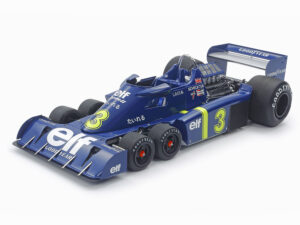
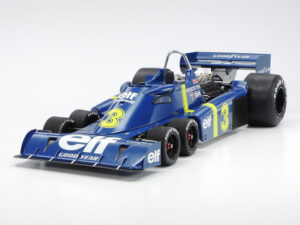
20060 1/20 Lotus Type 79 1978

60320 1/32 Supermarine Spitfire Mk.VIII

61108 1/48 Mitsubishi A6M3/3a (ZEKE)

37006 1/48 Arado Ar196A (Italeri)

35309 1/35 Russian Tank BT-7 Model 1935

36314 1/16 WWII Russian Field Commander

17501 Sunny Shuttle (re-release with different wheels)

17502 Jolly Joker (re-release with different wheels)

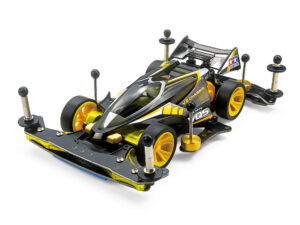
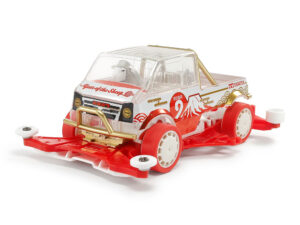
94740 Thunder Shot Mk.II Clear Special (Polycarbonate Body)

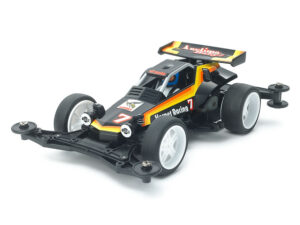
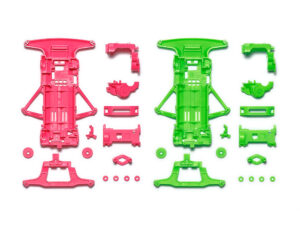
94734 Mini 4WD VS Chassis Evo. I

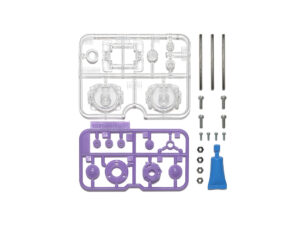
71126 Mechanical Swimmer

Source: www.tamiya.com

April 27

Mad Mog
Posted on April 27th, 2010 at 9:09 PM by miramar

Recently, seeing a Mini 4WD Wild Willy and a Mini 4WD Unimog together, I got an idea that I can’t possibly understand I hadn’t got before. In 1985, when the Mini 4WD Unimog was released, I was one of many enthusiasts that dreamed that Tamiya would make an RC-version too, just like Tamiya had made a Mini 4WD version of the Wild Willy. As we all know, it would take 23 years for that to become reality, and when it did, it was thankfully a realistically proportioned body, and not a caricature like the Mini 4WD Unimog.

However, what would a Tamiya RC Unimog have looked like, if it had been based on the WR02-chassis (Wild Willy 2), true to its Mini 4WD predecessor? Well, as long as Tamiya doesn’t do it, it was only one way to find out, and it involved cutting a Unimog body in two. Measuring the bed of the Mini 4WD Unimog, it was clear that cutting the RC body along the rear mold line would result in quite correct proportions. This also meant I could keep the original 172mm wheelbase of the WR02 to emphasise the caricature look I was aiming for. In hindsight, I wish I had turned around the front suspension arms (like the Willy’s Wheeler 2) to create a 190mm wheelbase, combined with a slightly longer bed. Furthermore, using M05 body posts would have put the holes in the body in places that would have looked a little better.

The rear fenders and the box and tank between the front and rear wheel arches were cut and modified to suit the shorter wheelbase, and the lower body cut line was slightly manipulated, but apart from that, no body modifications were necessary. As for paint scheme and stickers, there was only one option, the Mini 4WD Unimog box art. As even the license plates of the Mini 4WD and RC-version are identical, it’s very clear that Tamiya had the Mini 4WD in mind when making the CR-01 based Unimog after all! I opted for the opaque headlight and taillight stickers to make the most of the caricature look. For the same reason, the wind screen wiper stickers and several other “realistic” stickers were omitted. I forgot to put on the grill stickers before making the photos though! To suit the caricature theme, the chrome Wild Willy 2 wheels were stripped and painted silver and gold similar to the Mini 4WD wheels. Comic books aren’t printed with chrome ink, are they?! ;-) Otherwise, the chassis is box stock. I played a little around with bumpers, assuming that it would look better with the TL01B or the large WR02 practice bumper, but ended up with the small WR02 bumper after all.

As for name, both because of the license plate and to be in line with the Wild Willy name and the unrealistic look, only “Mad Mog” seemed appropriate to me. I may end up making one more with the improvements mentioned above, but for now, I love my Mad Mog as it is. Born 23 years “too late”, but still my baby!

Posted on April 19th, 2010 at 11:39 AM by dunebuggy

Before Tamiya announced the return of the Buggy Champ in 2009, I never thought this would ever happen. But as we all know, Tamiya surprised us with fantastic re-releases over the last years. And finally after the release of the Sand Scorcher 2010 it seems that Tamiya is possible to make every dream come true.
For me it was a real experience to build such a historic car. I´ve restored a Super Champ in the past, but to build a SRB from new is another thing.
As a regular visitor on tamiyablog, you may know that we try to use different colours and paintschemes on most of the Tamiya re-releases. So this Buggy Champ is no  exception.
This time Tamiya “TS-39-Mika Red” was used.  The car is totally stock, except for the alloy wheel covers which give a more authentic look to the whole car. Sometimes, it seems unreal for me. You can really buy new SRBs ?
Again, a big “THANK YOU” to our favourite company.

Posted on April 7th, 2010 at 9:01 AM by admin

Update 28.04.2010:  Added photos

Update 22.04.2010:  Added new drawings and more details

Update 09.04.2010: Added few items and part numbers

Update 08.04.2010: Added some (unconfirmed) part numbers

R/C Models

  • 42167 1/10 R/C 2WD Off-Road Buggy TRF201

Mon tentative price will usually 6 ¥ 34,800
Recently we reported the first report, “2WD Purototaipubagi” commercial decision is finally out!

While placing the motor shape Riyaendo conservative, and a transmission case and Shashidezain, TRF has been cultivated so far, bringing together expertise Haiendoreshingu various 2WD is buggy.

2WD transmission case needed to be buggy (gearbox), the ball differential 3 / 32 × 12,2.6 Defusukuryu inch ball Ф, adopting a new design thrust. Gear teeth and ball shape is also attention Defukyaria Hall, delivers the best performance from a long shakedown.

The Main Chassis batteries upright, has reduced weight and high strength glass filled nylon. Riyakushon combine with split lines, such as optimizing Shashirorubaransu material. The off-road skid side of the key gaps, we seek the best shape while reducing center of gravity.

As other equipment, the HL Eareshondanpa Court cylinder, Chitankotopisutonroddo, Teflon guide, Tefuronshiruborubearingu (1510,1050,850,840), blue titanium turnbuckles specifications, kit contents and full universal type WO It is.

January 2010, Japan held Tamiya Off-Road championship!
2WD buggy according to the new release, Tamiya Grand Prix class for the 2010 summer national championships (2WD, 4WD will) set.
Gathered together representatives of the top players and tournament results, January 2010 championship will be held at 29 and 30 days Sakittoofurodokosu Tamiya Kakegawa!

  • 58463 1/10 R/C FF-03 PRO Chassis Kit (Tentative)

Tamiya is proud to announce the release of the FF-03 PRO, the newest touring car chassis kit in our line-up. The FF-03 chassis features a horizontally-placed front-motor, frontwheel drive and comes enhanced with a range of high performance parts to offer you a new driving experience. Due to its unique chassis layout and FWD setup, you can enjoy a style of driving different from 4WD chassis machines. The chassis features a newly designed lower deck and comes with a compact front gearbox. Suspension is equipped with short reversible suspension arms and TRF416 uprights on the Inboard Front Suspension (IFS) setup. True to its name “PRO”, high-spec parts such as TRF dampers, aluminum turnbuckle shafts, and aluminum ball connectors are also included in the kit. For more information on included Option Parts, refer to the next page.
Chassis length: 384mm, Overall width: 185mm, Tread: 157mm, Wheelbase: 257, 245, 233mm.
FWD chassis features front-mounted motor and is designed for optimum weight distribution and a low center of gravity.
FF-03 PRO Chassis Kit includes the following Option Parts:
Item 42102 TRF Special Damper (Hard Black Coating) plus Titanium Coated Piston Rods and White Coil Springs (Medium x2, Hard x2)
Item 51000 Hi-Torque Servo Saver (Black)
Item 53159 4mm Anodized Aluminum Flange Lock Nuts (Blue)
Item 53642 5mm Aluminum Ball Connector (Blue)
Item 54121 Aluminum Horn For Hi-Torque Servo Saver
Item 54223 FF-03 Aluminum Motor Plate (Blue)
Aluminum Turnbuckle Shafts (Blue)
5mm Adjuster (Gray)

  • 84132 1/10 R/C High-End Drift Chassis Kit (Limited Edition) (Tentative)

Tamiya is proud to announce the release this High-End Drift Machine. This machine adopts a front midship motor layout (motor within wheelbase) for optimum balance which is essential to drift driving. The upper frame features vertically mounted carbon plates which improve chassis rigidity while also providing enough flexibility during drifting. The parallel geometry steering system provides this machine with excellent control of counter steering. The especially designed battery holder is adjustable and is compatible with Ni-Cd, Ni-MH, LF batteries. Glass tape can also be used to secure the battery.
Front: Ball Diff., Rear: Spool Diff.
Carbon chassis 2mm thick.
Front and rear universal shafts.
Aluminum hex hubs.
TRF Dampers (Case: Fluorine Coated, Shaft coating: Normal)
Short reversible suspension arms.
Uprights feature 1050 ball bearing specifications.
TA05 Front and rear bulkheads (Resin).

  • 84124 1/10 R/C Wolf WR1 (Limited Edition) (Tentative)

Among F1 fans, one legendary machine that stands out with its vivid gold lines is the Wolf WR1 which now comes realized as a 1/10 R/C machine loaded on the F104 chassis. Led by wealthy Canadian businessman owner Walter Wolf, the WR1 made its debut at the 1977 Argentine GP and started the race in 11th position. Driven by team driver Jody Scheckter, the WR1 went on to win the race and record the first ever win for the team. The 1977 season saw Jody Scheckter win three championship races and finish overall 2nd in the drivers championship.
This is a limited edition 1/10 R/C assembly kit model of the Wolf WR1.
Length: 460mm, Width: 206mm, Height: 105mm.
The F104 chassis has specially designed features such as F103 front arms to allow you to mimic the dimensions of F1 machines of the 1970’s.
Keeping true to the 1970’s style, the WR1 comes with large sized rubber rear tires like the Tyrrell P34 Six Wheeler 1976 Japan GP (Item 84111) and small front wheels which provide the machine with a realistic scale presence.
The body is accurately reproduced with durable polycarbonate.
Sticker sheet depicting the WR1’s famous livery included.
A resin bumper is equipped under the front wing to protect against shocks and crashes.

  • 58466 1/10 R/C MOTUL NISMO GT-R Tokachi 24hours Race (TA05 ver.II) (Tentative)
  • 58462 1/10 R/C Datsun 240Z Rally (TT-01E)
  • 58465 1/10 R/C Fiat Abarth 1000 TCR Berlina Corse (M-05)
  • 58445 1/10 R/C Toyota Land Cruiser 40 (CC-01) (now also available in the Japanese market)
  • 58464 1/10 R/C Suzuki Swift Super 1600 (M-05Ra) (Tentative)

Tamiya is proud to introduce a new addition to the very popular M Chassis range, the M- 05Ra. Like the M-05, it shares the same chassis layout with the servo, receiver, and ESC positioned for improved weight distribution and a lower centre of gravity. Furthermore, this chassis features new front and side bumpers for extra protection as well as different attachment positions for dampers and upper arms for a wider range of suspension settings. Newly designed 60D rally block tires also feature their own unique tread pattern.
-Includes parts to allow you to make either a short, middle, or long wheelbase chassis car. (Wheelbases: 210mm, 225mm, & 239mm.)
The 2005 Junior World Rally Championship season was mainly a two-horse race between Suzuki and Citroen, and in the end the Suzuki Swift Super 1600, which was introduced at Round 5 Finland, just barely lost out on the title. Tamiya now brings you this superb machine as an assembly kit R/C model on the new M-05Ra chassis.
All the features of the compact rally car’s body has been accurately reproduced in durable polycarbonate, including separately-molded light cases.
Side mirrors and rear wing separately molded.
Included polycarbonate guards protect the motor and battery pack against dirt and debris.
Length: 347mm, Width: 168mm, Height: 138mm. Middle wheelbase: 225mm.
Newly designed 60D rally block tires included.
Install separately available Tamiya LED Light Unit (TLU-01, 53909) for exciting light action.

  • 58467 1/10 R/C Castrol Honda Civic Vti (FF-03) (Tentative)
  • 56324 1/14 R/C Tractor Truck MAN TGX 26.540 6X4 XLX Full Operation Kit
  • 57803 XB Lamborghini Gallardo LP 560-4 Super Trofeo (TT-01E)
  • 57804 XB Datsun 240Z Rally (TT-01E)
  • OP 60D Reinforced Tires Type-B (Tentative)
  • OP M-05 Lightweight Aluminum Battery Holder
  • OP TA05 ver.II Carbon Reinforced Chassis (Tentative)
  • OP Tamiya LF1600-6.6V Racing Pack (Tentative)
  • OP 2WD Off-Road Buggy Body Parts Set (Tentative)
  • OP 2WD Off-Road Buggy Rear Wing Set (Tentative)
  • OP 2WD Off-Road Buggy Front Spring Set (Tentative)
  • OP 2WD Off-Road Buggy Titanium Screw Set (Limited Edition) (Tentative)
  • OP FF-03 Aluminum Motor Plate Set (Blue) (Tentative)
  • OP FF-03 Stabilizer Set (Front & Rear) (Tentative)
  • OP FF-03 Aluminum Diff Joint Set (Tentative)
  • OP FF-03 Titanium Screw Set (Limited Edition) (Tentative)
  • OP M3x0.5mm Thread Forming Tap
  • OP 3/32″ Tungsten Diff Ball (12pcs.) (Tentative)
  • OP Die-Cast Metal Tracks For 1/16 R/C Tiger I (Limited Edition)
  • OP Die-Cast Metal Tracks For 1/16 R/C King Tiger (Limited Edition)
  • OP Die-Cast Metal Tracks For 1/16 R/C Panther (Limited Edition)

Scale Models

  • 61108 1/48 Mitsubishi A6M3/3a Zero Fighter (ZEKE)
  • 60320 1/32 Supermarine Spitfire Mk.VIII
  • 20060 1/20 Lotus Type 79 1978
  • 12635 1/20 Lotus Type 79 1978 Photo-Etched Parts Set (Tentative)
  • 14117 1/12 Honda CX500 Turbo (Tentative)
  • 16035 1/6 Honda CX500 Turbo (Tentative)
  • 25110 1/35 Russian Tank Destroyer SU-85 w/Weathering Master Set & 7 Figures (Tentative)
  • 25111 1/35 Russian Tank Destroyer SU-122 w/Weathering Master Set & 7 Figures (Tentative)
  • 35309 1/35 Russian Tank BT-7 Model 1935 (Tentative)
  • 36314 1/16 WWII Russian Field Commander (Tentative)
  • 37006 1/48 Arado Ar196 (Tentative)
  • 21068 1/12 Suzuki RGB500 ’80 #10 (Finished Model)
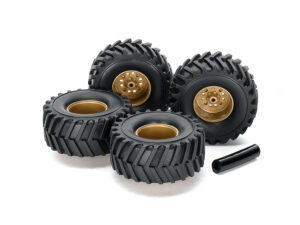
  • 21069 1/12 Suzuki RGB500 1980 Team Gallina #21 (Finished Model)
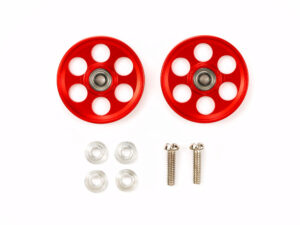
  • 21070 1/12 Suzuki RGV-Gamma (XR89) ’99 #10 (Finished Model)
  • 21071 1/12 Suzuki RGV-Gamma (XR89) ’99 #9 (Finished Model)
  • 21079 1/20 Ferrari F60 #3 (Finished Model)
  • 21080 1/20 Ferrari F60 #4 (Finished Model)

For Kids

  • Mini 4WD VS Chassis Evo. I (Limited Edition)
  • GP Quick-Release Body Catch Set
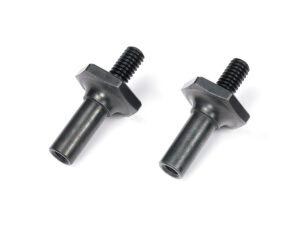
  • GP 60mm Reinforced Shafts (Black, 4pcs.) (Tentative)
  • GP 72mm Reinforced Shafts (Black, 4pcs.) (Tentative)
  • GP Reinforced N-04/T-04 Units (Red)
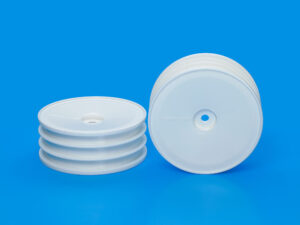
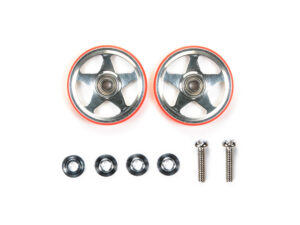
  • GP Narrow Large Dia. Wheel & White Arched Tires (For Super X & XX Chassis)
  • GP Wheel w/Aluminum Disc Set (7-Spoke Markings)
  • GP Wheel w/Aluminum Disc Set (Stripe Markings)
  • GP Reinforced Rear Double Roller Stay (3 Attachment Points)
  • GP Rubber Brake Set
  • HG Aluminum Wheels For Low Profile Tires (Black, 4pcs.) (Limited Edition)
  • Shadow Breaker Z-3 Super XX Special (Limited Edition)
  • Front Under Guard (Red) (Limited Edition)
  • Black Plated Screw Set (Limited Edition) (Tentative)
  • HG Carbon Multi Roller Setting Stay (Limited Edition) (Tentative)
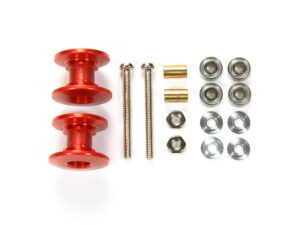
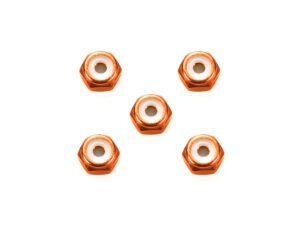
  • 19mm Aluminum Ball-Race Roller Set (Dish/Blue) (Limited Edition) (Tentative)
  • Thunder Shot Mk.II Clear Special (Polycarbonate Body) (Limited Edition) (Tentative)
  • Mechanical Swimmer (Free Style, Butterfly, Backstroke) (Tentative)

Tools & Paints

  • 73018 Display Case N (w/Base) (Inner 620×125×165mm)
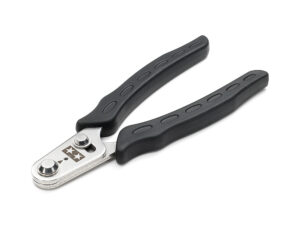
  • Photo-Etched Craft Saw
  • 74539 Spray-Work Airbrush Stand II (Tentative)

Source: Tamiya, INC.

Posted on April 5th, 2010 at 11:07 AM by admin

This exciting new prototype will be featured in the May issues of Japanese R/C enthusiast magazines RC Magazine and RC World (both on sale in early April). Although it is still undergoing development and the specifications have not been finalized, here is a brief glimpse of the machine.

Specifications:

Chassis with longitudinal battery layout.

Equipped with slipper clutch and ball differential.

Front and rear long-span suspension.

Front and rear aeration dampers.

Fitted with Wide Operation Angle (WO) universal shafts.

Specially-designed body and rear wing.

(Further details will be released at a later date.)

This machine was entered in the Yatabe International Offroad Grand Prix 2010 in Japan, and at the hands of TRF driver Satoshi Maezumi, achieved 1st place in one of the heats on its debut. It was also raced by new TRF driver Lee Martin (UK) at the recent Cactus Classic off-road race in the United States, where it placed a respectable 11th against the local favorites.

More details regarding this incredible new machine will be announced as we approach the Shizuoka Hobby Show!

Source: Tamiya, INC.

Posted on March 29th, 2010 at 9:24 AM by admin

Posted on March 14th, 2010 at 2:29 PM by admin


The new son meets his 31 year old father. Thank you again Tamiya for making such possible, giving every Tamiya-fan the opportunity to build a NIB SRB, a must-do in the life of every Tamiyast (like a planting a tree)! Unfortunately weather is poor and photos don’t give the chosen paint tones fully justice, especially the champagne gold.

March 10

Tamiyablog 2.0
Posted on March 10th, 2010 at 4:35 PM by admin

We decided to move Tamiyablog from blogger to wordpress to enable us much more options and capabilities. Of course this way also the layout and design had to change, but it already gives some useful new features like a better blog search, an article categorization, as well as links to the last articles and comments.  The only downside we could find till now is that somehow some older comments were lost during the transfer, but you are like before welcome to post comments again. We hope you also find the advantages exceeding the habit of the old form.

Posted on March 2nd, 2010 at 9:34 PM by admin

First, I feel the need to write a “disclaimer”, before somebody gets the impression that I dislike the SRB’s or Tamiya in general. I’ve been in love with the SRB since getting my first Sand Scorcher right after it was first released, have continuously been into SRB’s since then and have actively collected SRB’s by buying back from customers when regular parts supply started to get scarce in the late eighties. So I have quite a few and have of course bought the re-releases and I’m very happy that Tamiya has revived them. Still, I think it’s appropriate to present a few views that may not suit the euphoria associated with these models, and then end this text with the enthusiasm and hopes for the future that the SRB surely deserves after all! I know the text is pretty long, but it’s still a very “light” and quite superficial look at a long piece of Tamiya history. I have refrained from posting any pictures as other sites dedicated to Tamiya and RC are currently flooded with SRB-pictures anyway.

At the time the SRB was first released, there were no similar electric-powered off-road vehicles in the market. As I was just a kid at the time, I don’t have a complete overview, but considering that Kyosho just had the Peanut series and Rally-Sports series and Tamiya until then just the Cheetah/XR311, the SRB surely revolutionized the way people were thinking about EP buggies. Until the Kyosho Scorpion and AYK 566B were released, Tamiya had this new niche market practically completely on their own without any serious competition. Bolink tried to get a piece of this increasing market with the Digger 10. It was basically a 1/10 pan car with foam “off-road” tires, a pan car rear axle “hinged” in the middle with a universal joint to create some rear suspension and topped with a lexan body copy of the Rough Rider body, and that was about it.

As revolutionary as the SRB was, it had an innovative concept for its time, but technically, it wasn’t really well tested. Even back then, most (if not all) weaknesses were very clear to those who were actually running and racing these models, and it’s easily understandable why aftermarket companies like RCH, CRP, Kimbrough, MIP, JG and others could grow so rapidly and successfully.

Of course, though some companies offered components to improve the handling, durability improvements were most important and the main focus for those of us who ran or raced the SRB. Just to mention a few things that were considered weak points also back then.

1. Front suspension pins. Bent very easily and damaging the suspension arms when being bent.

2. Servo saver. The lack of a bearing made for high friction after some use, and servos at that time were generally not strong enough to overcome this high friction. Also, running the radio gear off 4 cells (especially when using dry batteries), the available steering torque was really inadequate for the rather poor steering mechanism.

3. Steering rods. Being 2mm and basically the same design as used on Tamiya’s 1/12 pan cars, they were much too weak for the 2+ kg SRB and in off-road conditions.

4. White “teardrop” ballraces in the front suspension. Very quick wear, especially if greased like recommended in the manual.

5. Nylon middle gear in the gearbox. Rotating at relatively high speed between a brass gear of the same dimension and a bigger nylon gear, wear was excessive.

6. Radiobox. Heavy and brittle and not really waterproof. Today’s hype of the “great waterproof” SRB is not justified at all, and mostly claimed by people who don’t have any actual experience with the SRB. Also, flex in the chassis plate and the loose wellnut in the rear hole, often caused the radiobox to get damaged even if not subject to a direct impact. Because of the brittle material, very small forces were adequate to damage the box.

7. Motor cover. Being the same brittle material as the radiobox, it would easily crack and disintegrate. Not a big issue for most who ran the SRB, but still annoying.

8. Rear cage. Unlike Kyosho, who chose a tough and flexible material for the Scorpion’s rear cage, Tamiya opted for a better looking, but much more brittle material.

9. Front bumper. Heavy and weak. Also, being quite expensive as a spare part, the tendency to break after just a few impacts was very annoying.

10. Dampers. Leaking badly even when new and being much too small for such a heavy model, the model was underdamped even with new and properly working (hypothetically) dampers.

11. Universal joints. Being of brass, wear was quick and excessive

12. Rear axles. Both the final gear axle and the wheel axles themselves would bend quite easily, and the weak universal joints allowed for a lot of slop and bending, which made the situation even worse as the “interaction” of bent axles and sloppy universal joints accelerated the wear and deformation of both.

The listed weaknesses and many more actual weaknesses were addressed by many aftermarket companies, sometimes well, sometimes less well. Also, a lot of money was made on aftermarket parts that weren’t of any actual benefit at all, but that’s the same for any model today too! Anyway, as much as I love the SRB and as nice as it is to look at and run, they were underdeveloped and inadequately tested by Tamiya before release. Many enthusiasts have a very romantic view of the SRB today, but fact is that Tamiya didn’t do their homework fully and properly, not just in hindsight. When you look at how much better the Kyosho Scorpion (and partially also the AYK 566B) were when released just a year or two later, although they had their share of weaknesses too, Tamiya’s excellent scale model skills, but also moderate RC-car technical skills, become evident.

As for using diecast parts, the typical understanding of metal being better than plastic doesn’t really apply. Of course, plastic material technology has improved a lot the last 30 years, but nylon was available back then too, and I guess that Tamiya could have made most of the diecast components of nylon instead, creating a more durable and lighter model. However, maybe nylon was more expensive than diecast parts, or maybe metal was considered superior to plastic by most customers, just like today? The use of diecast parts on early models make them easier to restore to a good finish today than modern models with plastic parts, so from a collector’s point of view, the use of diecast parts is now rightly celebrated. Also, the use of diecast parts on the Kyosho Circuit 20 series of GP buggies (and other manufacturers of GP buggies too), might have influenced Tamiya to use diecast too.

So, apart from fantastic bodies, relatively authentic suspension, a great scale look and founding a new niche of RC-cars, from a technical point of view, the SRB’s weren’t even great for their time and companies like Kyosho, with a lot more experience and knowledge about chassis design, quickly proved with the completely superior Scorpion that it would have been possible for Tamiya to make the SRB a lot lighter, more durable and better handling even without sacrificing looks. In other words, the SRB wasn’t THAT great, not even back then.

Currently, the interest in putting differentials into the SRB has caused some persons and even Tamiya themselves to offer ball differentials. But why? Tamiya could have included a diff with the SRB from the very beginning, but chose not to. Maybe to some degree for technical and cost reasons, but probably mostly because a differential wouldn’t offer any advantage for the average owner. The SRB was intended for loose surfaces and sand and even most GP-buggies didn’t have differentials at that time, and for today’s typical fun use, I can’t really understand why anybody would spend money on a differential for their SRB. I generally love improvements and hop-ups myself, but why spend money on something that actually is a drawback for the use where the SRB is the most fun?

Sure, when buggy racing got organized, Kyosho and others rightly started to offer differentials as an option. So, when the Super Champ was released and was intended for organized racing, the competitors already had differentials available, and the rear-heavy Super Champ made a differential even more necessary when running on a track. As such, I think it was a mistake not to develop a differential for the Super Champ or even the SRB after customers started to use them for organized racing.

In the early ‘80’s, I ran SRB’s with aftermarket differentials in organized racing myself, and still own some CRP differentials, but currently have none of them installed in my SRB’s as it doesn’t have any sensible purpose anymore.

By the way, when talking about the Super Champ, back when it was released (and even today), I couldn’t understand why Tamiya didn’t include any of the improvements on the other SRB’s. The better servo saver, tempered steel front suspension pins, better steering rods, brass middle gear and steel universal joints could all have been incorporated in the Rough Rider, Sand Scorcher and Ford Ranger without hurting scale looks and probably also at a very moderate extra cost. These improvements would have made the models a lot more durable and enjoyable. Difficult to understand, especially when considering that the other SRB’s were offered for several years after the release of the Super Champ.

Of course, in 1983 (when the Super Champ was released), Tamiya already had plans for the future and knew that the remaining life of the SRB was limited. For the fun market (not organized racing), the market dropped massively after the Scorpion was released and even more so after Tamiya released the much cheaper, quicker and more durable ORV (Brat, 037, Frog). By the end of 1984, only people with a special interest in scale models (almost nobody back then), would buy an SRB when they could have an ORV, Scorpion or other models at much lower cost and with a lot less trouble. As I was working in the business, I closely observed how the interest in the SRB dropped quickly, and in Norway where I lived at the time, the remaining stock of SRB’s was so unsalable that they were offered for about EUR40,- in the end, at roughly ¼ of original suggested retail price. Even at this price, it was hard to sell them.

As for the racing market, the SRB boomed and dominated the buggy class from the very start and until 1983, much with the help of the aftermarket business. The AYK 566B was a hot contender, but the aftermarket for it was always moderate and quite a lot of manufacturing defect issues (especially gearbox) ensured that it never really got well into organized racing. With the release of the Scorpion, the SRB got very hot competition. Being much lighter, better balanced, generally more durable and much better handling, the SRB would have been without a chance in racing if there hadn’t existed so many aftermarket parts for it. At the 1983 World Championship (ROAR, not IFMAR official world championship) in Anaheim California a heavily modified Scorpion won and more than any other single event marked that the days of the SRB were over as a competition model, even when massively upgraded with aftermarket parts. But then again, the Scorpion won against Associated RC10 prototypes with a very small margin, and it was evident that realistic scale buggies were about to leave the arena for the benefit of purposebuilt racers. With the release of the RC10, the SRB was finally “dead” as a model for organized racing, and at about the same time (early 1985), 4WD models would occasionally start to win races. Kyosho Progress and Hotshot being examples, and by 1986 replaced by the Optima and Supershot/Boomerang. Still, even with 4WD entering the scene and the superior Scorpion, it was the RC10 that really “killed” the SRB as a competition model, whereas cheaper alternatives (mostly from Tamiya) made customers loose interest in it as “fun” model. As such, the SRB’s lifespan in the market was limited to 4-5 years! Almost hard to believe now, considering its current popularity!

Talking about popularity, some of the aftermarket companies that offered parts for the SRB back in the old days have indicated that they will offer parts for the re-release SRB’s too, but so far, little is available, mostly limited to old stock of parts that didn’t sell well even back in the old days. I realise that there might be a small market for some aftermarket parts, but as soon as enthusiasts that have little experience running the original SRB’s realise that practically any hop-up for improving handling will be in vain, I fell confident that the remaining market will virtually be for “scale” details and durability improvements only. Making a profit on SRB parts to improve handling and performance will be a lot harder today than back in the early days. So what will sell well? Obviously, I don’t have a crystal ball, so I can just make some more or less qualified guesses:

1. Aluminium wheels seem to sell quite well already, and are offered by quite many sources, although a comparison of quality of several of them shows that sources from Far East offer the best and most consistent quality, combined with lower prices!

2. Reproduction stickers of the original SRB-stickers are of course popular as replacements for the “generic” stickers included with the re-release SRB’s and will probably remain popular for years to come. Also here I have compared the quality from several sources and quality is mostly disappointing, also from the sources that are often considered to be the best for reproduction stickers. If time allows, I will write an article for Tamiyablog soon, presenting the SRB reproduction with the by far best quality so far.

3. Bodies. To my knowledge, there currently doesn’t exist a single aftermarket body with acceptable quality. The lexan- and ABS-bodies offered for the SRB from several sources are so inferior to the original bodies that they aren’t suitable for anything but hard thrashing, but that’s not what the SRB is about, is it? ;-) I however hope that some of the Japanese manufacturers, which probably are the only ones capable of making bodies that could be real alternatives to the original bodies, may consider the market large enough to have a go.

4. Boxart style front bumper, rear cage and nerf bars are to some extent already available, and one of the best companies is about to release their versions. Personally I look very much forward to that and feel confident that they will remain good sellers for years, keeping in mind that the overall market is pretty small.

Some also offer chassis plates for the SRB, but I have yet to see a design that is significantly better than the original chassis plates.

5. For durability and precision, just like for the original SRB, I think there is a pretty good market for improvement parts for the steering mechanism. A pretty good cure that still looks pretty “scale” is using the steering linkage and servo saver from the Super Champ (like I do on all my SRB runners), but considering that these parts aren’t easy to find anymore, I would love to see somebody address this major weak point of the SRB.

6. So what about gear cover, motor cover and even radiobox? Well, especially the radiobox, even with all its flaws, is one of the things that has made the SRB so loved, and with the improvement of plastic technology and re-relase parts being easily available, I hardly think there is any market for an alternative box or radiotray. As for gear cover and motor cover, the diecast gearbox of the SRB, though somewhat better cast on the releases, still looks pretty rough and crude by modern standards, so in my humble opinion, machined aluminium covers look a bit out of place. Also, the original gear cover was never really a problem unless the screws were tightened too hard, so what remains for me is the wish that somebody will offer a stronger motor plastic motor cover. That said, I’m pretty happy with the availability and price level of the motor cover for the rerelease anyway!

7. With the availability of “small scale” dampers, I can hardly imagine that aftermarket dampers specifically for the SRB will sell well, and generally I think most will keep the suspension pretty original as it’s part of the charm of the model. I would love to see somebody offer tempered steel pins for the front suspension though and was in fact surprised when the Buggy Champ was released with “soft” pins, as bent suspension pins and the resulting crooked front suspension wasn’t at all considered “charming” back in the old days and hardly is even now!

8. Well, what do you think? Dummy parts to improve the scale looks maybe? Dummy airfilters? Dummy boxer engines? Scale looking floorpans? Sound modules? Light kits? Some of these items exist already, but the combination of excessive prices and mostly inferior quality surely makes for an opportunity of those quality-oriented enough and with a healthy understanding of the balance of demand and offer, to take a large portion of this market. Your ideas and views are very welcome and though we’re in no position to make any promises, we have already presented our ideas to one of the most serious manufacturers of aftermarket parts, and would be happy to forward your ideas as well.

Any way we turn it, we’re in for a lot of fun in the coming years! With the re-releases, dreams have again come true for many of us, but never being really saturated, at Tamiyablog we’re excited to see what Tamiya have up their sleeve next. A brand new scale buggy? Holiday Buggy or Sand Rover re-release? Keep dreaming, and at least some of the dreams will come true!