February 4
Tamiya Modified Motor History Part 31990s: Diversification age
Modified motor “third wave” had come in 1993 or later. Before that, from the late 1980s through the early 1990s “boom F1″ Were not, but here is used solely SUTOKKUMOTA 540 type. “ROAD WIZZARD” to “F101 chassis” with the development of F1 GP Tamiya popular categories and classes and the beginning of the EXP unlimited weight class is, as it was nearer 930 to 950 g What ridiculously lightweight machines also being tailored, modified motor once the “fifth wheel”. Even DYNA-TECH 01 R, Power HAARI spare as he feels, is hard to master. Later, Tamiya Japan starting from now when all classes are now more than 1000 g, in any case focusing on performance improvement, and the main shaft and chassis parts to replace carbon materials, or cutting, such as “lightweight “. Battery performance is improving year by year it began, the Power 540 “sports EXP also driving satisfaction” was possible. The per the RC kit now lost part of me. “Lightweight, simple, fast enough 540 kit” and want to be resurrected. . .
However, the loop is also F1 boom, and then boom in the touring car, the weight IKANSEN 1600 g (then revised in 1995 to circa 1500 it became the provisions g) burden, and provides complete power shortage of 540. In order to obtain satisfactory performance review modified motor. Battery capacity also increased from 1400 to 1700 also reduced the frustration runtime.
The flow from that first came out, “ACTO-POWER” series. The motor, and finally Tamiya, even as a general-purpose brush thoroughly entrenched in the general “5 × 4mm brush” has been adopted. Ave!
2 WD ACTO-POWER First came out of the race for two open buggy WD “DYNASTORM” has been developed to take the double-pink cans 0.75mm14T “WD ACTO-POWER OFURODA 2″ (op.122, 4800 yen, 92 Nov). 0.70 mm15T double followed by “touring ACTO-POWER” (black cans, op.153, 4800 yen, November 1993), 0.70 Double mm17T “ACTO-POWER Formula” (op.154, 4800 yen, 93 Nov) appeared. And this time, the battery is also revamping the capacity up “SCR 1700″ (Item55056, 5,200 yen, released in October 1992), was later “ultimate” enshrined “SCRC 1700″ (Item55062, 5,800 yen, 1995 March release) appeared. SCRC is particularly 1700, 1800 and the actual discharge capacity 1900mAh and ensure the discharge characteristics of excellent goods unparalleled in the past. Actually this “SCRC” cell type, cell battery sanyo industrial catalog is the first “RC exclusive goods.” In particular, the first year of production, the so-called “Z Damas” extraordinarily good performance, after years of treatment with a lot of this is zapping performance from the “difference in battery performance by different lot”.
“ACTO-POWER” series is the “line-up purposes, according to a prepared”, in other words “to deal with diverse needs,” the point. Already “TEKUNI” series in the rotor to ensure compatibility, “DYNA-TECH” opt-series set in the form of the rotor was not groundbreaking, but “ACTO-POWER” one step farther, separately from the package NARIMASHI hoop. That market has been growing that? Come to think of it, these days, the kit will be released in the number of variations of the body in the form of increased rapidly increased. Overseas exports also grew.
However, in ACTO-POWER, in the form of limited production spot by selling “TRF ACTO-POWER tune” (Item49567, 8000 yen, released in December 1993). Ostensibly for buggy, but in the first place, leading to the 1992 is being developed around a prototype buggy “TRF411X” according to the TRF’s activities Works made goods. Double-rotor winding is 0.8 mm and 12 T H 02 DYNA-TECH high spec since. Magnet also strengthened by the opt-10 H 02 DYNA-TECH rotor specification is not the enemy, but as a normal state of TAMIYA MOTOR power highest level in history.
TRF is a brush 411X Cheung said at the time boomlet, 5 × 5mm, the so-called Big & big commutator combination brush. Bell is also in the luxury end, cutting out the aluminum. Big commutator, ig brush, cutting aluminum at the end of Bell’s first model is adopted. Kang also encourage special cooling fin processing Special items were seen. While the price of 8,000 yen SURPRISE! Choicest hand-rolled motor 5000 6000 era might have bought the yen,! Rotor winding machine! Works of the bubble economy period just bear close resemblance to the motor design, but also anachronistic is downright disappointing. Collapse of the bubble economy, as long Buggy boom only mania, TRF prior to the release of motor buggy race fields were extinct, and even buggy Tamiya GP New Year’s race is only the beginning of the year already do not pay any more and who is gonna use this? Ultimately, the only Tamiya GP class also uses Gr.A was abolished in 1995, and to further open up cross race in the Big brush use is prohibited, age 95 is the big brush one sitting out. Tamiya eventually brush is a staple in the replacement of items that are not disclosed. So, really useless and motor BABURI become is also disappointing. In the past TAMIYA MOTOR was not planning products?
That, too, even after this funk without getting new products out. At the end of 1995, the newly-built SHINNAGOYA, “Special ACTO-TUNED motor M” and “DYNA-RUN” series begins.
“Special ACTO-TUNED motor M” commonly known “M tune” (op.251, 3,000 yen, released in December 1995) is a small lightweight chassis MINI COOPER for M, keeping in mind the length of normal rotor type 540 1 / 3 truncated, motors and overall length almost half of the 540 types of special motor. Normal motor and the motor is not a simple comparison, the rotor is certainly a single 0.65 mm T-22 was winding remember. The motor was decomposable, bearing oilless to reduce the cost of the combination is rare.
“M Tuned – on” is a small, lightweight, thin torque motor minutes and will be easy to property, changes to be able to advance, reverse motor used in the M-02 chassis to be used, such as point Woori. The aim is as much for the goods but was, however, the heat capacity is smaller in size commensurate Know in the end completely motor can opening bell and cooling performance is not zero, then immediately travel to heat happen, motor nuisance. But Tamiya GP season is about 2 to M-Class chassis and EXP are banned, M Tuned also unavailable. Until the 2002 model was left catalog, but now, people who are M chassis, I have almost forgotten?
Meanwhile, the touring car for “DYNA-RUN” series at the time, efforts have been 1 / 12 on road awareness and advocate strongly for it was “short stack” of the specifications of the rotor, which features were adopted . This is the rotor to fill the full length of the light, so that the rotor torque also weak finish by a strong magnet motor to be easy to finish rolling, to improve throttle response, the aim experience.
Lineup of the modified “super touring DYNA-RUN” (short stack single T = 15) (op.263 substantially equivalent 13-turn, 5,000 yen, and released in June 1996) and the type of stock “DYNA-RUN stock” (short stack Single real 20T = 17) (equivalent to turn op.272, 2,500 yen, released in October 1996) has been put in two types. Both are basically bell-end “M tune” common, Couling bad omissions, the brush is dry and easy to change design, “ACTO-POWER” bell-end precision machining is worse than it is regrettable. Frankly, the less popular Very poorly. Others have no choice but to reluctantly use anybody.
DYNA-RUN system, the rotor length is shorter minutes by filling an empty space cooling fans, and the forced-cooling device is also equipped with the feature. The concept itself is cooling fan, Johnson has already made TAMIYA MOTOR as “H DYNA-TECH 02″, but there is a proven recruitment. But fans DYNA-RUN system, shape issues and the lack of attention to air flow, such as the cooling performance is not necessarily expected to have had lamented that point. After all, Bell and end the “hole” is almost not open. Other side of the hole is open, the Air “exit” is not in the “entrance” is not quite so end up in the air in a motor only. Not just mean more losses, is it? Why is that kind of nonsense design, is still a mystery.
In the performance, “stock” and “super touring”, as the aim indicate, in response to the throttle work smoothly handling Sato Yasu well-balanced power to the finish, and to adopt a new brush (also sold separately as Racing motor brush op.307 by Mark M, T Mark after the former stamping modified brush) coupled with high performance and good performance. Consequently, but Tamiya GP touring as a spindle motor for the summer of 2001 “T Super Stock 23″ series will come to a fairly long-term use.
Another series of these particularly notable in the motor system, “BURASHIDANPA” TAMIYA MOTOR introduced as the first point. BURASHIDANPA is the leading Japanese motor tuner, as invite eminent emerging as a manufacturer of motor activity started from age 93 nagoya Singh was introduced ahead of competitors, the company’s motor “Uri” and it was one of mechanisms. “Damper” says the so-called shock absorber to the recall should not. Bottom spring-loaded brush from the brush with a brush holder coercive force, to reduce the commutator with butter and stabilize contact with the brush holder and improve adhesion of the conduction efficiency of the device. As photos of the brush holder of a thin stainless steel sheet to the bottom of the peg, which cleaved into a little function as a spring board to wake up let them. The idea is simple, but can not dumb. – The performance was more favorable because it is obvious, since the micro Sagami OEM supply will be from 5 × 4mm motor brush with a “natural” equipment has become today.

January 21
Tamiya Modified Motor History Part 2Mid-1980s: Tamiya and motor-wave decomposition
Now, after several years, I was not very far away from the RC is detail, as might be expected, BLACK MOTOR specifications about the escalation of the year obsessed with 1 / 12 in the visitor’s Racing also reached that limit the height of the December 1984 finally, MABUCHI and joint development of the race only 8 minutes of high-efficiency “RX-540SD TECHNIPOWER” (sp.225 the 4500 yen) will be released. Both support shaft bearing, complete decomposition formula can be adjusted in advance of the first model. Next March 1985, the number of characteristics that turn a mild “RX-540SD TECHNITUNED” (sp.230 the 4500 yen) will also be released. This is the epidemic showed signs of the buggy, especially WD 2 machines in mind to use as a motor was released. The TECHNIPOWER TECHNITUNED and is the same type as MABUCHI, Tamiya and differ only in the part number so suspicious. Turn catalog number is not listed, but after some “TECHNIGOLD” T 21 single winding, and that the 21 TECHNIPOWER T, T TECHNITUNED at 23 degrees it was in (Single Roll it is verified). Diameter of the wire, but the appearance is about 0.70 mm.
But that time is still of RC motor parts, I like the versatility of most of the parts are no longer exists. Each manufacturer has been common in the procurement of parts I, and the rotor magnet around parts of the bearing, which was not only much. Bell and motor end, brush, brush spring, and each maker has been designed to own fancy. Naturally the high cost of production, 20 years from now at around 5,000 yen before, it is now reduced to a value of 10,000 yen to 15,000 yen worth of goods at the time the user is not purchased. . Then I, like jewelry.
Indeed, Bell and end around the middle of the magnet in part to build up long-bis motors, it is hard to note a mechanical mechanism, and is now fond memories. Now, any manufacturer the “visible parts” only to change the color and design of the fine parts of the generic parts are just a combination of a lot. And the price is pretty cheap now not to complain, but also the split-high-end model is also completely gone, press a piece of them, “boring” I think the only writer?
Late 1980s: motor age
Times have changed, the world is 1 / 12 Racing ON ROAD center is out of the buggy whip to start selling. “The four-wheel drive mini” boom coupled eginning. Era, the so-called “bubble economy” in the middle. In the middle to late 1980s, after the roof of the city’s department stores buggies there is a TV, “RC Tamiya Car Grand Prix” and other TV programs are aired, leading to a boom. There was an atrium of a building in Shinjuku NS (vaulted Square) to create special courses held and magazines for children and RC model is the tie-in TV advertising CM which was, I tell, who believe that now? But there are certainly times that. Definitely a “radio-controlled era” and also likely to put the money to use as a luxury product planning.
Tamiya in March 1988 “AVANTE” machine TRF release form (avex four years ago from the TRF), this year’s eighth JMRCA A in Japan and to enter into serious action activities Works This also started on time (TRF then “DYNASTORM” released after age 93 with a lull, but since 1996, 1 / 8 GP BMT fought race in the series and TRF404-414 development activities you know is resumed.)
The unprecedented four-wheel drive mini-boom, Power is expected to intensify competition. However, the battery capacity is still “1200 mAh” remain. SC cell types (General Standard cell) only. Early 80s qualifying time 45 seconds (!) Was battling JMRCA1/12 nightmare Racing is competitive with power came again. Blindly raise the motor power and runtime only only three minutes away from making a dilemma.
This approach quickly resolve for a period of time as the mid-1980s, has spotlighted the “V 7 cell pack 8.4″ battery. Tamiya, too, “released 10 Planning Tamiya RC car,” Kraft’s moon buggy by Yura design, “BIG WIG (Item 58057, 25,800 yen),” released in July 1986, while “V 8.4 TAMIYA NI CD Power Gold (55025,6400 Item yen) “to release them. In addition, the motor is also included with the new V 8.4 as compliant HIGH POWER MOTOR “RX-540VZ TECHNIGOLD (sp.290, 5,000 yen)” to develop. The following year, in August 1986 from spare parts sold separately as also started. The rotor of TECHNIGOLD is 21-turn, 0.8-mm single.
Been released so far made a series of MABUCHI motor is essentially all of the parts are compatible. The final model, and 8.4-V battery “TECHNIGOLD” exchange theory, “TECHNIPOWER / TECHNITUNDED performance of brush” notices have been, and earlier TECHNIGOLD Two models of the brush is different materials (for TECHNIGOLD Perhaps it is more soft), the hardware is compatible with the same shape. Rotor, the wire diameter and the number is of course different from the wound, but was diverted because of the same size. This is around, but I also make custom MABUCHI model.
While all of this was going on, in 1987, Japan’s F-1GP back from Tamiya according to the “ROAD WIZARD” T-99 chassis and the new Lotus dipped Williams FW11B body kit released. F1 was boiling of a sudden boom.
R DYNATECH 01 F-1 model at the time, released at the end of the seventies, “Tyrell P34″ “JS9 Ligier” to the first and second generation of F1 chassis compared to the lighter side, too, in terms of driving performance lot nicer, and even beginners Power 540 is a bit much uncontrollable, fast enough to have fun. Still, more power and high-speed has been increasing demand from users, which came out in response to that, “DYNATECH 01 R (op.1, 5,500 yen).” This is also the custom of MABUCHI goods in the name of the company MABUCHI “RX-540VS” now.
Oh, op.1? Yeah, the memorable “HOP UP OPTION” This is the first issue of Motor me know. Opt hop’s history is also up, with a motor, you know?
By the way, “DYNATECH 01 R,” rotor “configuration option” is the first thing that is striking out. 01 R DYNATECH standard diameter of 0.90 mm T-19 was a single roll of the options as 1.00 T 17 mm diameter are provided by a single winding.
Until then, the Member Works (TRF) and JMRCA participants to support the rotor at the scene bespoke specifications to be supplied as was the case, but such cases are generally not marketed. These “The race unless” special motor distribution or distributed at the scene, the enthusiasm, excitement and buggy boom, rather than now become more radical as it was (and already history back to late 1970s Works only “Special Motor Japan” does not exist were it). The RX-540 series, the name was different, “TECHNIPOWER” “TECHNITUNED”, the rotor is incompatible because this is essentially to opt around super rotor was like setting But from the beginning, as the opt out had not.
This time, the batteries finally wave of technology innovation. Generic years has been used for long-SC type of cell was released after 10 years after finally abandoned by the new large-capacity cell SCE appeared in 1700. Tamiya, “EX 1700,” released in November 1987 as being (Item55038, 6,000 yen).
However, the SCE has repeatedly recharge cell weak and discharge characteristics as a second half loaf, which becomes not necessarily suitable for RC. Therefore, large current discharge voltage can be sustainable in the end “type SCR” has been developed, “SCR 1400″ (Item55051, 4,400 yen) as. 1990. As you know from the convention space, capacity at the expense of the discharge voltage drop suppress cell structure shook her direction in design. However, the actual usable space travel at the last minute pile-up celebrity, SCE 1700 and changed so much.
On that occasion, NI CAD BATTERY market, Matsushita Sanyo batteries to challenge the monopoly to begin, RC racing, “Panasonic” is gradually began attracting attention. “1400SCR” an end to this dispute, were sanyo Weapon is killer. Consequently, “SCE 1700″ and “1400 SCR” appearance brought the NI CAD BATTERY “competitive capacity / characteristics competition” is the beginning of a new battle, every two years since “SCR 1700″ “1700SCRC” “2000RC (Tamiya Pack is rejected), “” RC 2400 “” 3000MH “such as how new products come out,1990s and the development of competition will not plunge.
02 H DYNATECH Now, these large-capacity battery to the full benefits are received, after all motor. After all, turn to reduce the number of more powerful runtime is not able to maintain, over the years more and more extreme motor came out. It symbolized an era of monumental model, in November 1989 have been released as HOP UP OPTION “DYNATECH 02 H (op.44, 6,000 yen).” This is after, “2 WD SUPER ASTUTE (August 1991, Item 58097)” and “Evolution TOP FORCE (released in June 1992, Item 58107,3 18,000 yen)”
“DYNATECH 02 H” is more than 1400 large-capacity battery is premised on the use of the cobalt-containing rare earth magnet at the time of the highest level of luxury to be adopted, 0.65mm diameter of the rotor winding 13 Double T, still fully accepted in specifications emerged. What is 0.70 mm diameter wire OPTION ROTOR 10 Double-T! NI CD BATTERY was the highest level for the specs, the motor including “unlimited rotor (outside articles are OK!)” Fought over the rules of Tamiya GP Gr.A Touring Car class in the summer to become the battery Connector has dissolved! It is also sometimes seen as an accident. In those days, the PL (product liability law) was not because of the accident should be the responsibility of users, manufacturers and the percentage of your stance on this hot carefree motors could release it. Could nostalgic era of peace.
DYNATECH spare brush DYNATECH 02 H 02 H 02 H-opt DYNATECH The motor rotor is a strong sense of its own off-road driving to the end of Bell & Design adopted thanks to the brush, the brush is how 1,000 yen spare! On the enormously expensive goods. Akira Hiroshi just came at the end of the era of “Battleship Yamato” state. MOTAKAN, still making luxurious three-piece structure. Consequently, the last three as TAMIYA MOTOR piece motor structure. This excessive cost can go up to the user with no Haz, buggy boom will soon decline. Separately DYNATECH Tamiya and H-02 is not due. . .
“DYNATECH 02 H” Another particularly notable is the first motor Tamiya, except MABUCHI MODIFIED provided by the manufacturer of the motor. Johnson’s company in Hong Kong manufacturers. Johnson, speaking of the now-compatible 540 so-called “motor Johnson” will be known in the 1980s for 540 types of buggy boom race is not used because it is not, and then it is either “DYNATECH 02 H” Johnson, the company discovered by that many people?
But Johnson also is a world-MABUCHI after leading maker of small motors, and 540 types of motors since stabilized supply to the secondary source (alternate source) has been trading as it is you know below. “Johnson motor” will be included with the kit to become the first place? NOKI did, “Blackfoot” Big tire system as a kit included with the motor, 540 S want is a bit more powerful motor for the “special motor “ostensibly in the game like it was the beginning.
By the way, this is like a high-end motor it will continue year after year, the basic specifications of the 540 motor was basically the same, the gap between the power on the other hand is open. 80s line-up kits at the end of that time, especially at the time buggy motor to mainstream it, which include 540 for the introductory model, the motor system DYNATECH include a net after two minutes in extreme racing model been. However, many users to buy a car Tamiya introductory who just bought a net race model, the spare hand it is a high-performance, and quite a few cases. A little bit, meek performance in the 540 from the high-power motor MODIFIED want has been.
Meet these demands is born, “SPORT TUNED RS-540″ (op.68, ¥ 1500, October 1990). This kit is included with the motor as “AVANTE 2001″ (Item58085, released in June 1990, 26,800 yen) first appeared, followed by the first bullet C Series car chassis “Mercedes-Benz C11″ (Item58088, released in November 1990, 13,000 yen) was also adopted. Original “AVANTE” “TECHNIGOLD” in the price of equipment three 2001. Also, “Group C” series is a gross weight of 1,200 g F1 model and heavier than the 540 offers power performance is somewhat dissatisfied. “SPORT TUNED” Tamiya assortment of motor MODIFIED indispensable product has been a long seller. Probably already MODIFIED Tamiya’s largest motor has been a bestseller in it. Life is short brush, Darre Magnet is easy to heat, and a lot of criticism might also say, a few decades before 5000 1500 yen available now, the impact is substantial, it’s big.
It is superfluous, “SPORT TUNED” is a diameter of 0.80 mm T-23 single winding. DYNATECH 19T just 0.90 mm of a single roll of 01 and R 540 S / SH 0.65mm 27T single roll of the intermediate and specifications. This, “a reasonable person in a high-performance primer” which was obtained or how barnacle to the specification later this basis, Japan’s distinctive “T stock 23″ was born in JMRCA Touring Car class sports and other provisions also been adopted. As a result theory is just, lasting masterpiece TAMIYA MOTOR history, and they would say.

January 14
Tamiya Modified Motor History Part 1It started with Black Motor
Tamiya modified the surprising history of the oldest motor, the car’s history and almost Tamiya RC say. Of the actual vehicle so as to the performance of a short cut up the power of the past still more powerful. Tamiya electric RC cars started in only two years, as a series of three books, “Tyrell P34″ is not out between December 1, 1977, as an option as early as MABUCHI appeared RS-540S. This is strictly modified motor is not just opt parts, but since TAMIYA modified motor “origin” as ignored. Incidentally, the less surprising it is not known, 540 S / SH 27 is a single-turn 0.65-mm wire (MABUCHI house, “6527″), the spec motors.
“MABUCHI RS-540″ in the first place is for RC kind, but a general purpose multi-purpose motor. Therefore, the noise killer custom specifications for the capacitor as “external” had been. It’s also the first white plastic end when the bell is the largest single ceramic capacitor, + – with bipolar form of a direct connection. The method is also seated, from now if Surprisingly, hand soldered (!) Was (S 380 photos of the 540 S is the same example).
However, third-party products, including electric RC continue to hit in, as might be expected in the March 1980 to April release “Williams FW07 / Special Lotus 79 competition” been included in the standard kit believed to be the second generation of black bell-end specification was revised sharply noise killer. In the same ceramic capacitors, high-frequency response can be further small two types of specifications and the motor is initially cans soldered to the ground as the spot welding and in later years become a bipolar system and can connect to the change.
By the way, 540 1970 days of the late, but also consider the impact brush not been the normal rotation reversed either because of the possibility of using the 540S Well, “advancer zero” is used in Bell’s end. Therefore, the brush is, reduced advanced with a more powerful, because someone dropped a piece of the direction of advance for “National Si inversion” is as much motor HAYASA tuning, in that era.
Incidentally, after a 7.2 V SH 540 specification change by the end bell metal, brush-angle regressive
540SH is with the brush of rise as the rotation of the output is not balanced and fall slightly as being redesigned. Automotive windshield wiper and dryer are also used as a generic design for parts, consumables and brush “powerful” What if “a defective product” does these specifications, but it will be desirable, for the same set RC is being diverted (option can be changed to the manufacturer) about why the story from Tamiya, because it is not unknown. It appears most, “standard kit” from the definition of the “performance embezzle up as” no better story, and the judge.
Noise and the recent measures have become commonplace because of the noise killer standard equipment, and equipment to be built in the way so that the end-to move inside the bell. 540SH (SH 540 Bell divert end) have the noise capacizor invisible from the outside for such a reason.
RC 540 for the S, V 6 initially on the premise that power, which NiCd cells 5 (generic cell SC 1200), or four batteries realized. However, the hollow rubber tires were standard, but it had enough power. At the time, 1 / 12 scale in the center of the machine is a gross weight of 1,200 g around. Some electricity users are strong, RC take power from the battery power for a single three-cell RC 4 (1) 1100 g until it was much lighter. Therefore, the “V-6 Power 540″ But the speed of 25 kilometers per hour to 30 km / h is much that time. Of course, bearing the machine is in the ball bearing firm Yeo anybody!
(Note 1) This later became “BEC system” in the form of voltage feedback, and generalized.
Now, the time has progressed and came in the 1980s, manufacturers have increasingly non Tamiya model was started at the All Japan Championship JMRCA also sponsored a youth hot gradually, as Tamiya trend of the times, namely indefatigable White Power pulled wave of competition.
CAN AM LOLA this kit, and the peak of Japan JMRCA “Works confrontation” in 1980 was the heyday of the long-awaited Tamiya is sent to the legendary “RACING MASTER Mk.1″ Yes, that ” CAN AM LOLA (Item 58021). ” The machine came with the motor is the first modified Tamiya (Note 2) as a motor MABUCHI specially designed for the “BLACK MOTOR.” Officially, the original “Black MABUCHI RS-540SD” (sp.136, 3,800 yen) called. Output side, but only just bearing ball bearing parts, 12 degrees brush advance is given the direction of rotation is given by Tamiya’s first pure motor racing. In addition, the motor is set, KAUNTAKKU / Porsche 936 (380 chassis specifications S) can be attached to the post with the gear case.
CAN AM LOLA BLACK MOTOR included in the initial form. BLACK mOTOR “sprint” convention is not to have or know? Also, prior to July 1979 CAN AM LOLA the COUNTACH such as “Special competition,” a popular series owing to the strengthening of the battery as a form of the first six Tamiya cell pack “TAMIYA NI-CAD 7.2 V battery (Item55008, 5800 yen), “the so-called” camel packs “have been released. This is still around, Tamiya cell GP 6 = 5 V, 6 V JMRCA five cells from 7.2 V to 6 cell migration into the United States overseas ROAR (IFMAR), the effects of the rule are already six cell 7.2V fixing the chaos. Look back on 1980 and look around, even the local races are still a lot of 5 V 6 cell. Remember to pack a camel race is not used. Camel pack at the time, to get the most YASUKATTA 6 cell pack, but in the IKANSEN “Tamiya only” packaging, and other manufacturers are using ZURAKATTA chassis. Lead to the current “straight-pack” of the 6-cell pack began to spread, Tamiya “RACING PACK (Item55015, 5,800 yen)” in November 1982 called for the release from the beginning.
(Note 2) At the time, “modified” is a high-performance motors imported from abroad, is strongly nuance of the public. At the time, and basically MABUCHI IGARASHI size of 540 Kang each rotor to teach special tuner that, in many cases, therefore BLACK MOTOR bell-end like that which has been fixed and no less. At Noli “decomposable motor modified =” in the sense of understanding and misunderstood part of it may please note.
BLACK MOTOR sprint. End feature red bell then JMRCA, at the top of the international organization IFMAR World Championship affected by 1 / 12 of the race Racing “Race 8 minutes” in the transition. Only 2 to 3 minutes in travel time to wrestle power had been chasing the red bell end “BLACK MOTOR” This is obviously not respond, “The new rule is not supported Yeo,” It’s clear to a “black Sprint “(sp.189, 3,000 yen) and renamed. COUNTACH for conventional gear came with the case is omitted, and the part number of new packages are also now on sale from August 1983. Specifications remain unchanged motor itself two different types of packages have been sold. That era also there. Anyway, at the time the country’s most RC maniacs get easier for a common topic also been CHUNDOmotor. In fact, thanks for Tamiya products was not hit?
BLACK MOTOR Endurance. This is a blue bell-end. “Sprint Black,” followed by “8 minutes motor corresponding rules” in November 1983 have been released “Black MABUCHI RS-540SD Endurance (sp.200, 3,000 yen)”. This is a year after the May 1984 race for 8 minutes chassis “RACING MASTER Mk.5 / Porsche 956″ bundled used as a motor.
The following is included with the 1985 motor MABUCHI RS-540S to the RACING MASTER Mk.6 “Toms 84 C,” and Mk.7 “Newman Porsche 956″ have been released, but in fact, these kit The 540 is included by the people in the know, “S 540 visceral bearing” white goods. This photo shows the spot. Yes, the original zero advancer 540 S (black bell-end second generation specification V 6) “BLACK MOTOR” a combination of the bearing. Toms SUPIKON terminal with 84 C / Porsche Newman exclusive goods, and (at that time) only service available only in the very rare items.
The S 540, April 2006 “Porsche 956 / C 84 Tom’s” After the introductory page up, and customer service inquiries among former No miraculously “only two” left, because it was so quick purchase it. But unfortunately, the motor is obtained by changing specifications and the specifications of 7.2 V Le regressive angle with the metal end-all “SH 540.” Model SH 540 at the end of the motor had been changed and that’s it. Sample added to the number “540 S-bearing” high-precision test data like to take the initial KANAWAZU purpose is regrettable, but in the SH 540 and 540S to switch time is valuable to know the facts and to understand MASHITA.
“BLACK MOTOR” series is the first modified Tamiya was as revolutionary, as MABUCHI, RC motor dedicated custom made for the first time in the sense of historic motor was worthwhile, but the contents – , frankly, then look at it from the level of potatoes was very SHOBO. Only the output side of the ball bearing bearing on the end pure metal bell left side, Kang, rotor, the end of the basic parts of Bell 540 and S were common. But, “I sold Tamiya is” more than just the value was enough. This is also still the same old dear. In that sense, “Tamiya” is a brand power SUGO say meekly.
As Tamiya, 20 2 6000 yen! (Inflation-adjusted value is now around 70,000 yen will be) very expensive “CAN AM LOLA” I would not sell that much, but I do not take the risk of product planning may have failed . Certainly CAN AM LOLA itself, nationally it, flattery and “sold” as is the sound banal. “Expensive.” Rather than “too heavy mechanical stiffness to the chassis-design but also operationally, game machines and other manufacturers to be” reasons. At the time, “Tamiya Class” What without the manufacturer’s race is a precondition without restriction, but in the face of such at the time already 1000 1200 g of “King Tiger class” Weight machines, which was CAN AM LOLA. Extras is a unique one-piece chassis MEKANIKARUGURIPPU absolute terms is less than rivals. Japan was also expected JMRCA A main BOTSU Kazu is filled, Tamiya Grand Prix is only active in the field. “Look” of the impact was very fresh (still!), But I run and the time to get the car made impractical proposition. This trend is the 1980s all the way until Tamiya car full of “promised” followed me like the 1990s and TOP FORCE EVO DYNASTORM also “bad tradition” was. A TRF414 in the main JMRCA finally arrived and settled in 2000, the sports class A main goal of the top (Heat 1 only) also realize, and ISTC (Touring Car world war) to produce two champions Champion second term four years to protect the seat manufacturer’s point of this tradition is a thorny completely, but it exploded.

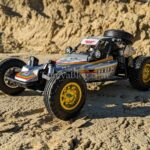
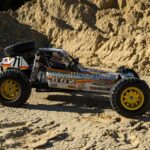
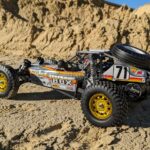
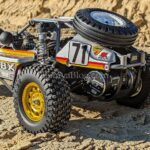
After having a look at the manual of the Hotshot 2007, I feel that the Hotshot 2007 is the poorest of the re-releases so far. I can appreciate it as a re-release being quite true to the original, but considering that many parts have been improved, I have difficulties understanding why many of the weaknesses haven’t been fixed, more so as other models in the Hotshot series (especially the Hotshot 2), had many of the Hotshot’s problems fixed. Problems that are now “revived” with the re-release. Tamiya will sure have their well considered reasons, and unlike me, those who wanted the re-release to be as close to the original as possible, will have their wish at least partially granted. As nice and interesting as the Hotshot 1 looks, a re-release close to the original is a welcome flashback, but it also means that it remains the most “immature” design in the Hotshot series.
Below a little list on details that the review of the manual has revealed, and which couldn’t be recognized on the pictures earlier available, or otherwise made known.
1. Diff joints without the integral 2mm pin (loose pin instead): More slop, higher frictionlosses and wear. The fixed pin was introduced with the Hotshot 2 and has been a standard feature for most Tamiya models since and it offers significant benefits over the “loose design”, as described in one of my earlier comments.
2. The same amount of ball bearings are included as with the original release. Considering how unprecise and inefficient the Hotshot gearbox design is, how important full ball bearings are and the fact that ball bearings aren’t by far as expensive as they were in the mid ’80′s, I would have expected Tamiya to include them. This is of course a cost issue, but as I’m sure almost all buyers will mount full ball bearings anyway, a slightly higher kit price for a kit with full ball bearings, would in my humble opinion have made more sense.
3. Pinion spacing arrangement is the same as the original release, instead of the much improved Hotshot 2 arrangement: Fiddly and more likely to get debris inside the rear gearbox. Not so critical on new and clean parts, but from past experience with the original, I know just too well how awkward this used to be.
4. As far as I can see, aluminum front bumper hex instead of brass, like later models in the Hotshot series: Threads strip much more easily, a very well known problem with the original release.
5. Not self tapping screws for radiobox, as introduced with the Hotshot 2: Much more difficult access to radiogear and more likely stripping of screwheads. (I will grease the screws on mine). I of course realise that entry to the radiobox will be less necessary now that the mechanical speed control is gone, but considering that the Hotshot 2007 has the Hotshot 2 tub, which has a quite strong visual impact, I consider it surprising that the “invisible” improvement of using selftapping screws has not been applied.
6. No 850 bearings for the diffjoints (outside the 1150 bearings) and no advice to add them to reduce diff joint slop, as with the Bigwig. Unless the gearbox housings have been modified, making fitting of these 4 extra 850 bearings impossible, I will add them on mine.
On the positive side, except the things we knew about already:
1. Reinforced rear upper arms in the lever area of the monoshock mount. A very much needed and truly welcome improvement!
2. Improved kingpin design. Hex head instead of screwdriver head (first release) and Phillips head (improved Hotshot 1 and later). The “hex” is smaller in diameter and thus will probably cause less wear on the “ballcup area” of the suspension arms (less/no grinding) and more important, makes assembly by far easier.
3. E-clips instead of C-clips for the diffjoints. The original’s c-clips were fiddly to mount, ever worse to remove and tiny, so were easily lost during assembly and maintenance. The larger E-clips surely offer a benefit here, and may also add a little more of the very much needed stability to the diff assembly.
4. Rubber boot on switch. Not important, but a nice touch.
5. Reinforced wing mount. Two almost vertical “struts” have been added. A little strange as the original was indeed adequate, but with no significant visual impact or other disadvantages, still welcome.
6. Hotshot 2 / TA01 type front uprights. Reduced bumpsteer compared to the original Hotshot’s upright type. For the purists, the original Hotshot 1 type uprights are included as well (on the D-parts tree), but marked as “not used” in the parts overview.
7. Both a steel antenna (like Hotshot 1) and a plastic antenna pipe with aluminum holder!
So, do I look forward to receiving the kit, which is currently in transit? Yes, I do. It will be nice to “travel” back to May 1st 1985, when I built my first Hotshot and seeing it finished in all its visual glory will be a joy. However, now knowing to a large extent how it will run, I think mine will stay a “static” model after assembly. After the XR311, the first re-release I don’t really feel any desire to run!
Update: Tamiya HQ obviously doesn’t have a problem admitting that the Hotshot 2007 is based on a very outdated design with limited positive characteristics in absolute technical terms, with focus on nostalgy rather than actual performance. Quote from Tamiya HQ’s English website: “Take this updated Hotshot out for a spin and compare it to today’s R/C buggies to experience how far this hobby has developed!”
More here: http://www.tamiya.com/english/products/58391hotshot/index.htm

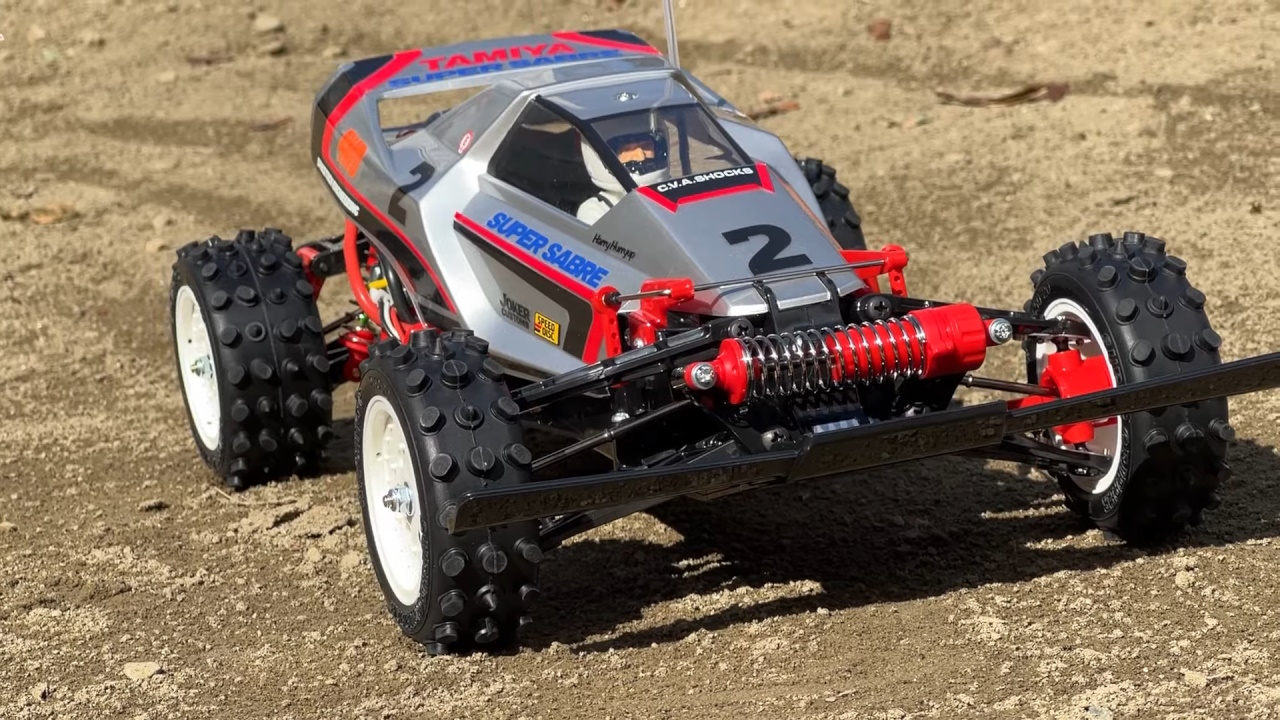
After having read many Tamiya enthusiasts’ reactions to recent news about the Hotshot re-release, it feels appropriate to make a few comments. The text below is solely my subjective opinion, but the opinion is based on using the Hotshot and the subsequent models in the “Hotshot series” for organized racing on national level for three buggy racing seasons and servicing countless of customers’ Hotshot series models (Hotshot, Hotshot 2, Supershot, Boomerang, Bigwig and Super Sabre). In other words, my opinion is at least not just based on random guesses.

September 27
Comparison test of F350 vs. TA02 and XC